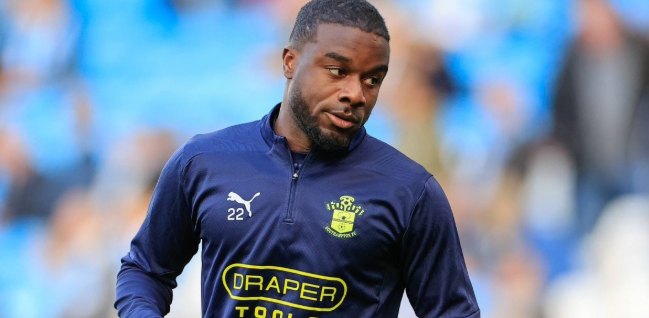
Shortly afterward, that platform once again shared a photo of Reichert and Zhou Dingyang dining with two bloggers, and posted an article stating that just now there may have been a fight, and the next thing you know it's a one-man, one-chopstick Mao maw hotpot, and there's no need to elevate it to the level of morals or values.
Fans who watched the battle between Chengdu Rongcheng and Seaport will understand: the former's second goal conceded, on the surface, appeared to be the opponent's high press that led to Wu Lei's return pass error, allowing the opposing player, Vargas, to easily break through the goal. In reality, however, Leichhardt's hasty pass to Wu Lei was one of the main reasons. However, Wu Lei, who was highly frustrated after the match, took all the external criticism. It is quite possible that as captain, Zhou Dingyang may have verbally exchanged words with Leicht at that time, which even led to the ensuing physical clash.
If this report is true, then Chengdu Hibiscus has become the fifth embarrassing thing to be discussed this season.
On April 5, Chengdu Rongcheng beat Jinmen Tigers 3-2 on the road in the fourth round of the Chinese Super League. After the match, goalkeeper Zhang Yan had an argument with a fan on his personal social media platform and abused the other team with vulgar and rude words, which caused widespread discussion. However, Zhang Yan was not punished, except for a media report that he was "criticized and educated on the spot" by the club's senior management.
On May 5th, the 10th round of the Chinese Super League took place, with Chengdu Rongcheng losing 1-2 to Guoan on the road. During the match, Baitijiang was accused of making an indecent gesture: he reached out to the stands and grabbed his sensitive parts before continuing the match as if he was unaware of it. The day after the match, Baitijiang posted a photo on Weibo, saying that he felt revitalized after eating dinner. The photo showed him eating hot pot in casual attire, seemingly in response to the internet discussion directed at him the day before.
On May 14, the media reported that Wei Shihao signed autographs for his fans wearing the jersey of Taishan goalkeeper Wang Dalei, an incident that once again aroused social concern and discussion.
On May 17, Chengdu Rongcheng challenged Meizhou Hakka on the road in the 12th round of the Chinese Super League. In the first minute of the match - less than 53 seconds to be exact - Yang Fan committed a heavy foul while fighting with his opponent for a header, stomping on his opponent's abdomen with his foot, and was then sent off by the referee after showing him a red card. After the game, the CFA made a penalty of a three-game suspension and a fine of 30,000 yuan for Yang Fan. Careful fans found that this is the 3rd consecutive season that Yang Fan has been sent off. The red card at the beginning of the match, I wonder if it set some kind of record in the Chinese Super League?
These incidents, individually, do not seem to be very serious and do not need to be overly concerned and discussed. Especially Wei Shihao's "jersey incident", fans also have different attitudes. However, when all things are taken together, the situation is different. At least, it can be seen that Chengdu Rongcheng club in the management of some "lax".
Many soccer fans believe that if the club had dealt seriously with the incident of Zhang Yan insulting the fans immediately after the incident, there might not have been the "inappropriate behavior" of Buying Jiang a month later, as well as the other incidents that followed. At least, after these two incidents, the people involved are still on personal social media "blog sunshine photos", as if nothing has happened, and can even be understood as deliberately "provoking" fans. The club has never made a public statement, which is very strange.
Wei Shihao's "shirt incident" seemed inappropriate, at least as far as the club's culture is concerned. It may have been unintentional, but it certainly didn't sit well with the fans, who felt it was too casual and failed to fully respect the club, the team and the fans.
To use a less apt analogy, what kind of public outcry would be generated by, say, a Cats player signing autographs for fans wearing a Dogs or Rats jersey in the aftermath of a cat-dog fight, or in everyday life?
As a new team in the Chinese Super League, Chengdu Rongcheng FC may find some excuses to explain some management deficiencies. However, with the recurrence of various problems, it would be unprofessional and irresponsible for them to continue to stand idly by as a "new team".
If professional players need to "relax" in order to "display the beauty of the speed and skill of the game of soccer" (quoted from enjoyment); fans need to "relax" in order to "to have a deep love of the game, to be able to make subjective judgments, and to appreciate and savor [the game of soccer]". The club, then, should have a sense of 'relaxation'. This relaxation should be demonstrated by an ease of management, including respect for the system and rules that require all members of the club to comply with the law.
Respect the elderly and care for others in their old age, take care of the young and care for others in their young age. Both athletes and fans should be more tolerant and understanding of each other, and participate in and appreciate the game with a calm mind. However, as a professional club, it must be strictly regulated and managed, and not just stay in the superficial human-centered concept.
If every time a player (or any other employee of the club) makes a mistake, it is considered insignificant and is never taken seriously or dealt with, these minor mistakes will gradually accumulate into major problems, minor oversights will turn into major mistakes, and "minor evils" will evolve into "major evils". In the end, even if certain goals are achieved, such as winning the AFC Championship or even the Chinese Super League title, the loss will outweigh the gain for the club's development. It is like building a skyscraper on the beach, which ultimately collapses because of its shaky foundation.
Note that this is a different kind of looseness than before.