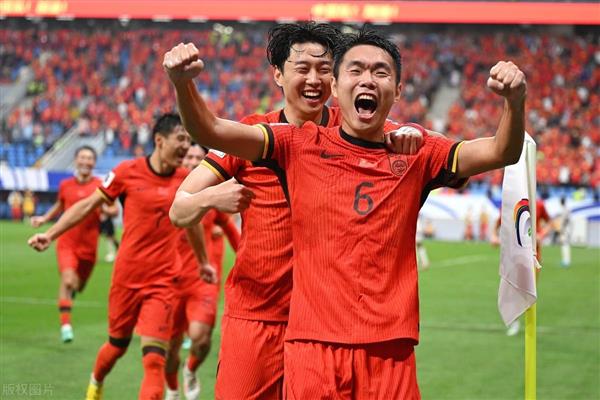


According to the news on November 23rd of the live broadcast, in the two warm-up matches of the Chinese national Olympic team against the Tajikistan national Olympic team, they achieved a relatively unsatisfactory result with 1 draw and 1 loss. Ma Dexing, a reporter from Sports Weekly, commented that the current situation of the National Olympics is a continuation of the lack of succession in the national team.
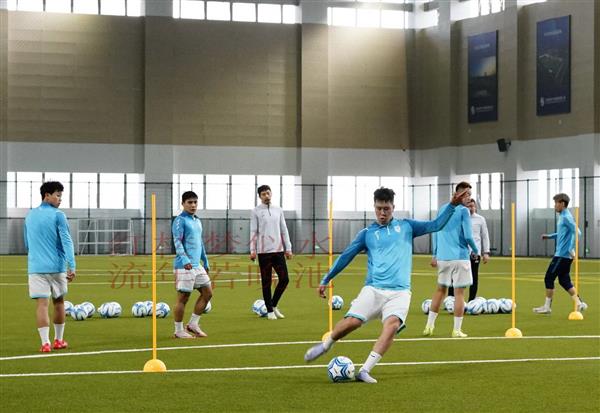
After the China-Korea war, this reporter quickly rushed from Shenzhen to Jinjiang to watch an international friendly match played at the Jinjiang Football Training Center yesterday evening (22nd). The match was between China's 2001 age group U22 national Olympic team and the Tajik national Olympic team. The result was that Tao Qianglong, a player of the Chinese national Olympic team, missed a penalty kick in the first half and had to settle for a 0-0 draw with the opponents. Adding to the first round match between the two sides three days before, on November 19, the National Olympic team lost 1-2 to their opponents. China's record at the end of the Jinjiang tour is 1 draw and 1 loss.
Interviewed by the press conference in Jinjiang, National Olympic head coach Cheng Yaodong said with emotion, "The National Olympics players are in extremely bad shape, and many of them were unable to play in the month or two months before the training!" Take Tao Qianglong, who missed yesterday's penalty kick, for example, he only made 15 appearances in the past season, playing a total of only 6 league matches and only 554 minutes of playing time. In that condition, how can he be fit for an international tournament?
As an example, let's take Efirdin. In the first half of the year, he did not participate in any official league game because he was on loan to Sweden; in the second half of the year, after returning to the Guangzhou team, he basically did not play in the remaining two months of the Central League for various reasons. This time, after he reported to the National Olympic team, both the physical state and the athletic state, are far from meeting the requirements.
The core players of the National Olympic Team have already reached the above situation, not to mention the other players. Therefore, when the national Olympic team first conducted a week-long training in Shanghai, and then participated in two warm-up matches with the Tajik team, the outside world expected to see the results of the game appeared to be "unbelievable"! It is understood that most of the players who participated in this training program did not even reach 40% of their normal condition in the internal fitness test. This is not because the players are tired after a season of intense league games, but because they can not play in the club, the quality of training can not be guaranteed, this situation is really "disappointing"!
To some extent, the Chinese Super League "aging", teams are not willing to give young players to provide more opportunities, there is no game to play, young players naturally can not grow up quickly. So, the Chinese national team in the last 10 years, why the "aging" is getting more and more serious, showing the situation of not enough youth? The answer is clear. Young players can not get more practical opportunities in the league, the growth rate slows down, the natural maturity will be later. When Yu Hai, Huang Bowen, etc. at the age of 16, 7 years old have already begun to make their debut in the first A, the early stage of the Chinese Super League, now the Chinese Super League, not to mention the 16, 7 years old, even 18, 9 years old players, how many in the Chinese Super League can there be?