

Shortly after Chen Xuyuan was investigated, the CFA released the access rules for the new professional league season. It's wonderful to tweak the access rules every season. What's even more brilliant is that the CFA seems to continue to stick to the nonsense style of waving the baton and talking nonsense. They require the AFC Champions League and FA Cup to field the strongest teams and not to forfeit matches or go on strike for no reason.
One of the wonders: promising the strongest squad to play in the Cup
Last year's AFC Champions League Chinese Super League teams created a lot of tragedy as most teams participating in the AFC Champions League fielded a second team, which naturally caused dissatisfaction with the AFC, the Chinese Football Association, and even alleged disrespect for the competition.
We should all know the reasons for sending a second team to the tournament. The schedule was intensive and underfunded. During the epidemic, the Chinese Super League adopted a cup format, which naturally required sacrificing the results of the AFC Champions League. This is a problem of tournament organization and an internal problem of Chinese soccer. But now, the CFA is directly asking for a commitment that all cup competitions must be the strongest.
It seems as if CFA wants to give an explanation to AFC. The problem is that your access rule itself represents disrespect for Asian soccer. Who would ask for the strongest squad? How do you define the strongest lineup? Is it the most valuable player in the whole team? There are rules that can't be enforced, and that's what they are.
Oddball II: Youth Ladder Requirements
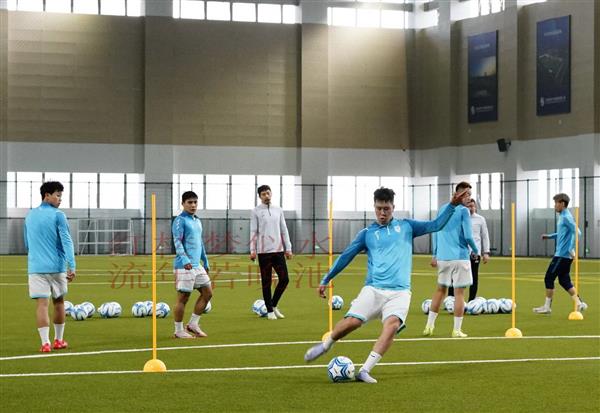
According to the access rules, the CFA requires Chinese Super League teams to set up six levels of echelons respectively, i.e., U13, U14, U15, U17, U19, U21. five echelons in the Chinese First Division (U21 fewer), and four echelons in the Chinese Second Division (U19 fewer), with each echelon consisting of no less than 18 players.
This seems to be a good thing. In the Chinese Super League, for example, there are 324 players in the 17 year old ladder, 972 U17 players in the third tier league, and with school teams and the like, it seems that Chinese soccer could solve the soccer population problem. The question is, what are the support measures of the Chinese Football Association?
Guess 900 young players enter the first team every year. How many do Chinese soccer need to update? How many can play in the tournament? Essentially, Chinese soccer is not a problem of underpopulation of soccer, but overpopulation. If professional leagues don't expand their armies, no matter how well you build your ladder, it's just a face-saving program. Unless the FA comes out with a plan explaining how to expand the army in how many years, this ladder construction is a kind of decoration and instead becomes a tool for clubs and coaches to collect money.
So why doesn't the professional league expand its army? For the past four years, it was normal to have 35 teams and player salary issues disbanded every day. Now, the burden of the sixth tier has increased, and the burden of coaching, training and players in the sixth tier is a cost, so what if the music department can't afford it? Is this a charge on young players? It's essentially a vicious cycle.
Is the day dawning for Chinese soccer?
When Chen Xuyuan went in, countless people sighed and said dawn, but has Chinese soccer really dawned? It seems to be very early. China's soccer cannot develop is a market problem, we do not have such a large soccer market, the task of the soccer association is not to wave the baton, but to consider how to cultivate a soccer culture and cultivate a self-sufficient soccer industry chain.
You can't do a good job of Chinese soccer with a promise in your left hand and a rule in your right hand, while screaming about easing the burden on the music sector, while increasing the burden on the music sector, and do a good job of Chinese soccer.