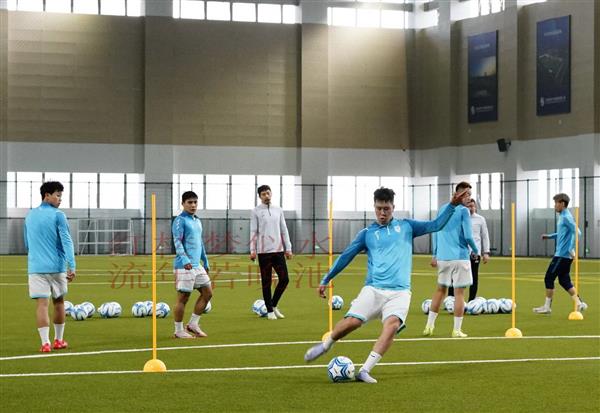


On July 28th, Japan's National Olympics managed to win two consecutive matches with a 1-0 victory over Mali's National Olympics, advancing to the early rounds of the tournament. In response, Soccer Daily published an article praising the outstanding performance of this Japanese national Olympic team, which does not contain overage players.
This is the third consecutive time an Asian team has advanced from the men's soccer group stage at the Olympics since Japan from 1964 to 1968; and the second time an Asian team has advanced to the group stage in the early rounds of the Olympics since South Korea at London 2012. Japan advanced out of the men's soccer group stage for the sixth time in 12 Olympic final round appearances, remaining ahead of South Korea's four, which holds the record for the most times an Asian team has advanced out of the men's soccer group stage at the Olympics.
Japan's national Olympic team is the only team competing at the Paris Olympics that does not have any overage players. In addition, the Japanese team has as many as 10 U23 age-eligible players who will not be able to participate in the games, including the most expensive player in Asia, Kubo Kenyoung, the main goalkeeper of the Japanese adult national team, Suzuki Choyan, the striker Suzuki Weiren, who has appeared in the adult team, as well as Jyusei Matsuki, who will soon be joining the English Premier League's Southampton, and so on. Therefore, the Japanese team with only U23 lineup can only be regarded as the "second team of the National Olympics".
Nonetheless, the Japanese "National Olympic Team 2", which still has up to seven players playing in Europe, has made the same excellent start as three years ago in Tokyo, based on the U23 Asian Cup winning team. Coach Tsuyoshi Oiwa's Japanese national team has not only started the season with back-to-back victories, but has also scored a total of six goals and shut out their opponents. A 5-0 win in their opening match against Paraguay was Japan's biggest victory in the history of Olympic men's soccer.
The Japanese national Olympic team, which is locked out of the tournament ahead of schedule, is likely to face Egypt, the second team in Group C, in the quarterfinals. Looking back to the 2012 Olympics, Japan defeated Egypt in the quarterfinals to advance to the quarterfinals, so the Japanese media is looking forward to a repeat of the history of the London Olympics in the race for a medal. Since last year, the Japanese men's soccer team has achieved similar success with the U23 age group after winning the U17 Asian Cup and making it out of the group at the U17 World Cup. Although the U19 age group is slightly less impressive, they reached the quarterfinals of the U20 Asian Cup and participated in the U20 World Youth Championship. In the last three U17 World Cups, U20 World Cups and U23 Olympics, Japan has been involved in a total of nine tournaments, failing to make it out of the group on only two occasions, showing the steady results of the combination of school soccer and club youth training, which is still among the best in Asia.
This Japanese National Olympic team has four mixed-race players, including midfield captain Jean Ruko Fujita and goalkeeper Reio Ogikubo. Ogikubo managed to pounce on a penalty kick in the second half against the Malian national Olympics to help his team keep a clean sheet and advance. Four of the team's six goals were scored by stay-at-home players, with Jean Ruko Fujita also providing an assist to her teammate who scored twice. The main stay-at-home players of this group of Japanese national Olympics mainly play in the middle and lower reaches of the Dutch and Belgian A, showing the current situation of Japan's stay-at-home players in large quantities and with high quality.