

Beijing time July 24th news, the Chinese Football Association today officially released the 15th referee review. In response to previous concerns about Wei Shihao's red card was additional suspension, the CFA provided a detailed answer. At the same time, for the Shandong Taishan team foreign aid Cressan in the occurrence of a similar foul was not additional punishment, the CFA also made a statement.
On the evening of July 23rd, the Review Group of CFA Referee Committee conducted the fifteenth period (20240723) of the referee review work of this season. According to the complaints from the clubs, a total of 9 cases were reviewed in this period. Among them, 7 were from the Central League, and the panel considered that there were 2 cases of wrong or omission judgments. In addition, there were two cases involving two similar kicking incidents in the Chinese Super League in which Shandong Taishan's Kressan and Chengdu Rongcheng's Wei Shihao have attracted a lot of attention recently. The panel analyzed that the two incidents were of different natures, with Kressan committing a serious foul and Wei Shihao committing an act of violence, and that the referee missed a direct red card that Kressan should have received during the match.
The Convocation still adopted the form of videoconference, and two soccer supervisors from the social and media sectors as well as CFA's disciplinary inspectors were invited to observe the meeting. The meeting reached the following conclusions through a combination of collective discussion and individual opinions of the members of the Convocation:
[Case Comparison 1]: In the 18th round of the Chinese Super League, Shanghai Shenhua played against Shandong Taishan, and in the 26th minute of the match, Shandong Taishan's No. 9 player, Cressan, was shown a yellow card by the referee for a foul. He then received a second yellow card and was sent off due to other offenses.
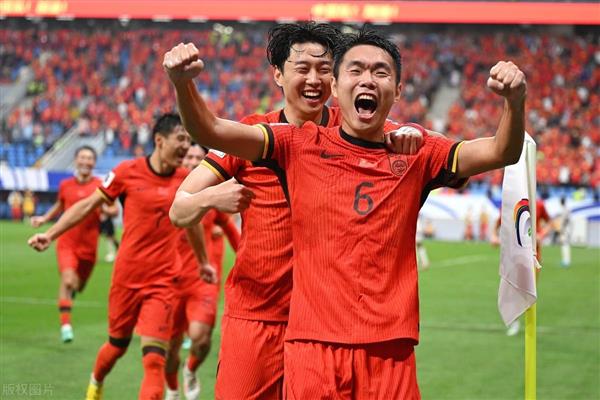
[Jurisprudence Comparison II]: In the 24th round of the Chinese Super League, Wuhan Sanzhen faced Chengdu Rongcheng. In the 63rd minute of the match, Chengdu Rongcheng's No.7 player Wei Shihao was shown a red card by the referee for a foul and was ordered to leave the field.
For these two cases, the panel reached a unanimous opinion: the behavior of Shandong Taishan's No. 9 player Cressan belonged to the situation where there was a possibility of touching the ball, using excessive and rough way to scramble for the ball, which led to the fall of the opponent. This situation should be recognized as a serious foul according to the competition rules, and the referee should show a red card directly to send him off. The referee was wrong to show the yellow card on the spot and missed the direct red card. Chengdu Rongcheng's No.7 player Wei Shihao's behavior occurred when the ball was already out of controllable range and there was no possibility of touching the ball, and he intentionally kicked the opposing player, which should be recognized as violent behavior according to the competition rules, and he should be sentenced to the field by showing a direct red card. In both cases, there are similarities between the foul actions of the players, both of which should have been penalized with a direct red card, but the circumstances are different, and therefore the applicable penalty provisions in the competition rules are also different.
The CFA Disciplinary Committee made the following clarifications on the subsequent disciplinary actions in these two cases:
After the Cressan foul incident was evaluated, it was decided not to file a disciplinary report and therefore no disciplinary proceedings were initiated.
After the foul incident of Wei Shihao, the disciplinary procedure was initiated for the violent act according to the relevant regulations. In the end, the CFA Disciplinary Committee made a decision to suspend Chengdu Rongcheng's No. 7 player for four matches and impose a fine of 40,000 yuan in accordance with articles 53 and 48 of the Disciplinary Code of the Chinese Football Association (CFA).
The CFA will continue to adhere to the principles of fairness, impartiality and openness, and actively listen to feedback and complaints from clubs. For some key cases as well as typical cases that have received wide attention from the society and can help to standardize the penalty awarding standards, deliberations will be conducted and the results will be announced to the society. At the same time, internal penalties will be imposed on the referees concerned for wrongful penalization.