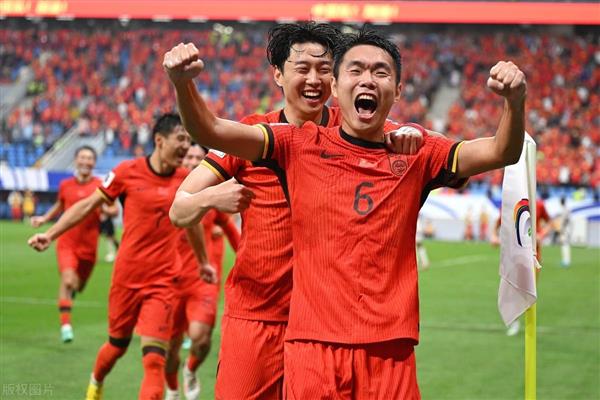


The Chinese soccer team lost 1-2 in a match against Hong Kong, China, a match that gave the domestic soccer community a clearer picture of the current state of Chinese soccer. In the past, the Chinese soccer team was able to maintain a no-lose record against some Asian opponents, and although they could not win consistently, they could at least ensure that they would not lose. Now, on the other hand, the Chinese soccer team can lose to any opponent without any lower limit to speak of. After this loss to Hong Kong, China, the entire domestic soccer community once again began to focus on the discussion of how to improve the level of Chinese soccer. Truth be told, this issue has been discussed many times. I think we should not be overly ambitious, but should start from the basics.
We need to start from the basics in every aspect. For example, take staying in the world as an example, in the past, we always aspired to play in the top leagues in Europe, but do our players have sufficient strength and standard? Perhaps players in the past had these conditions, but players nowadays definitely do not. Wu Lei, the top star among domestic players, is only struggling hard in the La Liga and has not been able to gain a firm foothold. Therefore, should our overseas players lower their expectations and choose to play in the Turkish second tier league like Wu Shaocong, a starting platform that is more in line with the level of our players. Even our neighboring Asian leagues are an option to consider.
According to reports in the national media, one of our men's soccer players has traveled to the Japanese league for a trial period during this winter transfer window. While the excitement and impact of going to the J-League is obviously lower compared to playing in Europe, Japanese soccer has completely surpassed us in both the national team and the league. The exercise value and rewards for players going to the J-League are also much higher than those in the Chinese Super League, and the J-League will give players more help as long as they ensure participation. We must not take the J-League lightly, as its level has reached the highest standard in Asia, and we need to reach at least the first-class level in Asia to have a chance to participate in the World Cup.
There is no clear information on which players will go to the J-League for tryouts. Since these players may not be transfers, but just trials, they may not be national team level players. They may just be young players or non-national team level players from the Chinese Super League. But no matter what the level of the players, it is better to play in the J-League than to play domestically. Fans can look forward to this as a good direction to go overseas because our players, even if they go to the J-League, are already vastly improved. Chen Binbin, the former national Olympic captain of the former China Harbor team, surprisingly hasn't played a single match in the J3 League and rarely even gets a chance to be on the playing roster.
In fact, if we had been able to find the 11 players who play as starters in the J-League and who make up the starting lineup for the national team, we wouldn't have struggled against Thailand as much as we did. The national team had a very difficult time against Thailand in the 36-team tournament, and ended up with a hard-fought 2-1 win. Recently, Thailand played a warm-up match against Japan's second or even third team, which resulted in a very smooth process with Japan beating Thailand by 5 goals. All of these Japanese team players are from the J-League, so if our national team players can reach the level of J-League starters, they are considered quite good.