
What are the professional soccer fields in Japan
What soccer stadiums are there in Japan
The land area of Japan is only 377,972 square kilometers, which is not even as big as our Yunnan Province. Therefore, building a soccer stadium in Japan, where every inch of land is expensive, is not an easy task for most clubs, not only in terms of financial difficulties, but also in terms of land approvals, which is a major problem.
Sapporo Dome: A stadium that transforms into a stadium
Sapporo Dome Stadium was built in 2001, and was the host of the 2002 FIFA World Cup. The Sapporo Dome is also a dual-purpose stadium for soccer and baseball, serving as the home of the J-League team Gonzaga Sapporo and the Japanese baseball team Hokkaido Nippon Ham Gladiators, respectively. The Sapporo Dome stadium utilizes a buoyancy system that allows it to switch between a soccer field and a baseball field in a short period of time. The stadium is also able to move the entire natural turf, which is rare in the world of soccer.
Sankyo Hauschberg Soccer Stadium: the closest soccer stadium to the players
The Sankyo Hauschberg soccer stadium was built in 1985 and is the home stadium of the J2 League team Kashiwa Sun Kings. The stadium is a professional soccer stadium with a capacity of only 15,109 spectators. The stadium was long called Hitachi Kashiwa Soccer Stadium until 2018, when it was renamed Sankyo Houshber Soccer Stadium due to Kashiwa Sun Kings FC's predecessor, Hitachi Manufacturing. Although the stadium does not hold a large number of spectators, the stands at the Sankyo Hauschberg Soccer Stadium are the closest to the infield in the J-League, allowing fans to be near zero distance from the players, making it an immersive experience no matter which side of the stands you're in.
IAI Nihondaira Soccer Stadium: A soccer stadium with a view of the World Heritage Site
IAI Nihondaira Soccer Stadium, completed in 1991, is a professional soccer stadium and the home of J-League team Shimizu Drums. However, the stadium is not owned by Shimizu Drums FC, but by the city of Shizuoka. The full name of the stadium is Shizuoka City Shimizu Nihondaira Athletic Park Soccer Stadium, which was renamed IAI Nihondaira Soccer Stadium in 2013. Mount Fuji, the symbol of Japan, is located in Shizuoka Prefecture, where Shimizu Drums is located, and on a clear day, you can not only watch Shimizu Drums' home matches at the IAI Nihondaira Stadium, but you can also have a clear view of Mount Fuji.
Ekimae Fudosan Soccer Stadium: the most convenient soccer stadium in Japan
Completed in 1996, Tosu Soccer Stadium is a professional soccer stadium and the home of J-League team Tosu Sandwiches. The stadium is the largest soccer stadium in Saga Prefecture, with a capacity of 24,490 spectators. The name was changed to Ekimae Real Estate Soccer Stadium this season. Most stadiums are built in open areas far away from the city station due to the large amount of people around the stadium on match days, which makes it very difficult for fans to watch the matches. However, Ekimae Fudosan Stadium is the most convenient soccer stadium in Japan as it is only 3 minutes away from the nearest station!
Kitakyushu Soccer Stadium: the closest soccer stadium to the sea
Completed in 2017, Kitakyushu Soccer Stadium is a professional soccer stadium costing nearly 10 billion yen and is the home of J3 League team Kitakyushu Sunflowers. The front row of stands at the stadium is only 8 meters from the pitch, with a height difference of 65 centimeters. The most unique design of the stadium is that one side of the stands faces the Kokura Harbor on the Sea of Japan, so you can enjoy the sea view while watching the game. Interestingly, the stadium has posted a special notice prohibiting fishing in the stands.
Saitama 2002 World Cup Stadium: The hottest stadium in Japan!
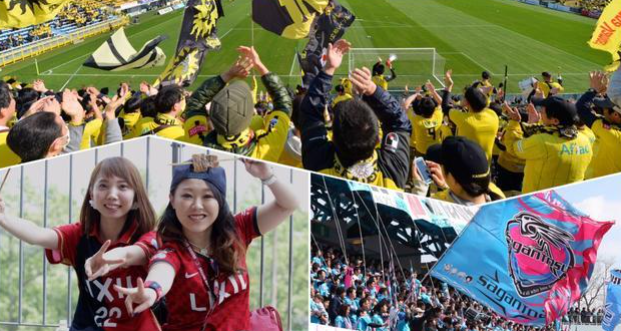
The Saitama 2002 World Cup Stadium, completed in 2001, is a professional soccer stadium that is home to not only the J-League team Urawa Red Diamonds, but also the Japanese national team. The stadium has hosted numerous tournaments such as the 2002 FIFA World Cup Korea/Japan, the Asian Champions League, the J-League, the All Japan High School Players' Rights, the Kirin Cup, and in the future it will be the main stadium for the 2020 Tokyo Olympics. The Saitama 2002 World Cup Stadium has a capacity of 63,700 spectators, and in last season's J-League Saitama 2002 World Cup Stadium became the stadium with the largest cumulative number of spectators at home. The Urawa Red Diamonds fans' neatly organized patch of red in the stands has become a unique sight in the Japanese league.
that's all...
What are the major soccer stadiums in Japan?
? What are the answers to the professional soccer field in Japan, you want to know more data and information can pay attention to this site.