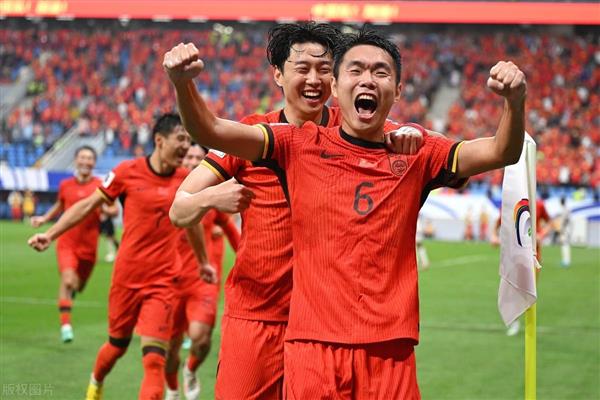


On the evening of October 3, in the semifinals of the Asian Games women's football team, China's women's football team missed the finals after falling behind 1-4 in the first half and then pulling back two consecutive goals in the second half to lose 3-4 to Japan's women's football team.
The achievements of the Japanese women's soccer team had been widely discussed by fans before the start of the tournament. Some domestic media called the Japanese women's soccer team Japan's second team, and some fans thought it was Japan's third team. However, as the game progressed, fans came to realize that no matter how many teams Japan had, conceding four goals in the first half was unacceptable.
In the second half, the style of the game changed again. Japan Women's Soccer Team was also very excited in the first half and suddenly became not going to play after substituting Yuzu Ayumu Shiokoshi and Rei Chiba Seafood. After the Chinese women's soccer team regained their mentality, the difference was only one goal, relying on their ability to head the ball for most of the second half. The Japanese women's soccer team was even forced to delay the final period of the match, which is rare for Japanese national teams at all levels.
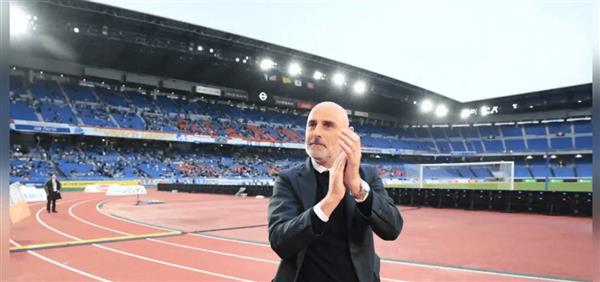
As the whistle blew for the final game, the Japanese women's soccer team, led by head coach Rengiu Natsuno, bowed to Chinese women's soccer team head coach Qingxia Shui. Renjiu Natsuno said that the Chinese women's soccer team in the second half taught the young Japanese women's soccer team a lesson, and the players learned a lot from the game, for which they were very grateful.
In the first half, the offense was sharp and threatening; in the second half, it was like playing soccer for the first time and only being passive. What are the origins of this Japanese women's soccer team?
While the Japanese media is calling this team Japan B, it doesn't seem quite right to call them a Japanese team, no matter how much of a Japanese team they are. This team is based on the Japan U20s, plus some players who performed well in the WE League (Japan's women's soccer league) last season. Their average age is only 21, with the oldest being 27-year-old Makoto Ueno. Of the 21-man roster, only seven are over 23.
Don't think that they can't represent the real strength of Japan women's soccer team because they are still young. Seven of this Japanese women's soccer team, including Sae Amano, Yuzuki Yamamoto, Aoana Tada, and Zhu Yu, played in the 2022 U20 Women's World Cup and helped Japan's women finish as runners-up. Reina Chiba, who scored in the first half, also played in this summer's Women's World Cup, but she only came on as a substitute against Zambia.
Meanwhile, players like Kino Kohara and Tazuko Koga are only 17 and 8 years old this year, but are already among the world's leading women's soccer players of their age. They missed out on the U20 Women's World Cup last year, and this is the first time they've competed in the Asian Games as Japanese internationals. Not surprisingly, these players will be the rivals of the Chinese women's soccer team for the next decade.
While most of the teams participating in the 2023 Women's World Cup landed in the Euroleague this summer, the players selected from the WE League are by no means ordinary players. Shuno Nakajima, who scored in the first half, was the centerpiece of Sanfrecce Hiroshima's midfield. He was replaced by Meiko Shimada, who was used to bolster the attack in the final moments of the game, and was also a key player up front for Urawa Ruby. Their performance also best represents the overall level of the WE League.
This Japanese women's soccer team is coached by U20 coach Renshu Kano and not by regular coach Mrs. Ikeda. This is because this team is also tasked with influencing the 2024 U20 Women's World Cup, and Rengu Kano has previously served as Japan Women's U16-U19 coach. He personally trained the vast majority of the players on this team and knows the players inside out.
Seeing this, many fans may suddenly realize that Japan's women's soccer team is sending its so-called B team to the Asian Games not to be big, but to train.
In the eyes of the Japanese Football Association, the Asian Games are not worth throwing back key players such as Hinata Miyazawa and Risa Shimizu, and Premier League clubs will not release them. But for young Japanese players, the Asian Games are the perfect training ground.
Not long ago, in the article about China's U15 defeating Japan's U15, we said that Japan's youth training results are quite rich in reserves, and there are about 400 to 500 players in Japan, a phenomenon that is reflected not only in the level of men's soccer, but also in the level of women's soccer. Although the players' "inner volume" is very strong, Japan does not have so many high-level international matches, which also leads to a serious waste of Japanese soccer talent.
Midori Honda, a famous Japanese women's soccer player and current Uzbekistan women's soccer coach, pointed out this phenomenon: "Without high-level competitions, we don't have the means to select the best players, but it also leaves the existing players lacking avenues for advancement and unable to see room for their own progress. Worst of all, the players don't know what the internationally popular style of soccer is, and this will affect the future development of Japanese soccer."
The JFA has also thought of many ways to deal with this situation. During the Shinkansen epidemic, as international matches were halted, the JFA arranged for young female soccer players to play against boys' teams from various high schools; after the epidemic ended, the JFA continued this move by organizing overseas training camps.
At the same time, the young players of the Japanese women's soccer team were willing to go out and play at a higher level and against tougher competition. On this point, Len Kano recalls, "After we finished second at the U20 Women's Soccer World Cup, our U16 and U17 players reached out to me and said they wanted more opportunities to compete on the international stage. I think the runner-up performance gave the young players courage and confidence."
There is no doubt that the performance of the Japanese women's soccer team at the Asian Games is a visual reflection of their success in youth training. The key to the success of Japanese soccer is that they have a very clear concept of the soccer development process, from the players and the coaching staff to the managers and senior executives, and they are able to implement the concepts and plans developed from start to finish.
Japan is a big family, sending the B team to the Asian Games, they have that capital. What about us?
The Asian Games is a no-brainer for the Sports Authority behind all the athletes. No one dared or allowed the Chinese women's soccer team to play like Japan. Our young players missed such a crucial training opportunity. Even if we could play like that, we don't have that many players with strengths close to those of the Chinese women's soccer players.
After the World Cup, the players had very limited time to rest and their physical condition was certainly not comparable to that of the Japanese women's soccer team. The reason why the Chinese women's soccer team was very passive in the first half was actually the result of their accumulation to the limit. Therefore, the score of the first half does not reflect the real level difference between the Chinese women's soccer team and the Japanese women's soccer team.
From a match point of view, the Japanese women's soccer team quickly got themselves excited in the first half, and inexperience became the main reason for the sudden change in the second half. If two more years go by, and if this Japanese women's soccer team goes through the tournament, then the gap between us may be completely defined.
In fact, there's something else that visualizes the progress of Japan's women's soccer team over the past year: Riko Ueki, who scored two goals against China at the Asian Cup early last year, has not only become a striker in the WE League, but also landed in Europe after the Women's World Cup of Soccer. Although we also have Premier League players like Zhang Linyan, the emergence of a new Riko Ueki on the Japanese women's soccer team is the scariest thing of all.
So don't blame Shui Qingxia, she did her best.
Some fans say the women's team is still honored by their failure, some are still trying to prove that "women's soccer is better than men's soccer", and some still believe that as long as Wang Shuang and Wang Shanshan are energetic, we still have a chance to do well until the Paris Olympics and the next World Cup.
Being optimistic and bad does not hide the current situation and the fact that Chinese soccer is stuck in stagnation. I don't know to whom the task of revitalizing Chinese soccer will be entrusted, it will take years, confidence, unity, scientific and rational planning and persistent execution.
Perhaps in less than a few months, when the tournament comes around again, the specter of defeat may once again loom over Chinese soccer.