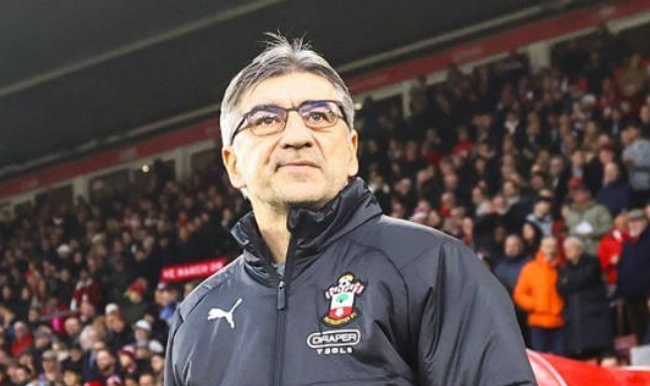


In World War II Burma, Djurdjevic replaced some of his replacements in time. While keeping the original framework, his overall ability is still quite impressive. At least, enough for the Asian Games. Before the match, there were reports that the coach was very keen on gathering information. Judging from the start of the match, this is definitely true.
Myanmar's lack of height is a big problem for them and certainly one that has plagued Southeast Asian soccer teams for a long time. In the past, our national soccer team was not afraid of them because they held the weapon of passing plus overhead bombing in their hands. Then the blind pursuit of the ground led to a stalemate. This time, Djurdjevic avoids this drawback, so that the Chinese team is no longer "unlike".
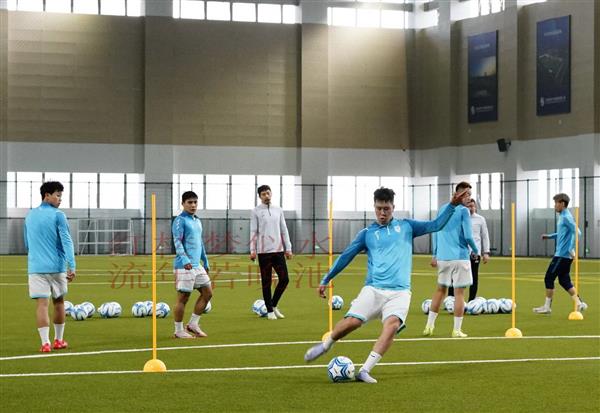
When the game started, Tao Qianglong's main attacking point was very clear what kind of task he was assigned. His bottom passes, inverted triangles, and cooperation with his teammate (Liu Yang) were very systematic; Gao Tianyi and Wang Zhenao on the opposite side were basically playing the role of adapted wingmen. If the left side of the road can not open up, they will immediately take over and keep the pressure. It is evident that the coach's arrangement and design, Djurdjevic really knows himself and knows the opponent better.
Watch the first goal. After the national soccer team took this set piece and hit the wall, Tao Qianglong was given two points and the first order of business was to get down to the bottom again. Tan Long's bottom kick looked a little forced (too high), but it could be considered to have broken the even momentum of the score and helped China gain the lead. Tactical execution was really strong.
It's the same thing with China, they don't make any sense, Tan Long is a "hamburger" defender and works high into the air to complete the breakthrough.
To his credit, Tan Long, a veteran of the national soccer team, did play well. Self-discipline is naturally essential to remain in good form over the years.
Despite the fact that it was a combination of the goal, but the bottom of the cross is still the key to victory. I can see that Liu Yang and Tao Qianglong Myanmar team "harm", is indeed very big.
"Marcelo" cross, "C Luo" header. Liu Yang and Dai Weijun were too easy to work with.
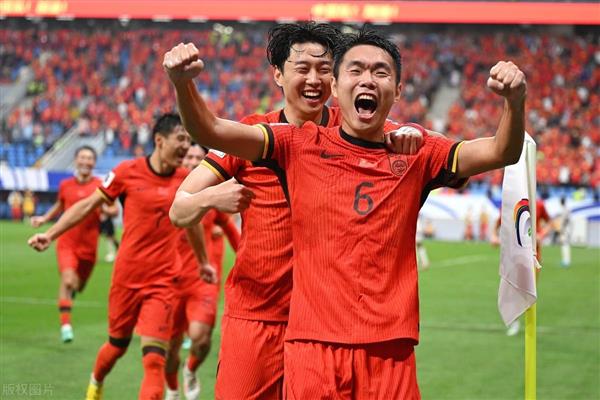
With this tactical design, China quickly gained the initiative of the game. If the few crosses that were cleared out of bounds in the opening exchanges were just dessert before the meal, Tan Long's head hammer after jumping up and Wang Zhenao's overhead kick after receiving the cross were inevitable. Advantage turned into goals as China gained momentum and scored. After 4-0 at halftime, the suspense was long gone, and all that was left was an exhibition match and a show of "responsibility" to the spectators who came to the game.
Of course, maintaining a tacit understanding between the three lines and the midfielders is also an important guarantee. Combined with this attack, we can see that Djurdjevic's general arrangement really targeted this Southeast Asian opponent and made them uncomfortable throughout the game.
But even so, there are still a few points that need special attention. The first is the problem of the Chinese team's awareness of offensive and defensive transitions, which does exist. For example, in the 35th minute, this problem is particularly obvious. After grabbing the opponent's left attack, it could have been a quick counterattack, but it turned out to be a backward reversal, missing a great opportunity. The explanation could not help but regret that this time it really should not have been arranged this way (route)!
The problem is the same, the player in front of them starts to accelerate and could have passed over to push a quick counterattack.
For the third midfielder, the problem is even more pronounced. Every time you get possession, you must first stop, then look up and pass out. This is really bad for taking chances, and not a big problem for Myanmar; for Japan and South Korea, who are very strong opponents, this break will not be given at all. If you go up and grab the wrong one, it's a matter of being interrupted before the offense changes hands.
Secondly, it's a matter of key goal-scoring points. Dai Weijun did a good job of taking the initiative to score in the first game, which was great in terms of his own enthusiasm and the trust of his teammates. But in the second game, he didn't receive many passes, nor did he advance through him much. It's a question of how to set up key players. Of course, this is also directly related to the tactical design of the game. After all, it is understandable to go both ways in the passing game.
Still, the starting lineup has to have something in mind, especially the main passer and organizer. Should you give Dai Weijun the primary rights in the middle of the field? If you don't give it to him, who is suitable for the arrangement? This is a question that must be established. After all, the idea is to take the card into the final.
In the second half of the year, there were significantly fewer chances for the National Football League, which had to do with the need to adjust the substitutions. However, it also reflects the depth and balance of our squad. For this, Djurdjevic must be well prepared. After all, the Cup is long, it is impossible for these 11 men to finish the game, and opponents will soon be ready for your strength.
The third point lies in the coordination of several guys up front. In the 11th, 25th and 60+ minutes of the game, there were problems with several people running heavy and the understanding of the tactics may not be uniform. In this point, Djurdjevic should have arranged more explanations to avoid similar problems. This is easier to solve than the first and second points.