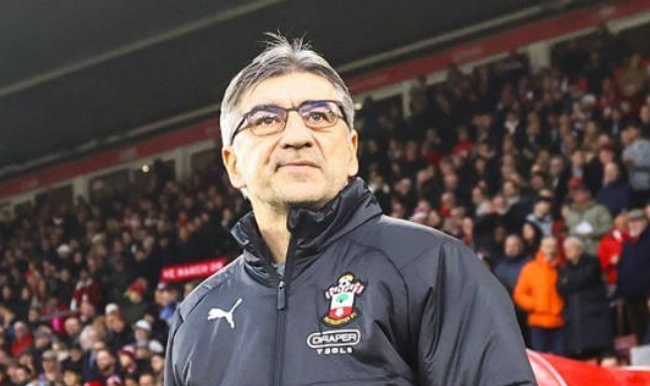


On September 4, current national soccer coach Jankovic is a practiced and meticulous coach, according to Football Daily. However, judging by the current lineup of the national soccer team, a gradual weakening trend over the next 10 years should be hard to avoid.
Reaching the 2026 World Cup finals may not be mandatory at the moment, but for coach Jankovic and his national soccer team, reaching the top 18 is a goal that must be achieved - the "big test" - and the four warm-up matches in September and October are his "mock exams! The four warm-up matches in September and October are his "mock exams".
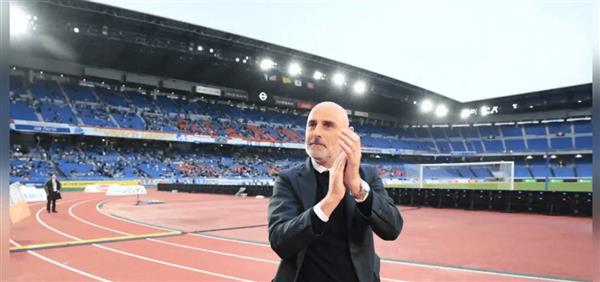
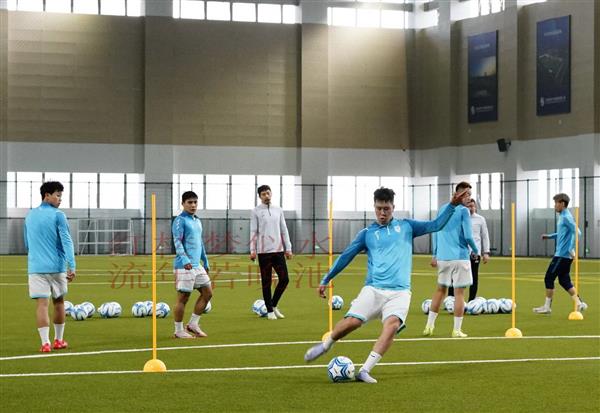
Jankovic is a practicing coach. For example, he will be involved in things that a head coach theoretically doesn't have to do, such as daily life management and team warm-ups. More importantly, in terms of technical and tactical play, he will personally instill this in daily training, including specific offensive and defensive drills, even clear technical and tactical conventions, and even detailed running routes for individual players.
In fact, this type of coach is more in line with the reality of Chinese soccer. Chinese players lack creativity and prefer clear tactical requirements and clearer responsibilities. However, Jankovic's type also dictates that it takes a while for him to run in well.
In these two games in September, Jankovic has led the team for the first time in six months and has been through four games. In theory, his technique and tactics will be more mature. Of course, if you want to form it, the second game in October is, in theory, a small node, but in any case, these two games in September could give the outside world a clearer picture of Jankovic's ideas and performances.
Of the four warm-up opponents in September and October, three teams outclassed Thailand (113) - Vietnam, Syria and Uzbekistan. There is hardly any gap between Malaysia and Thailand. In this case, the opponents for the four warm-up matches in September and October were chosen to ensure the technical, tactical and psychological condition of the players for the Thailand match.
This 24-man roster has hardly changed substantially from the June training. Outside dissatisfaction is that Wei Zhen and Sun Guowen are only the club's substitutes, while Zhang Xizhe and some other players who have performed well at the club have not been selected.
It should be noted that while national coaches are often on hand to investigate players, the fact remains that coaches have an inherent team. But on the other hand, as coaches of national soccer teams, we should ultimately give hope to more hard working players due to watching so many games on site. In addition, candidates may not need to play as starters. Some suitable players actually take on the task of "changing positions", which is relatively clear in the case of Zhang Xizhe. Zhang Xizhe's strengths and weaknesses are obvious. Suarez did not agree with him at first after coaching the national security, but after realizing the lack of midfield control, he used him and he produced obvious results!
Currently, by October, the national soccer team roster will definitely change. First, if there are no surprises, Zhu Chenjie will be back. Secondly, if Dai Weijun is in good shape, he might be selected. Even if Jiang Shenglong is normal, he should be selected. Zhu Chenjie and Jiang Shenglong are Yankovic's old players.
However, looking at the roster, there are fewer and fewer players to choose from for the national soccer team - there are five 34-year-olds on the roster (Wang Dalei, Zhang Linlian, Wang Shenchao, Wu Xi, and Ackerson) and four over 32 (Yan Junling, Liu Dengzui, Li Lei, and Wu Lei). At the moment, it's hard to stop the trend of the national soccer team's lineup gradually weakening over the next 10 years.