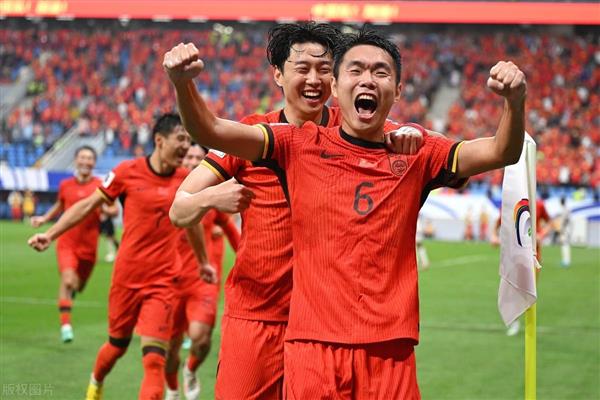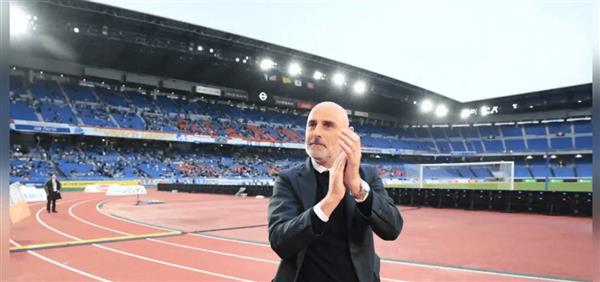

The Chinese men's soccer team visited Wellington, New Zealand, on the afternoon of March 26 local time and played their second international A-level warm-up match against the New Zealand national team in four days. Although substitute striker Barton pulled a goal back before the final play, the Chinese team lost 1-2, ending their warm-up tour of New Zealand with a record of one draw and one loss.
From the two warm-up matches, the Chinese team under the leadership of new coach Yang Kovic, in terms of technology, tactics and spirit is really praiseworthy, it is difficult to win, but still because of the technology is not as good as others. Chen Pu, Wu Shaocong, Lin Liangming and other young players as the representative of the new players do not yet have absolute strength, the Chinese team in the early reconstruction will inevitably continue to "chew the old".
Under the pressure of the opponents, the Chinese team's formation is gradually broken up
In the 23rd match, the Chinese team's desire to win, tactical discipline and the outstanding performance of Wu Lei and other core players pleased the majority of Chinese fans, but also for the new coach Yang Kovic to lead the team to achieve their first personal victory added confidence. In response to the problems exposed by the team in the first round of matches, Yang Kovic adjusted three personnel positions in the 26th China's starting lineup. He arranged striker Chen Pu, striker Deng Hanwen, and center back Wu Shaochong, who had just been loaned from the Men's Asian Games, to replace Tan Long, Liu Binbin, and Wei Zhen in the starting lineup. At the beginning of the game, China continued the game's active posture. Only 13 minutes into the match, Wei Shihao's left-footed long-distance shot almost broke through the rival city. six minutes later, Wu Lei lost another chance.
Unfortunately, as the game progressed, the home team gradually regained the initiative to control the ball by utilizing their physical advantages, while under the pressure of the opposing team, the Chinese team's formation was gradually washed away. In the 31st minute, the home team's Jaster broke through Zhu Chenjie's defense and broke through the penalty area. As a result, Wu Shaocong recklessly shoveled down in the penalty area. Fortunately, Yan Junling pounced on Graves' soft and feeble penalty kick. But like previous appearances of the men's Asian Games team, China continued to play passive defense, with inevitable lapses in the line of scrimmage. In the 41st minute, a foul by Wu Lei gave the opposing team a chance to set up a ball in front of the goal. As a result, the home team utilized this opportunity to force Zhu Chenjie to set up his own goal, breaking the deadlock on the field.
As the game entered the second half, Barton, Wei Zhen, and Lin Liangming replaced Chen Pu, Wu Shaocong, and Wei Shihao, respectively, followed by He Chao, who also replaced Xu Xin in the 65th minute. In the process, Liu Yang's direct free kick in the 52nd minute had a tricky angle but was magically parried away by the goalkeeper. The hosts had a chance to strike back in the 80th minute when Garbett scored an easy goal to help seal the win. Wu Lei and Barton got a bit of offense in the second half, but it wasn't until the last minute of extra time that Barton helped the visitors pull a goal back with a header, but they couldn't reverse China's loss.
Finding pragmatic technical and tactical play, but few players with outstanding individual ability
From the two matches against New Zealand, new coach Yang Kovic's strategy of "based on defense, focus on counterattack" is relatively correct, and has achieved some tactical results in the two matches. Unfortunately, China has very few players with outstanding individual ability.
Liu Yang's direct free kick in the 52nd minute almost scored a goal, and the team's loss of goals or lack thereof cannot simply be attributed to bad luck, but rather to the lack of a "key man" in the position in question or to turning the tide. For example, the home team's second goal was largely due to Liu Yang's almost non-interventionist defense in the penalty area. This means that the Chinese team still faces a lot of work to be done in terms of personnel, technique and tactical organization.
Forward Wu Lei, midfielder Wu Xi, defender Zhang Linpeng, and goalkeeper Yan Junling all played the full game on the 26th, and these 30-year-olds were also the most consistent players on the expedition. Barton, who scored the only goal for the team, has been selected for the national soccer training team many times before. In contrast, the newcomers, represented by Wu Shaocong, Chen Pu, and Lin Liangming, are serious on the pitch but a bit immature or reckless due to their lack of experience in international matches, and they still need to mature under the guidance of their coaches and with the help of veterans.
With these two warm-up matches, the Chinese team took the first step towards reorganization in the new cycle under new coach Yang Kovic. While the record of one draw and one loss against New Zealand is unfortunate, the Chinese team has at least found a practical technical and tactical approach rather than a poor Men's Asian Games team. As age players for the Men's Asian Games, Wu Shaocong and Zhu Chenjie also gained rare experience through quality international warm-up matches. From this perspective, the Chinese team achieved something on this trip.
Asian teams as warm-up targets in June
It is understood that the Chinese team will leave Wellington, New Zealand during the daytime of March 27th local time, return to Auckland, and then take the plane that takes off at 11:00 p.m. local time on the 27th to leave Auckland and return home. The team is expected to arrive in Shanghai at 6:00 a.m. Beijing time on the 28th and will be dismissed on the spot.
Beijing Youth Daily has learned that Coach Jankovic's Chinese coaching team will enter a new cycle of work immediately. According to the plan, China will enter its local home ground for two international A-level warm-up matches during the June 12-20 international cycle. Considering rebuilding the team's confidence and giving back to its fans, China will not choose strong opponents in June, but it will still choose Asian teams as warm-up targets considering that the opponents of the Top 36 and the 2023 Asian Cup are from Asia.