
Pulau
Of the 219 national team games, when asked about the happiest and saddest game, Pu Wei always chooses that great Chinese-American game, the Rose Bowl.
Prior to that World Cup, youngster Pu Wei had already been in the national team for a year and was gradually becoming a regular in the Chinese women's soccer team. A strong runner, good at back-pedaling, and a good passer, she eventually won a ticket to the United States of America.
Without much attention or high-profile goals, the Chinese women's soccer team has been progressively amazingly light.
With the exception of the first game against Sweden, where she was a substitute, Pu Wei became an unchallenged starter in the remaining five games, and her long-distance shot against Russia helped her team reach the semifinals.
Goals against Russia
Unfortunately, in the final, the goddess of victory no longer favored the Roses.
War to penalties, down to the last second, Pu Wei and her sisters missed out on the world title.
The regret of a lifetime Pu Wei is still unforgettable, so close to the top podium, but so far away.
Entering the new century, just when the Chinese thought that China's women's soccer team would have a glorious year and climb to the top again. China's women's soccer team began to slip from its peak, missing the World Cup and the Olympics for a time. Pu Wei was on the team at the time, three times in and three times out, seeing some problems but unable to change them.
After retiring, she revisited this dark time as a youth coach to understand the difficulties of old women's soccer.
Second, before flowering
"After thinking for myself for a change, I think it's the infrastructure that's not being done properly."
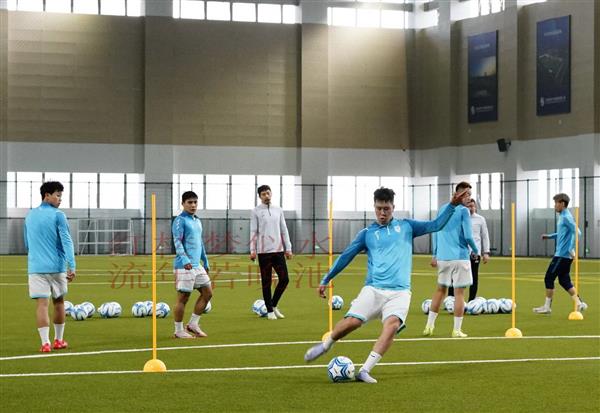
Pu Wei has been involved in youth training since 2018, having served as head coach of the Shanghai Football Association's elite U11 men's team and Shanghai University's high-level women's soccer team.
Over the past five years, Pu Wei has found that the gap between Chinese women's soccer and the world's top teams is not just a matter of other countries' concerns and copying the established men's soccer system. More importantly, it is the teachers, parents' attitudes and selection patterns of Chinese soccer.
coaching for a living
Pu Wei used her own experience as a reference. "Take me as an example. From the junior team, youth team to the national team, all the coaches who taught us along the way are retired. They have a background as professional athletes and have a deeper understanding of soccer."
Now, after the announcement of the soccer reform plan, the popularity of school soccer has increased, and the number of people involved in soccer has increased both on campus and in the stadium. On this basis, there is a growing demand for good coaches at all age groups.
"With this trend, the growth of good teachers lags far behind the number of popularizers. I see a lot of coaches who are general soccer enthusiasts leading their teams with passion and enthusiasm, but some of the more specialized stuff may hit a knowledge blind spot and can't be imparted to the players."
"For example, what kind of techniques need to be used in what scenarios, how to adjust mentally in difficult situations, how to get ahead, how to fall behind, how not to be humble, these more detailed scenarios are taught. If the coach does not have a clear and accurate perception, how can the child integrate further growth?"
If a soccer boy is compared to a budding rose, then without a grower who is familiar with the properties of flowers to cope with cultivation in a variety of complex environments. How can a rose in a flower bed blossom successfully and where are the hundreds of flowers?
In 2019, FIFA released the Women's Football Survey. Compared with the number of registered coaches in each country, the United States has 172,070, England has 65,421, and China has 56,551. Looking at the number of registered coaches, there seems to be little difference between China and England, but the threshold for coaches is even lower considering the E-level coaching certificates that are not available in the CFA and other countries. With the same level of statistics, I'm afraid that China will have even fewer excellent coaches.
Having more soccer seeds is gratifying, but in the barren soil of Chinese soccer, they need more professional cultivators to successfully break through the soil.
In addition to the lack of enough good coaches, parents' attitudes towards soccer can affect their children's development, and the invisible pressure can have a detrimental effect.
When U11 led the team, Pu Wei felt firsthand the desire of Chinese parents for their children to look forward to becoming dragons.
Many parents require their children to learn soccer, which means they are determined to pursue a professional career. They have the mentality that you have to get a return on your investment, which is quite common.
"My idea is to get kids to try more sports. Parents should be the child's guide, not the decision maker. Once the child has a sense of independence, give the final choice back to them."
This year, a child on a CFL U17 team was placed on the training roster. The parents immediately called around for help from familiar coaches, asking how to resolve the situation and if they needed to express something to pave the way for their child's future.
Naturally, Pu Wei talked about the most topics or selection. Whether it is men's or women's soccer, down to the least year team, up to the national team, can never escape a topic - performance.
In the pursuit of championships, youngsters who develop early and are physically fit will be the first choice for coaches at all levels of the ladder and youth training. "These kids who are currently physically superior may not be superior in the future."
In Pu Wei's opinion, engaging in youth training should be a long-term process, step by step progress, rather than giving up the future for the sake of immediate small profits, otherwise it will be too utilitarian.
Known as the female Xu Genbao, Shanghai coach Qian Hui, who has trained international players such as Zhang Ying, Ji Ting, Tang Jiali and Zhao Lina, was deeply moved.
In a conversation with Coach Qian in 2020, she remembered a former student: "In training, this child was the best physically among those players. But once she played, she was always slow, timid and afraid to move forward. I encouraged her many times to be brave, but I really couldn't change it. Later, I really didn't kick out. I had to choose to continue my studies. Now I'm graduating from college."
West learns from the East, West learns from the East
To bridge the gap with the strongest teams in Europe and the United States, as many as 14 women's soccer players have traveled abroad since 2021, in ten countries on three continents.
Coincidentally, Pu Wei was one of a similar group of Chinese women's soccer players who studied abroad at their peak after the World Cup more than 20 years ago. She joined the Washington Freedom.
In comparison, less than 30% of players could study in the Big Five and in the United States. At that time, as many as 10 international soccer players went to the American professional league, which represents the highest level of the league. They could all receive many offers before transferring.
"Our study abroad at the time was basically a two-way street. Others could choose us and we could choose the club." Pu Wei said. There was nothing wrong with the vision of the American clubs. After studying in the U.S., many were able to get their feet wet and stand as starters.
There is no doubt that strength is the deciding factor.
However, the next few games were dismal but brought into question the significance of this study abroad?
The Chinese women's soccer team finished in the last 8 of the 2003 World Cup. At the 2004 Olympic Games, the Chinese women's soccer team failed to qualify.
Is studying abroad really a formality?
Pu Wei, who was a witness, recalls the scene and says it wasn't like that: "For one thing, a lot of the players were about to retire after studying abroad, and there wasn't enough time for them to show off, coinciding with the turnover of the old and the new."
Liu Ailing, who returned from her stay in the United States, announced her retirement at the end of 2002. Sun Wen also announced her retirement in 2003.
"Secondly, the relevant authorities at that time did not pay as much attention to veteran players as they do now. Veteran players retired after retirement, the subsequent transition to re-employment was not done well, and what they learned studying abroad was not properly utilized."
This past experience is still relevant in the present.
So what exactly is the value of staying in the game?
"Studying abroad should be for yourself (to improve) and then you can have a team to improve. I hope that young players who have the opportunity will go out more and go anywhere, even if they can't reach their desired destination at once." This was Pu Wei's answer.
On the pyramid of professional soccer, very few people stand at the top and make the national team.
You may wish to set your aspirations to the end of your journey and use study abroad as a means of transportation to move forward. Some people choose to walk, some choose to bike, and some choose to fly. Each person's choice of platform and team affects the direction and distance to follow, and ultimately the time of arrival, sooner or later.
Don't change your rhythm because someone else changed it long ago; choose the path that is right for you before you love the path you choose.
As for the subsequent fans' concerns about the Chinese women's soccer team's game results and when the resounding roses will once again ascend to the highest stage, it should actually be the natural result of each individual's progress. A group of people can be changed by just one Wang Frost and Tang Jiali.
So please give the Chinese women's soccer team more time.