

Before the start of the group stage of the U20 Asian Cup, no one was optimistic that the U20 national football team would be able to get out of the group in the "Group of Death".
And the team is also used to being eliminated early in a losing effort before the second match against Saudi Arabia...
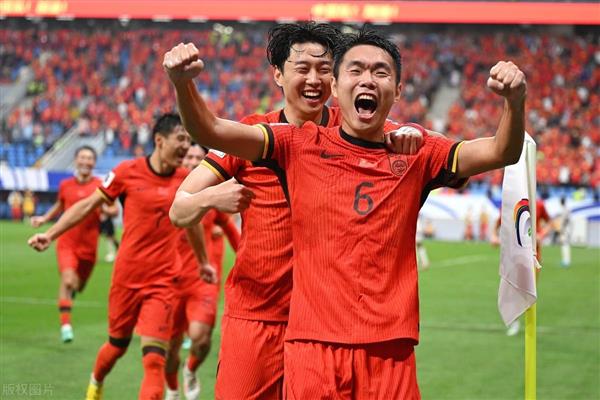
The Chinese team slid to their knees in celebration after the match.
But this time, the youngsters redeemed themselves against Saudi Arabia, beating the defending champions 2-0 while keeping a firm grip on the group.
A win over Kyrgyzstan in their next match will be enough to get them out of the tournament - but the U20s still need to find the right position ahead of the do-or-die game and refuse to be taken lightly.
China's stats were at a disadvantage throughout the game.
give up possession of the ball (idiom); to give up the right to control the ball
24.1 percent to 75.9 percent, that's the percentage of possession for both China and Saudi Arabia in this game, and China also trailed dramatically in shots, 8-16, but the U20s ended up winning 2-0.
Overall, China basically adopted the tactic of handing over the ball and steadily counterattacking in their first two group games against strong opponents Japan and Saudi Arabia.
According to other key statistics, China is also in a total slump - 183 passes compared to 558 for their opponents; only 47% passing accuracy for China compared to 83% for their opponents; 2 corners for China compared to 9 for their opponents; and as many as 16 fouls and 3 yellow cards for China.
In the end the U20s raised their eyebrows.
In fact, in the match against Japan, the Chinese team also lost the technical statistics - possession was only 23%. ; 162 passes to 577; a success rate of passing that was even more than half that of the other team (46.9% to 84.4%); and shots on goal of 4 to 25, and shots on goal of 2 to 9.
Although Antonio is a Spanish coach and is supposed to be a passing and controlling style of soccer, Antonio was very pragmatic in the intercontinental tournament by adopting intensive defensive tactics, first stabilizing the defense and then waiting for a chance to counterattack.
Overall, the defense didn't make too many mistakes in either game - China had chances to score in the first game, with offsides and handball suspected in two of the opponents' goals; but China could have lost the second game as well. Saudi Arabia hit the post with a long range shot in the second half. If the ball had gone in, Saudi Arabia could have opened the door to victory...
They hit the post from long range just outside the Saudi Arabia's Zayed penalty area.
This kind of tactic is easy to understand by showing pictures, so Antonio didn't want to say much after the match. "Saudi Arabia and Japan are two different opponents, so it was impossible to use the same tactics. The Japanese players kept passing and passing and the Saudi players were stronger and more specialized."
"This game needs to be a game as far as specific plays go."
After the win, Antonio still praised his team's performance. "They worked 100% every day and today's result is the best reward and gift. It was an excellent game today and now the most important thing is to enjoy the game."
The U20 national soccer team used a corner kick to break through and face Japan.
Set pieces, clear ideas for counterattacks
Although Japan lost in the first leg, China caused an opponent's own goal with a corner kick in the opening six minutes. This corner kick tactic was obviously well thought out - the center back scuffed high in front of the opening goal, which is a very popular corner kick tactic in international soccer at the moment.
We were also able to score first in the second game after being outplayed, with the team relying on efficient counterattacks - while trailing in shots 8-16, China's offense was much more efficient, going 5-6 in shots, with China shooting more than 50% of its shots efficiently, while Saudi Arabia shot less than 40%.
From a cross, Efirdine substitute Mutalifu grabbed the goal.
For the first goal, Efirdin was able to dribble past a defender and Mutalifu was able to parry and stab the ball into the goal.
The second goal pattern wasn't too different from the first. Efirdin sent a cross straight into the box and Mutalifu stepped forward to cross the ball. This time, Xu Bin's steal extended the lead to 2-0.
A parry breaks through in front of Xu Bin's goal.
From the start of the second half, Antonio replaced debutant Hu Huotao with Mutalifu and it was Mutalifu's cross that helped China to victory.
"Because Hu Hortao had a yellow card in the first half of the year, I replaced him for insurance purposes and I was worried that he would get a second yellow card in the second half of the year."
In the past World Cup in Qatar, the weaker teams hoped to win against the stronger ones. Set-pieces and counter-attacks were the most important weapons. After all, weapons that can predictably make the breakthrough when there is very little possession.
Saudi Arabia coach Mohammadi also admitted that China won with counter-attacking efficiency. "We created a lot of chances in the game but we were not lucky. On the other hand, China had only two chances in the whole game, both on counter-attack."
Li Hao (right) is the goalkeeper of the U20 national soccer team.
You can't take it lightly with Kyrgyzstan.
Two rounds of the group stage are over, with Japan on top with six points, China and Saudi Arabia both on three points, and Kyrgyzstan at the bottom with two consecutive losses.
In terms of the group stage exit scenarios, even Japan could go out - if they lose to Saudi Arabia by two goals in their final group stage match and China wins, or Kyrgyzstan could advance if Japan beats Saudi Arabia and Kyrgyzstan is able to net two goals against China.
However, China controls its own destiny for advancement - according to the rules of the tournament, two or more teams will first compare each other's performances. The most extreme scenario is that China wins the final round, Saudi Arabia beats Japan, and China, Japan, and Saudi Arabia score six points, as China's youth team scores and loses 3-2, and Saudi Arabia (currently 0-2) beats Japan (currently 2-1) by whatever score, with no way for both teams to overtake China at the same time.
So China will definitely go out as long as they beat Kyrgyzstan by one goal; even if they draw, as long as Saudi Arabia doesn't beat Japan, China can still go out of the group.
Even with a narrow one-goal loss to Kyrgyzstan, China can still make it out of the tournament as long as Japan can beat Saudi Arabia.
So all in all, China's fate in the tournament is not only in their own hands, but their prospects are brighter.
However, Kyrgyzstan also performed well in their first two matches of the group stage. Against Saudi Arabia, they lost 0-1. in the second match, they were not at a disadvantage in the first 70 minutes against Japan. It would have been difficult for them to win 3-0 if Japan had not broken the deadlock through a penalty kick.
In the match against Kyrgyzstan, the Chinese team must first of all put an end to the idea of underestimation - in fact, the adult national team does not have any advantage in the match against Kyrgyzstan.
In the first match of the group stage of the 2019 Asian Cup in Al Ain, the national soccer team was down 0-1 at half-time. If the opposing goalkeeper hadn't made a huge mistake on a high ball and put the ball into his own goal, China would have been hard pressed to win 2-1 thanks to Dabao's turnaround.
Secondly, the first two games against strong opponents were mainly counterattacks for the Chinese team. If they win this game against Kyrgyzstan, they can advance. China must focus on offense. The coaching staff and players need to adapt to this short-term switch in tactics.
Meanwhile, Antonio is prepared, "It's going to be a very tough game, they defend very well with their 532 formation."