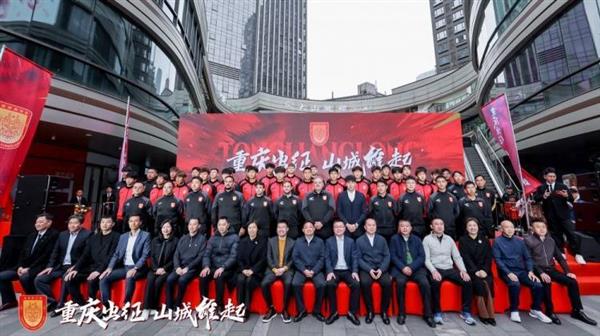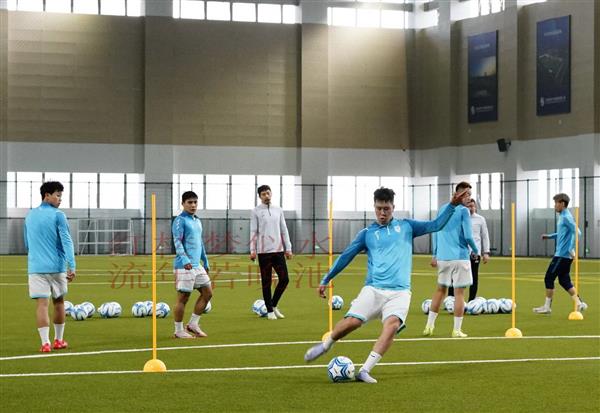


The 2023 Professional League Club Heads Meeting and the Summit of the Heads of Chinese Super League, Chinese First Division and Chinese Second Division Clubs were held at the Xianghe National Team Base. At the meeting, the CFA and the preparatory group of CFL announced various policy programs for the 2023 season. Among them.
The Chinese Super League resumed the home and away match system, canceled the u23 policy, the Chinese League A and B allowed relocation and other new policies attracted attention
Think about the new U23 policy of the United States
The elimination of the u23 policy has been met with a great deal of emotion. This policy began in the 2017 season. At that time, Chinese soccer was still in the bubble expansion stage of the "Golden Dollar Era". Under the support of super foreign aid, the Chinese Super League clubs' external performance soared. But the national team's performance dropped significantly, and the problem of lack of successors gradually appeared.
Therefore, in the 2017 season, the Chinese Football Association and the professional league management department officially launched the "new policy on u23 players". 1.0 version of the u23 policy requires that in the registered 18-man list, there must be two players under the u23, and one of them must start. But there are policies and there are countermeasures. In the face of victory and defeat, the interests of the team and the interests of the Football Association are not the same.
In the first match of the 2017 season, Guizhou Zhicheng started a new match in Shenyang, Liaoning. In the opening 17 minutes, Liaoning replaced u23 player Wang Qiao with Wang Liang, who was on the pitch for 10 minutes. After that, this kind of operation proliferated throughout the Chinese Super League.
March 12, 2017, Henan Jianye vs Liaoning Kaixin in the second round of the 2017 Chinese Super League. Sang Yifei replaces Wang Qiao in the starting lineup.
In response to the club's response, the FA has a new policy. 2018 season 2.0 version of the u23 policy from "18 registered players list must have two players under u23, one of which must start" to "the number of u23 players shall not be less than the number of foreign aiders, each team must start at least one u23 player", if you want to use more foreign aid, you must use more u23 players. Each team must start at least one u23 player", if you want to use more foreign aid, you must use more u23.
But in fact, when it was actually implemented, this version 2.0 was offset by other policies. For example, some players selected for the national team could reduce the number of U23 players, so the top teams in the league were largely unaffected by version 2.0 of the U23. Instead, mid- and lower-tier teams had to make huge shifts between foreigners and young players. In the middle of the 2019 season, the U23 policy was revised to no less than one U23 player per team. The very fact that the overall operation of the league has to be modified every season, even in the middle of the season, shows that it is unreasonable.
August 9, 2017, Shanghai Shenhua 0-3 Guizhou Hengfeng Zhicheng in the 21st round of 2017 Chinese Super League. Xu Junminmin.
Around the u23 policy, there are also many strange phenomena. In addition to the young players mentioned just now, there are also "23-year-olds playing in the starting lineup, 24-year-olds retiring". This is of course an exaggeration. But it does illustrate the different opportunities for some young players between the ages of 23 and 24. For example, in the 2017 season, Xu Junmin, a player who benefited from Shenhua's u23 policy, made 14 starts for the team. After 15 appearances, he lost the protection of the u23 policy because he was over 23, and then had no chance.
There is also the inflated value of young players. In order to ensure the overall level of the team, a handful of high-level young players have become hot in the eyes of clubs. Their transfer fees and salaries have increased significantly. Some media believe that this is one of the reasons for the lack of enthusiasm for young Chinese players to study abroad.
Do young people lack opportunity or ability?
Objectively speaking, the U23 policy has given some youngsters a chance. For example, Zhang Yuning, He Chao, Wei Shihao, Yang Liyu and others have become the main force in the music department, and even entered the national team. But again, excellent young players do not need the support of the U23 policy, unqualified young people even with the U23 policy can only "bleach".
On October 31, 2009, Beijing Guoan won the league title in the final round of the 09 Chinese Super League, and 22-year-old Huang Bowen has become the team's main force
We take the truest World Cup qualifiers as our measure. The average age of the 27 players in the Li Tie-coached national soccer team for the first Qatar world qualifier was 29.56 years old, with as many as 16, or more than half, over the age of 30. Only Zhang Yuning, Wei Shihao and tomorrow have three players who have received the U23 policy dividend. Among them, it is still controversial whether tomorrow's ability is qualified. Moreover, this team currently has no U23 school-age players.
As a matter of fact, the history of Chinese soccer is not short of cases of standing out at a young age. Zheng Zhi won the honor of Chinese footballer at the age of 22. Hao Junmin played for TEDA at the age of 18, Wang Dalei was the starting goalkeeper for Shanghai United at the age of 17, and Huang Bowen broke the record for the lowest age for a Chinese Super League player at the age of 16 at Guoan and scored goals as well!
So, is the problem with youth training in Chinese soccer a lack of opportunities for young people? No, it is the lack of ability of young people. I don't want to solve the problem at its root, but rather I want to use the power of policy to make already weak players stronger the day after tomorrow. Do you think this is Marvel Comics' Captain America? Canceling the u23 policy can only be inevitable in the history of Chinese soccer.