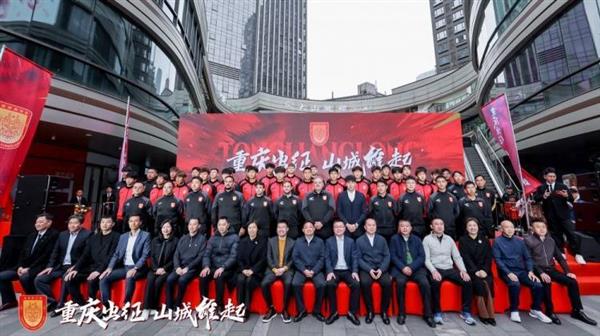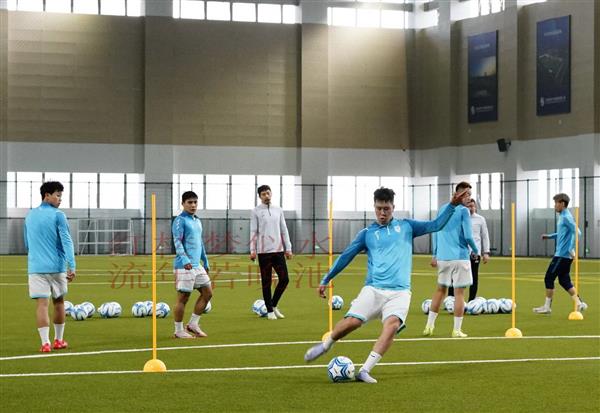

By the evening of February 1, Chang'an Athletic Club had recruited a total of 7,000 members, the exact amount of money is not known, there must be tens of millions of people. The management of the club also breathed a sigh of relief, 10 million to operate a team in the first division is obviously not enough, but with this money, we can solve the urgent problem of "salary arrears", first through the level of access.
There is only one completely independent club in China like Chang'an Athletic. One of the independent clubs in Chinese soccer is also from Shaanxi. Its name is Guoli. So far, I know that the club that invests a lot of money in a single season but makes a profit is also from Shaanxi, and its name is Chanba. Its name is Chanba, and in the 2011 season, Chanba was recruiting. However, because the club received so many sponsorship contracts that year, it found a surplus at the end of the year. This is real profit, not the same as the so-called profit in Shanghai.
Shaanxi Guoli has stuck around for nine years, and this is Chang'an Athletic's eighth season. In terms of results, Guoli has entered the First Division, Guoli has entered the First Divisiona, and Chang'an Athletic's cobbled-together lineup has never felt the pressure of relegation since entering China's First Division, placing in the top six for two consecutive years; in terms of years, self-sustainability is certainly tough, but it's not too short-lived. Those clubs with their backs to the wall, such as the rich and powerful Suning, lasted only five years.
It turns out "speculation" is the right way to go.
Shaanxi Guoli, Chang'an Athletic more professional than Suning? In the early years, there was a vulgar expression for Li Zhimin of Guoli and Xu Hongtao of Chang'an Athletics, who were called "empty gloves". There was no industry behind them. They tried to make a profit from soccer and were easily labeled as "speculators".
Now let us calm down and rethink this issue. I am afraid that those clubs that are losing money year after year and investing huge sums of money year after year without regard to market returns are pseudo-professionals. Yes, Chang'an Athletic is now struggling on all sides. Xu Hongtao is looking night and day for the intervention of the major shareholders, but isn't the main reason this club can't get the pot started the fact that other clubs don't talk about martial arts? If all the clubs in the Chinese Super League were on a self-financing path, the overall operating costs would fall. Maybe Xu Hongtao is drinking to nourish him now!
I'm not friends with Xu Hongtao, we even have some mustard with each other, but I admire him. He pulls together lineups at minimal cost that are good enough to play in the Central League. That was his expertise. At that time, Shaanxi Guoli was also a miracle, somehow killing the first division, but it was actually finding the right quality and cheap coach and the right quality and cheap players, isn't that the core of professional soccer?
At the time, Li Tie led Hebei Huaxia Happiness and Wuhan Zhuoer into the Chinese Super League and established a juggernaut status, a legendary scenario of coaching a national soccer team and moonlighting in Wuhan on a $30 million salary. Can this really be evidence of his professional competence? Who doesn't know how to spend money, and who doesn't know how to do business that costs money but isn't afraid to lose it? Give Hebei Huaxia Happiness over that one year's investment to Xu Hongtao, and Xu Hongtao can support the Shaanxi team for 20 years. For Li Zhimin, Li can make sure Guoli won't be relegated in the top league for 10 years. But if you give Guoli and Chang'an Athletic's stall to the professional managers who flourished and tyrannized a few years ago, I'm afraid they won't last even six months.
And the most important point is that today, when the reputation of Chinese soccer has fallen to a low ebb, Chang'an Athletic recruited 7,000 members in three days and took out real money to support it. Xu Hongtao does not dare to guarantee how long the team can survive. Ren Ran of Yangkan's company paid 10,000 yuan for a five-year ticket, saying, "I am an eternal fan of Shaanxi Chanba. What kind of emotional connection is this between a soccer club and its citizens? If you think this is exaggerated, let me tell you, Shaanxi Goliath and Xi'an are 100 times more integrated than Chang'an Athletic.
Who is more like a professional club? Hebei Huaxia Happiness and Wuhan Zhuoer, who once spent a lot of money, disappeared, and Shaanxi is still alive.
No bailouts. No bailouts.
After Shaanxi Changan Athletic's share reform was blocked, I witnessed the frustration and helplessness of the club's management. Shaanxi fans often complain that "Shaanxi lacks strong enterprises". In fact, there are not many companies that run a Chinese League One team in Shaanxi. The key question is, let people control the soccer club first, give a reason?
Is Guangdong's economy developed enough? Now that three clubs - Shenzhen, Guangzhou City and Team Guangzhou - are in an existential crisis, it's not surprising that any of them have disappeared. According to Phoenix Sports reporter Feng Zhen, "We have yet to see any rescue documents issued at the government level." Even if there is government coordination, companies may not buy. Wasn't the failure of the Hebei club's equity reform promised at first, but then yellow? Tianjin club equity reform success, but the premise is to catch the chairman, general manager, good guy, with the state's money poked more than 1 billion holes.
From a business perspective alone, it would be irresponsible to force any state-owned enterprise to take control of the soccer music sector, which is itself a money-losing business. Investing in soccer also lacks a positive direction if you look at it from a social and branding perspective, which is a major difference between the present and the AA era. The top players of that time were city heroes, now the pros are no longer icons.
How to go professional in Chinese soccer? Let it fend for itself? My answer is "yes". Letting it fend for itself is not only the most in line with the law of the market, but also the only way to let professional soccer out of the way of life.
Professional soccer in China generally takes two forms, the first is state-owned enterprises spending money; the second is private enterprises consuming state resources through soccer needing policies.29 years of professional soccer is actually supported by state funds and policies. When our players say they make money in the market they are very ignorant.
In other words, Chinese soccer has never been truly professionalized, and naturally cannot find a suitable path to self-financing. There is only one way. Throw yourself into deep water and flop. If you die, you die. If you live, the road will come out.
Let them suffer.
Over 2,000 words and I haven't expressed my anger yet, now it's into swearing time.
In 2006, I interviewed Nie Weiping, and I asked him why Japanese Go had not improved. Nie's answer was succinct and comprehensive, "They are too comfortable." There are seven title wars in Japan, and the Chess Sage has a winner's purse of more than $300,000, much higher than the world championship prize. Is it like Chinese soccer?
At that time, the Korean "zombie stream" represented by Lee Sedol killed Chinese players. We were playing chess and people were fighting for their lives. Later, after the rise of the 90s represented by Ke Jie, the zombie stream was completely suppressed, because these 90s players were all trained in the dojo. Entering the dojo from a young age, they faced tough matches, rankings, and struggles every day. When Ke Jie meets a Korean player, he is afraid that his opponent will not struggle. If you fight, I will fight better than you. This is a professional game. If I win, I can live a better life.
The other day I read the news, "99% of Chinese actors don't earn much", "actors' income has shrunk by more than half in the past three years", "a few years ago Zhang Songwen couldn't even afford to buy a house in the county town". . This is the truth of life. But Zhang Songwen's acting skills are there for all to see. If he acted badly and could make a lot of money, he would never have played Gao Qiqiang so vividly.
Deng Chao is a top tier star. He made a Chinese ping pong movie. For non-technical reasons, he missed the Chinese New Year and bit the bullet and swallowed it. I attended their first internal screening. After the movie, they interacted with the audience. I sat down and got dizzy for almost three hours. They stood on stage for three hours of pure physical labor. Later, there were a dozen other similar roadshows.
This movie is really good, and like Champion, has great word of mouth and a high platform score. Unfortunately, we all know that Lang Ping is the character who wins the championship. Everyone in Chinese table tennis thinks it's a tournament, a cockamamie tournament, and is resistant to the theme, which is, in fact, life. But having missed out on the publicity, they can only bury their heads in the sand and move forward, the box office can't be faked, and it has to be recognized regardless of whether or not it ends up being a Jedi comeback.
No matter how badly Chinese soccer loses out there, they make a lot of money. Where is the incentive for them to improve their studies? "We are the best in the Chinese soccer industry, high salaries should be taken for granted" Even if you lose to Cambodia, high salaries will be high as long as the club makes a profit. The problem is that all the clubs are losing money. In recent years, more than a dozen clubs in China have closed down. Why would you want to earn a high salary?
Who told you that if you play professional soccer, you will definitely make a lot of money. Don't fixate on Melo Neymar. The main players in the four leagues make less than a million dollars a year is the majority, the average salary in the Japanese j league is over 1 million dollars. Salary cuts and arrears are the norm in Chinese soccer now, and will be worse in the future, worth your level of competition, market reputation and the state of the industry.