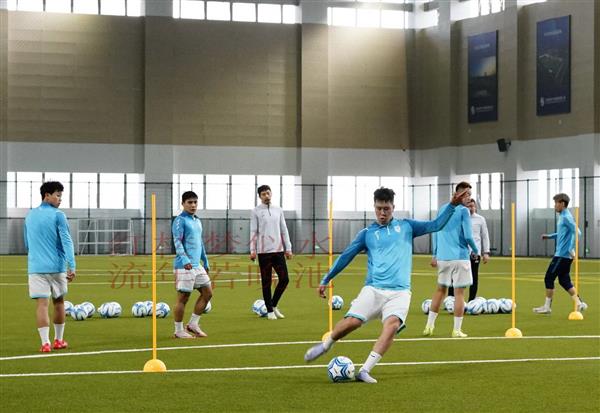


In an interview with Xinhua News Agency, Schlapner, the first foreign coach of the national soccer team, who is nearly 80 years old, recalled his experience of coaching in China and made suggestions for the development of Chinese soccer.
In 1992, the Chinese Football Association (CFA) extended an invitation to him and he officially became the head coach of the Chinese men's soccer team in the same year. "Curiosity drove me to China and although I had the opportunity to go to other familiar countries or clubs, I wanted to learn more about this country. I also wanted to leave this country with some positive impact. Some of what I did was recognized and some was not understood at the time. For example, in warm-up matches, to increase the intensity and polish the style, I had the team play 9 to 11, working out less and more. Some people thought I deliberately humiliated my opponents."
In the 1992 Asian Cup, China lost to Japan in the semifinals and finished third, and Schlapner became famous at the 1993 Spring Festival Gala, where he was used in the comic strip "Auctioning Uncle Shi's Hair" by Niu Qun and Feng Gong. In 1993, China lost to Yemen and Iraq and failed to earn the right to qualify for the 1994 World Cup. Schlapner officially resigned in 1994.
After that, Schlapner for Yang Chen, Xie Hui and many other Chinese players to German clubs. "Staying in the ocean" matchmaking, but also for Chinese coaches to Germany to further their education. "At first, Yang Chen came to Mannheim to train. In a friendly match, Frankfurt club staff noticed him. Later, Yang Chen had a successful trial and created a world in Frankfurt. Xie Hui joined Aachen and then went to Fürth. He can speak German and English. This shows that Chinese players have the strength to establish themselves in Europe."
"If the national soccer team continues to develop on the basis of 1992, it must be the top level in Asia and can also take its place in international soccer." Schlapner said, "Including women's soccer and youth, I am willing to provide advice for Chinese soccer."
"To bring and show the face of international soccer to China and to advise our Chinese counterparts to think more about the overall and long-term development." Schlapner said, "If our Chinese counterparts have any questions, we can always talk, including professional club operations and so on, when this is something completely new in China."
Over the years, Schlapner has learned about the groundwork of Chinese soccer through various channels, such as whether there are mature amateur leagues and the development of soccer in schools. In his opinion, one of the detours that Chinese soccer has taken is to focus too much on making money and distributing it, while neglecting the grassroots work.
"I have participated in some school soccer programs in China, made reports and lectures, edited manuals, books and so on. We should establish and improve the school league system. I am not referring to tournaments, but regular daily training and teaching matches. Young players should have ideal ambitions, learn self-discipline and examine their lives every day. Players should have a strong sense of national honor and patriotism. Chinese soccer does not need to invite foreign players who only play soccer for money. Many of my Chinese counterparts have kept in touch with me over the years, and we would like to recall the past when we worked together in difficult conditions many years ago."