

When the Qatar World Cup came to an exciting end in 2022, the Chinese Super League was still struggling in the cold winter. In this year, there are not many Chinese soccer like the Chinese women's soccer team won the Asian Cup, but one after another, Chinese soccer is still like chicken feathers, which makes the fans lose the courage that even fantasies are gradually losing.
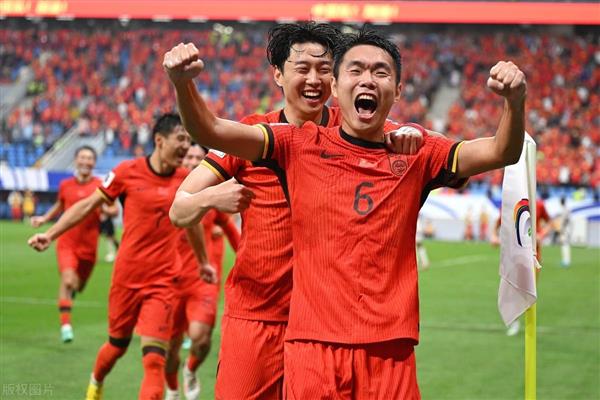
The national soccer team lost 1-3 to Vietnam, completely disqualifying them from the tournament.
For Chinese fans, the biggest depression may not be the fact that Chinese soccer is unable to share the joy of success in a short period of time, but that the pain is further aggravated after Chinese soccer continues to break through the lower limit. On February 1 this year, the Chinese men's football team lost to Vietnam for the first time in the 8th round of the Asian Zone 12 of the World Qualifying Tournament in Hanoi, Vietnam. If 1 win, 3 draws and 6 losses in the Top 12 was a predictable result for the national soccer team to miss the World Cup final round for the fifth consecutive time, such a defeat would have been even more humiliating for the national soccer team. It is with such shame that Chinese soccer began its journey to the Year of the Tiger in the Lunar Calendar.
In recent years, Chinese soccer has become increasingly difficult amidst a mix of difficulties and challenges. While the Chinese Super League is doing its best to maintain the integrity of the game, the game has suffered a crisis due to a variety of primary and objective reasons. More frightening than the schedule, the game system is affected by objective factors repeatedly adjusted, is the "aftermath of the golden dollar soccer" various symptoms continue to attack in this extraordinary season. From the actual results, a considerable number of professional clubs continue to be unable to make ends meet, and it is difficult to fill the huge loss loophole. Individual clubs were deducted points and penalized for failing to repay their debts in the required installments. Hebei's record 24 consecutive defeats and the shift from positive to negative league points not only embarrassed the club, but also brought shame to the whole of Chinese professional soccer. Next, how many clubs face relegation, disqualification from admission and other penalties because of their inability to repay arrears? Will the construction of professional league scale at all levels be affected next year?
Eight champions Guangzhou team relegated "golden dollar soccer" the best portrayal of decline
Among the many keywords related to Chinese soccer, credibility is undoubtedly a heavy weight. The pomp and circumstance of Chinese professional soccer suddenly disappeared after the ebbing of gold-dollar soccer. A famous international coach, when the stars left, they left huge wage orders to the clubs. At this point, no one sympathizes with the huge effort without cost. The "arms race" of club investors and the failure of clubs to pay their debts not only exacerbates the debt, but also pushes the domestic league into international professional soccer. These harsh realities of the "blacklist" have made domestic soccer players who have worked hard to build the Chinese Super League and the Chinese First Division feel aggrieved and saddened. Inevitably, this will be followed by a diving drop in revenue from the league's media rights.
There is also the need for the national soccer team to regain its credibility. Unfortunately, when the World Cup in Qatar came to a successful conclusion, the Chinese team, which had been "idle" for more than eight months, was still unable to confirm who would lead the team in the tournament year next year. As industry managers, the CFA is understandably anxious. They know better than anyone that it is urgent for the national soccer team to start a new cycle of preparation. However, the team has been battered and bruised after the onslaught of the last cycle.
What's more embarrassing is that Japan, South Korea and Saudi Arabia beat the world's best teams in the World Cup, while the national soccer team is caught up in the whirlpool of former coach Li Tie being investigated for allegedly committing serious violations of the law, and the gap is too wide. The answer to the question of who is involved in Li Tie's case, what levels are involved, and what impact it will have on Chinese soccer remains to be resolved. Will the national soccer team choose a foreign coach or a local coach next? If you choose a foreign coach, what kind of foreign coach should be chosen? All these issues need to be carefully considered by decision makers. In a sense, the national soccer team wants to get back on track, not only need to be improved in the technical level, but also need spiritual healing.
Of course, it's not as if Chinese soccer is useless in the upcoming 2022. For example, shortly after the national soccer team lost to Vietnam for the first time, the Chinese women's soccer team, led by Shui Qingxia, won the Asian Cup in India. In contrast to the Chinese men's soccer team, which was in a deep slump, the Chinese women's soccer team seems to have returned to its normal track of development. Equally gratifying is that the 2003 Chinese u2006 Chinese age group men's football u Later this year, they were given 17 men's football. u20 Asian Cup, u17 session of the Asian Cup final tickets, to a certain extent, to alleviate the crisis of the interruption of the delivery of national-level talent. However, Chinese soccer is difficult to return to, expect them to go farther in this year's debut tournament is unrealistic.
In 2022, the Chinese women's soccer team is a rare bright spot in Chinese soccer.
In addition, domestic professional soccer has shown resilience despite difficulties and obstacles. It is gratifying to see that the u21 league has provided useful personnel additions to the first team professional league during difficult times. It is also gratifying that Ma Ning, Cao Yi and Shi Xiang, as representatives of the best local referees nurtured and trained by the Chinese Super League, are among the Qatar World Cup refereeing lineup, earning glory for Chinese soccer.
When the technical points of the Chinese Super League has fallen to 15 in the AFC League Technical Ranking List, the key to stopping the loss of Chinese soccer is to improve the league and strengthen the foundation of youth training after the unsuccessful formation of the inherent law of the national football team. But can Chinese soccer have such patience?