

(journalism) lede
Chen Xuyuan needs to take the responsibility he should, but his thin body can't take all the heavy responsibility. The problem of Chinese soccer has never been a pure soccer problem. If we only discuss Chinese soccer within the framework of soccer, we seem to be too simple and naive.
At the end of the year, Chinese soccer is still struggling with chicken feathers, waiting for the dawn of the New Year. Compared to previous years, the situation shows no signs of improvement, but rather a dive into the abyss, accelerating with both feet.
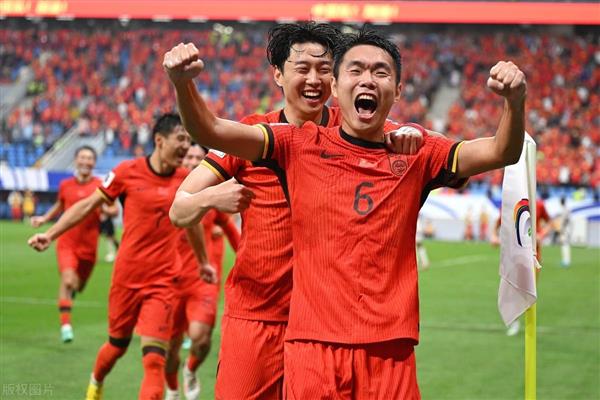
The Chinese men's soccer team has completely disappeared from the public eye in this chaotic year since the end of the top 12 tournament. The World Cup hoopla has nothing to do with Chinese men's soccer. There is no doubt that the epidemic was an x-factor, but it is clearly unfair to shift all the blame to the epidemic.
Former national soccer coach Li Tie has been taken away for investigation on suspicion of serious violations of the law. According to media reports, Li Tie is also involved in other soccer players. Years from now, we may once again witness the anti-corruption and anti-mafia storm in Chinese soccer.
The Chinese Super League is also waiting for the arrival of the last play. The Evergrande dynasty, which once created countless glories, has collapsed, leaving a lonely backdrop for the times. The champion could be born in a very dramatic way. These two championship teams may have finished their last game of the season. Affected by a massive fever, the Chinese Super League was abandoned by several teams in the final stages. While waiting for their opponents to forfeit their matches, the championship teams are waiting for the final word on their ultimate fate.
Just before the penultimate round of the crucial war began, Wuhan Sanzhen issued a condemnation of the CFA and said in a statement that they should uncompromisingly fight the dark forces of the CFA. The CFA's response was quite timely, which was justified by asking Wuhan Sanzhen to submit relevant evidence.
Just a few days ago, the CFA also publicly penalized the Guangdong Provincial Games for match-fixing. Xie Zhiguang, president of the Guangzhou Football Association, Wang Yajun, president of the Evergrande Football School, Zhang Xiuyu, vice-president of the Evergrande Football School, and Cai Guanghui, director of the Player Management Department of the Evergrande Football School, were engaged in any football-related activities under the management of the CFA. This result is alarming because match-fixing has penetrated to the youth level.
Chinese soccer has long been trudging through the mud, but it has never seemed so porous. The cold winter for soccer players seems to have just begun. They can't hear the footsteps of spring.
At the World Cup, our neighbors Japan and South Korea have achieved great things around the world. Even old rivals like Saudi Arabia and Australia performed well, highlighting the embarrassment of Chinese soccer. In addition, Chinese soccer has been humiliated by embarrassment not only at the national team level but in every aspect of the game.
In addition to the Chinese men's soccer team, Chen Xuyuan, the president of the Chinese Football Association (CFA), has been out of the public eye for a long time. One of his capable generals was fired back in late October. All indications are that it's highly unlikely that Chen Xuyuan will stay in his post, but we don't have any accurate news about the change of CFA.
There is no doubt that the problems with Chinese soccer are comprehensive and many practitioners who have immersed themselves in it are to blame. How many people are seeking personal gain in the name of soccer. Li Tie and others may just be the tip of the iceberg. We don't know the silent iceberg hidden underwater.
Chen Xuyuan needs to take the responsibility he should, but his thin body can't take all the heavy responsibility. The problem of Chinese soccer has never been purely a soccer problem. If we only discuss the problems of Chinese soccer within the framework of soccer, we seem to be too simple and naive.
Many articles have discussed the rise of Japanese soccer. In the final analysis, the path of development of Japanese soccer is clear and simple: follow the laws of development of soccer itself and consistently implement the set strategies.
Chinese soccer tried to learn from Japan, but never learned the skinny. A fundamental problem is that Chinese soccer has never been a simple professional soccer. There is an invisible hand directing both the national team and the Chinese Super League. The president of the Football Association is by no means the absolute leader of Chinese soccer.
The Chinese Super League is not a purely commercial league and it faces countless restrictions. Take the reinstatement of home and away matches this season as an example, the Super League has made a huge effort but very few matches have actually been accessible to fans, while also encountering a lot of resistance.
The Chinese Football Association (CFA), which is modeled after professional leagues such as the English Premier League and La Liga, still has the word "Preparatory Group" hanging over it. The CFA cannot unilaterally decide when it can actually go public. The unique system of Chinese sports has created many historical problems, many of which have become "dead ends".
Chinese soccer also epitomizes society as a whole. Due to the unique position, high level of interest and influence of Chinese soccer in the eyes of the Chinese people, the resources absorbed are not proportional to its commercial prospects.
As we all know, Chinese soccer is not a lucrative business and it should not be tilted by so many resources. However, there are always some companies that get stuck in the muddy waters with more unrealistic fantasies and their own agendas. Their purposes may be many, but they have nothing to do with trying to improve Chinese soccer. When the real estate industry made great progress, the Chinese Super League had become a real estate league. After the real estate industry went cold, real estate companies abandoned ship, leaving behind countless noises and rotten debts.
Chinese soccer is a huge vortex of interest that applies not only to many businesses but also to many practitioners. Of course, the interests I've mentioned here don't imply the profit potential of professional soccer (which is certainly a bleak prospect), but the opacity of the soccer industry and the threshold of the profession provide obstacles for many to seek personal gain. Fake gambling blacks are popular in Chinese soccer, Li Tie has been taken away and the investigation seems superficial and the "canker sore" may have never really been cleared up.
Where there is interest is the jungle. There are always people who will take risks. This is also in line with the environment of society as a whole. In recent years, the country's anti-corruption efforts have been modest, but enormous greed has never really disappeared. The deep-seated reason is self-evident; huge interests will always become a hotbed of corruption.
In short, the problem of Chinese soccer is a complex and systematic one. Rome was not built in a day. It is not a one-man job. If we cannot truly unbind Chinese soccer from the system and return to the pure nature of the industry, Chinese soccer will invite more foreign teachers and more foreign aid. In fact, learning from Japan and South Korea is very simple, but learning from Japan and South Korea is an almost impossible task.
Next door, China's basketball team has just completed its term as president, with Yao Ming re-elected. But will the future of Chinese basketball be brighter than that of Chinese soccer? In fact, Chinese basketball and Chinese soccer are not necessarily twins. "People's Basketball" China Basketball will be the guiding light of the basketball industry, dancing in heavier shackles just like Chinese soccer.
All wild industries, such as eSports, are doing better; in all regulated industries, the living space has become narrow and chicken feathers are everywhere (except for table tennis and other niche sports). This is the life of Chinese soccer, not just the life of Chinese soccer.