
The World Cup in Qatar has reached the heated semifinals, and once again, Asian teams missed out on the quarterfinals. Whenever fans regret or laugh at the elimination of Japan and South Korea, they can't help but think of the national soccer team.
Since the fall of 2021, Chinese soccer, which has been tethered to real estate companies for years, has been undergoing a transformation with the decline of real estate, the biggest golden industry for Chinese Super League soccer clubs.
In fact, among the 16 teams in the new Chinese Super League season, only Shanghai Port and Shandong Taishan, which are dominated by state-owned enterprises, are still operating smoothly, while the other clubs are cash-strapped and owe wages.
In the past decade, real estate developers have entered the soccer field with money and venues, and large sums of money to recruit Chinese and foreign players and coaches in pursuit of influence in the shortest possible time has become a common model for clubs.
Today, real estate developers generally difficult to protect themselves, Chinese soccer prevailed for more than a decade "golden dollar era" finally ended, once the glory and humiliation, as if overnight into chicken feathers.
lit. stake a high price on achievements
For a long time, when it comes to the national soccer team and real estate developers, two groups that are deeply bound by the soccer club, Chinese people have a surprisingly consistent attitude, love and hate.
From 2010 to 2020, 15 of the 16 Chinese Super League teams have shareholders who are real estate companies.
Such as Guangzhou Evergrande, Greenland Shenhua, Henan Jianye, Wanda Dalianren, Fuli Guangzhou City, Huaxia Happy Hebei team, etc., in the memory of a generation of fans is almost one and the same.
Real estate developers and the National Football League at the time were a mutual achievement.
For example, Henan Jianye, the earliest investor in soccer, has been nearly 30 years since 1994 when it decided to invest in a soccer team. Hu Baosen's investment and love for soccer is not real estate at all. The Jianye soccer team once became a strong team in the Chinese Super League and even the Asian Championship.
Another example is Guangzhou Evergrande, which is known for its pride. Since acquiring the Guangzhou soccer club in 2010, Xu Jiayin has invested about 15 billion yuan in just over a decade to create a "dream team" regardless of the cost.
Despite the grooves, it is undeniable that Guangzhou Evergrande's two AFC Champions League titles are inextricably linked to the strong capital behind them.
In fact, the reason why real estate developers are keen on soccer, in addition to the owner's personal hobby, the greater factor lies in the commercial value brought about by the charm of soccer itself.
As an efficient catalyst for brand communication, the commercial value of world-class tournaments such as the World Cup and UEFA Champions League has never been underestimated.
The sponsorship of the Chinese Super League, AFC Champions League and other competitions is of great significance for Chinese companies to showcase their brand image, enhance their visibility and space for future development.
Especially around 2010, it was the era of rapid rise of domestic real estate. Local real estate enterprises faced tremendous local competitive pressure. At the same time, some real estate companies encountered bottlenecks in local development and rushed to national expansion.
For example, Evergrande is even willing to pay the price of liquidated damages, the private use of "Evergrande Life" to replace the "Dongfeng Nissan" chest advertising space; previously also offered 8 million yuan to buy back a game chest advertising for chest ads; "Evergrande Grain Oil" promotion. Evergrande Grain Oil" promotion.
lit. stake one's claim to earn a living by losing money; a hubbub of gambling
Time has changed and the real estate tycoons who now support half of the Chinese Super League feel alone. Apart from Wang Jianlin's Wanda, which invested heavily in the World Cup a few years ago and became fifa's biggest Chinese sponsor apart from its official designation, most of the rest don't have time to think about soccer.
According to Xinhua News Agency, on February 16 this year, Guangzhou Evergrande announced a collective pay cut for its players, with the main players taking a pay cut of nearly 90%. At the same time, five highly paid naturalized players terminated their contracts.
According to Xu Jiayin's idea, 2022 is the year to realize his dream. According to the plan, Guangzhou Evergrande soccer stadium will be built into the world's No. 1 stadium; the players who invested billions of dollars can also realize the dream of the World Cup of Chinese soccer.
But now everything falls in the fall of 2021. Since then, the Evergrande soccer stadium has been out, changing the investment in the city of Guangzhou, and a large number of naturalized players have had their contracts terminated en masse. Xu Jiayin no longer has time to think about his soccer dreams.
When Evergrande's crisis continues to ferment, the biggest dominoes of real estate fall, real estate enterprises default one after another, the main team also staged a "salary" action.
Soccer Daily even bluntly stated that "wage arrears have become the core contradiction in Chinese soccer."
On Nov. 23, in a penalty notice publicly released by the CFA, many teams that owed wages were deducted six league points, including Chinese Super League teams Shanghai Shenhua, Wuhan Changjiang and Hebei. Hebei scored 0 points at the time and again received 6 points.
And to study carefully, even if the "Wanda Tourism" as always appear in the World Cup, but also a game "beautiful misunderstanding", not from the heart.
In 201, Wang sold 91% of 13 cultural and tourism projects to Sunac for 43.844 billion yuan and 77 hotels to Fortune for 19.906 billion yuan. The 63.75 billion yuan deal became the largest M&A deal in the history of China's real estate industry.
Today, most of the original Wanda culture and tourism projects have been dispersed in the hands of other unrelated companies such as Sunac, and Wanda's business focuses on light assets such as commercial real estate operations.
However, until March 2016, Wanda had a 15-year contract with FIFA, which meant it had the rights to FIFA's top sponsorship from 2016 to 2030.
For 15 years, Wanda has made a significant bid. British data company. globaldata data show that at this year's World Cup in Qatar, Chinese companies became the largest sponsor of the World Cup, sponsoring 1.395 billion $, more than 1.1 billion $.
In particular, Wanda Group is expected to invest $850 million (about $6 billion) over 15 years for the World Cup, sponsoring the next four World Cups at an average of more than $200 million each.
there are no rivers one who has crossed the ocean
Currently, the two Guangzhou real estate companies club, R&F tension and Evergrande Xu Jiayin have very different choices: R&F is likely to completely withdraw from the operation of Guangzhou, while Evergrande decided to continue to operate the club alone.
Evergrande led the gold dollar soccer, now have to choose to use "diving type" low salary to deal with the new season, 15 million annual operating costs are not all used for the first team, including soccer school training.
Hebei used to be a participant of golden dollar soccer. Former superstar Lavezzi was still reminiscing about the good old days at Hebei Huaxia recently. I didn't realize that the team that paid him handsomely has been hanging on to its woes for two seasons and still hasn't waited for stock reforms.
Earlier, it was revealed that the Rivera team was unable to pay their utility bills and decided to stop work and take a vacation. The entire staff shared that they will work for free. Currently, they are planning to gather 11 players to participate in the Chinese Super League at low cost, which is a bit sad.
According to relevant media reports, Shanghai Shenhua, invested by Greenland Group, also has a number of salary arrears, and the team has begun winter training under the guidance of Wu Jingui. The club also hopes to reduce the team's weight and players' wages through equal dialog and negotiation, but the progress is slow.
If internal load shedding is not accomplished, the club is likely to go into the 2022 season with an all-Chinese squad and not be able to bring in foreign aid.
Several other real estate company clubs are also undergoing changes. For example, the Shenzhen team, which owes wages, ended its training in Hainan early, publicly because of Li Zhangzhu's devilish training and the players' self-reported injuries, but the players also had the intention of claiming their wages.
In fact, in addition to Henan Songshan Longmen has completed the stock reform, Beijing Guoan should be the other real estate companies music department is the most calm, although there are also arrears of wages, but the music department early to determine the head coach, and began to sign the work, as can be seen from the rental of Memisevic, Guoan signing standards are not high, and the new season greatly reduces the expenditure.
While Guangzhou and a number of other soccer teams have recently formalized several partnerships, sponsorship revenues still do not allow for strong support from clubs.
Share reform could be a way out, and most clubs want to put it on state-owned enterprises and local governments. Unfortunately, only Shandong Taishan and Henan Songshan Longmen have been relatively successful in their shareholding reforms, while other clubs have been slow in the reform process.
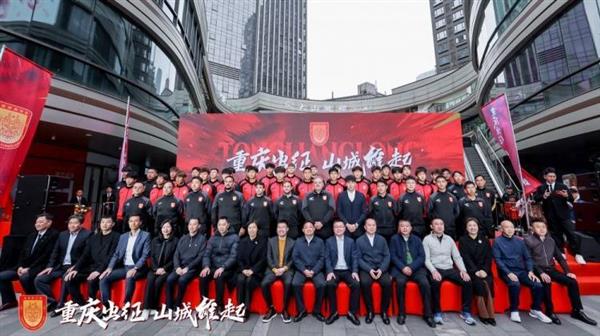
Some industry insiders told the Observer that even these out-of-town stock reform teams, such as the Chongqing team that introduced Chongqing's new national district of Liangjiang and the Henan team that took the opportunity to introduce the local governments of Zhengzhou and Luoyang, are almost always just written reforms, and the funds are not yet fully in place.
"Whenever Chinese soccer is criticized, we briefly focus on youth training." A practitioner at a soccer school said youth training requires long-term investment. At present, the popularization and tournament system of soccer in China is not really perfect and mature. "At the moment, the income of Chinese soccer clubs may be less than 10 percent of their expenses."
Although tied to real estate developers of Chinese soccer by countless fans of ridicule and criticism, but in the real estate developers fell that year, who would like to continue to come up with real money "take over" Chinese soccer, change the development model, change the development model, so that the club market benign operation.