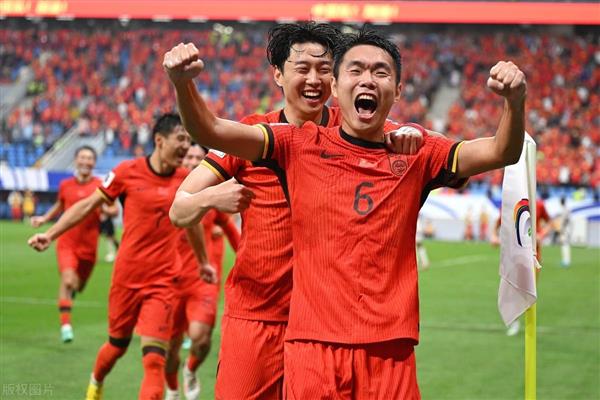


Those two victories qualify as Japan's greatest moments in men's soccer, at least until Monday's match against Croatia.
The Spanish team played well at the beginning. Morata went to the next city first. They always took the initiative until the end of the first half. Japan seemed to lose a bit of it, and it wasn't until the 20th minute that they finally attacked their opponents' hinterland. At halftime, the game seemed to be coming to an end, at least from the perspective of the media seats.
Japan didn't think so. Morimbo wanted to take a gamble and still went with the 5-4-1 formation, but made two changes. Kaoru Mitsunari replaced the defensive-minded Yuto Nagatomo to play left wingback, and Yasutoshi Don replaced the long-term health care provider. The plan was simple:apply pressure.
"It's really risky to defend Morata alone," confessed Maya Yoshida after the game, "and to let these guys have space one-on-one, that's hard to do. But luckily today (we) pressed really effectively and scored two goals right away and then everything changed."
After the 47th minute, Don Angelo capitalized on Simon's mistake to tie the game. The Spanish team didn't seem to wake up. If they intend to practice passing and possession in the second half, they will make a mistake. While the formation was still 5-4-1, Japan was a different team. Instead of helping the defense, the three fumigators supported the front line. He desperately chased a ball that everyone thought he couldn't recover (VAR excluded) and then made a pie for a Bi Tanaka pass.
For Germany, Japan completed the comeback in the 82nd minute; for Spain, they did it in the 50th minute. After that, they held firm to retain the spoils of victory. In the last minute, Allenichi pounced on shots from Asensio and Olmo, but for the most part, he was not up to the task. Instead, Japan's counter-attacks were lively. Takuma Asano should have converted three crosses and made it 3-1. three center backs Taniguchi was well aware of, and Yoshitama and Itakura also had good defensive skills. Some feared they would collapse and lose at the last minute like Belgium did for four years, but this time, they held on.
The Japanese team is full of fighting spirit, organized and level-headed. They play textbook defensive counterattacks and know when to defend, when to attack and when to return. They seem to have suddenly become enlightened and learned how to fight against strong teams.
"Everyone says surprises and miracles, but we really don't think so because it's something we did ourselves," Bea Tanaka said when she stuck around for her post-game interview, "so I'm not surprised."
The biggest difference between this Japanese men's soccer team and their predecessors is their mentality. In the past, the Japanese team came to the World Cup not knowing how to play. It seemed like they were just content to participate in the tournament. They never believed they could beat older teams. That was the case when they lost to Belgium four years ago. This year, many Japanese fans fear a similar episode will repeat itself.
But things have started to change. European clubs now value Japanese soccer talent. Of Japan's 26-man roster, 19 play in Europe, eight of them in the German league. the J-League has only seven players, including Tomotomo Nagatomo (who has been playing in Europe for 11 years) and Redtree Sakai (who has spent a lot of time in the German and French leagues). European players play every week with players from European countries and they are not afraid of these stars.
As a result, when Japan went down 0-1 to Germany, the team never panicked. At halftime, the locker room was calm. Boichi Mori talked about the adjustments made in the second half, changing from a 4-4-2 to a wing-back formation. The players were very relaxed, not nervous, and focused on what they were supposed to do. Mori Bao turned to offense and Japan is capable of winning the game.
Mori Poichi's adjustments also set the tone for their World Cup. Against Costa Rica, Japan did the same thing - after a poor first half, they went from four to three defenders in the second half. But they never fully controlled the game. Costa Rica scored on the counterattack and had the last laugh. At the time, Japan's World Cup seemed to be over. They were not used to playing teams weaker than themselves. However, when they returned to Khalifa Stadium to face another European giant, everything suddenly came back. "Based on the experience of playing Germany, if we were just 0-1 down (in the first half), then we could return in the second half," Yoshida concluded after the match, "We played a desperate comeback, the whole team was energized, and I'm very happy."
Team spirit is a big part of this Japanese team. In the past, Japan has a history of playing around superstars, like Keisuke Honda and Hidetoshi Nakata. But now, they don't have stars of that caliber, and that's a good thing. They have veteran Tomodu Nagatomo and leader Ma Yoshida, but they don't have a superstar or a big name. The three may have bright futures. They are future superstars, but not yet. After moving to Brighton, they have only made two Premier League starts. The highest-achieving player in the squad, Kamada Daiichi, plays for Bundesliga club Eintracht Frankfurt.
But a Japanese team is dynamic, fast, organized and tactical enough to give any opponent a drink, especially those who provide space. Incredibly, the Japanese soccer team won first place in their group on Wednesday night, but Japan deserved it. Now that they are in the knockout stage, the players are determined to fight Croatia like Desi.
They won against two former world champion teams. Who knows how far Japan can go. They are very confident and have found a way to win key games and put it into practice to prove it. They played two of the best games in the World Cup and shocked Spain. Most importantly, Japan showed the crowd that the World Cup is still good, especially when a team comes together to win against the weak.
"We knew from the start that it would be difficult," said Maya Yoshida, "but this is the World Cup, anything is possible, everything is possible, and the result could be good or bad. Our goal is to win the next game, which will make history for Japan."