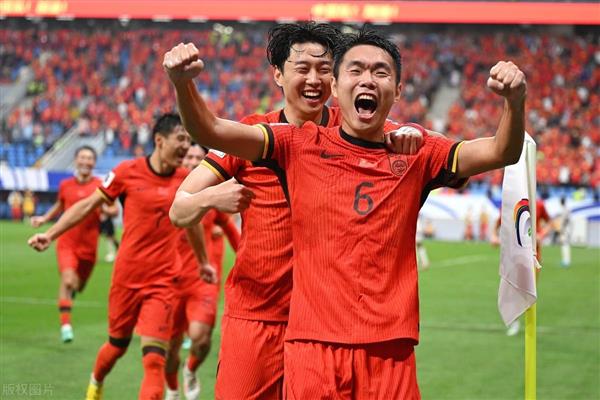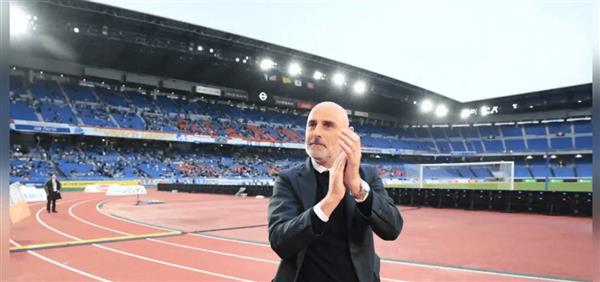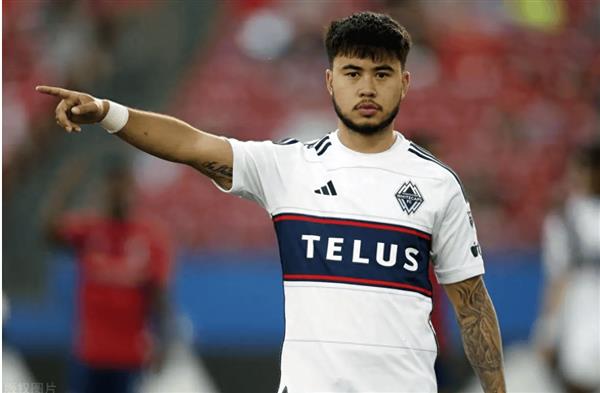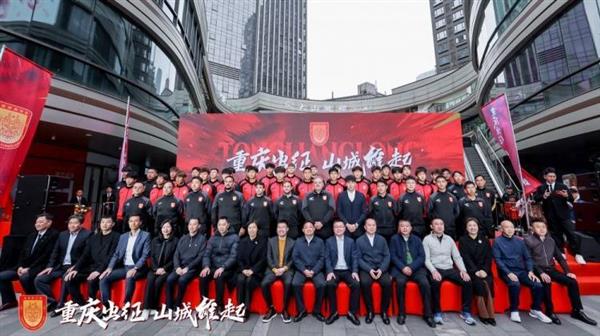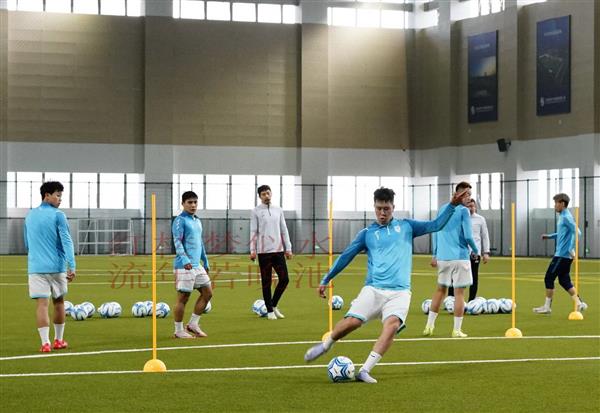

The World Cup is playing lively, the national soccer team can not reach the World Cup, but this does not prevent people from making money.
The happiest are the sponsors, from the stadium to the container in the fan village, almost everywhere are Chinese companies; a TV giant also completed the whole "China first, the world's second" big advertisement, placed on the sidelines for the camera to shoot.
Perhaps because it was so high profile, the tagline changed quickly.
Businesses make money on products and teams make money on status.
Although they performed poorly at critical moments, some of them were able to get more than $10 million a year after several salary limitation orders; as for former chief coach Li Tie, he is a leader in the field of soccer business. He is said to have 100 million yuan in a bank in Shenyang.
Where does the money come from? I'm sure we'll all find out soon enough.
According to public information, former head coach Li Tie is under investigation by the Disciplinary Inspection Committee on suspicion of serious violations of the law. More shockingly, a media outlet also revealed that he has revealed himself. "Confessed" the news of three former international players, one of whom has been taken away, the rest are at risk.
This seems to prove the media rumor in one way - "someone allegedly traded national football eligibility for benefits". Sound unbelievable? But if you look at what he did, you won't be surprised.
According to the sky eye data, Li Tie's related enterprises and soccer have inextricable links. For example, at the end of his coaching at Guangzhou Evergrande, he was engaged in soccer pre-school education in a company; during the period of China's happiness, he and China's happiness in Shenyang Peacock City married "in-laws".
In addition to this direct business dealings, Instructor Lee clearly knows how to see the wood for the trees.
For example, when he served as an assistant coach of the national football team in 14 years, he introduced his endorsed products to the then head coach; after Li Tie became a shareholder of the company in 2017, the company was selected by the Football Association several times as a service provider of equipment for the national football team.
Even after his stint in the national soccer team, he still retains a part-time job at Wuhan Zall and even has a firm grip on control of the team. Although neither compliant nor reasonable, with an annual salary of $30 million after tax + facing an $18 million signing bonus, he made what he thought was the right choice.
Not only that, but Coach Lee has also achieved great things in terms of endorsements. For example, Li Ning even signed him to a lifetime endorsement contract in October 2021, which could exceed eight figures.
We're not against people who can make money, but you have to achieve something, right?Li Tie came on board in January 2020 and resigned in a hurry in December 2021, with very few matches to praise from the fans.
Key results are bad and he won't let anyone talk about them - Coach Lee spent several minutes making excuses, pouring out bitterness, shooting from the spit, and even taking the time to send out illegal advertisements during a press conference for the sixth round of the World Cup Asian qualifiers.
As the saying goes, if the top is not as good as the bottom, and the head coach is like that, how strong can the people below him be? If everyone is blind to criticism and opposition, then the team is less likely to progress.
Does it help to just admit mistakes when it comes to competitive sports?
Don't say that it really works, at least from the experience of the Japanese team. Although many times, many people take a joking view of Japan's bowing culture, there is no ambiguity about self-criticism under the influence of the culture of shame.
At the 2018 World Cup in Russia, Japan met Belgium in the round of 16 knockout round. On paper, Japan, whose best World Cup finish was the round of 16, clearly can't match the Red Devils of Europe.
However, this does not mean that people will accept their fate.
At the time, Japan's captain, Makoto Kubu, had a simple idea to come out with a whole different spirit: "I'm afraid the whole world thinks Japan will lose here, but because of that, we have nothing to lose."
Now that we're all up to this, let's do it.
Not to mention, it worked well. More than halfway through the game, Japan was up by two goals. At this point, the Japanese team was happy with their coach and players and decided to decide. "keep the status quo".
So, as a result of this slackness, Belgium has slowed down. First, they managed to level the score by capitalizing on a mistake by a Japanese player, and then used the last extra time of the match to stage a crazy 14-second victory, which eventually turned the score to 3:2.
In the history of sports, such stunning reversals of ten seconds or more are basically unrepeatable gods.
So from that perspective, the Japanese players made mistakes, but they also had to take into account factors such as physical exhaustion, tactical arrangements, and luck of the field, and could not simply be criticized for their mistakes - after all, no one thought anyone could fly across the court and finish a shot in less than 10 seconds.
How do we usually like to handle a situation like this one?
Experienced veteran fans know that the maximum penalty is three cups and less sea cucumbers. Maybe they'll celebrate because of the good-looking score. After all, it's better to plan than to achieve. Today's death is my sin.
As a result, the Japanese TV station was so good that it started a direct project to make a documentary.
Even so, the Japanese players did not complain, but did a very detailed and serious review.
For example, after getting a lead, the team's thinking, including the coach, stayed status quo, so they issued confusing and misleading statements to the players and wasted many opportunities to extend the lead.
When a dropped pass caused possession to change hands and ultimately a point was conceded, the entire team bred a sense of foreboding and fear of the unknown. Later, that moment was indeed the turning point of the entire game.
So much so that a player faced the camera and exclaimed, "Soccer is really brutal, and a little bit of judgment can change the situation on the field. I haven't experienced such horror in a game."
As for the final 14 seconds that brought Japan to tears, not only did they find all the photos taken by 28 cameras, but they also questioned experts and players from various European clubs and did a very detailed analysis.
Why did you choose to attack directly from a free kick in the final stages?
Why did the key pass in the final period miss?
Why didn't the whole team get back in time?
Why was the defense porous at the end? In short, all sorts of awkward questions were asked.
Eventually, all of this resentment and regret was cut into a 50-minute documentary by the man who regrets nhk.
Sounds combustible, right? But reality burns even more than that statement.
For in the following fourth year, Japan beat Germany in the first round in Qatar. It was said to be a big upset, but those who watched the game will give the thumbs up to the Japanese players.
? Another week later, Japan managed to advance to the top of the group by beating Spain 2:1. If he hadn't lost to Croatia on penalties in the final game, the stubborn middle-aged man would have literally been blocked by the crazy Japanese fans ......
Of course, the results are not only about coaches and players.
It is said that the Japanese know about this holiday, but there is no justice. They also say that Japan has lost 30 years. The young people lie flat on their backs as a generation of collapsed fat bastards, but you have to admit that they do deserve credit in some areas of expertise.
For example, the implementation of the Second Basic Plan for Science and Technology in 2001 recommended that the number of Nobel Prize winners in the next 50 years should reach 30, maintaining the same level in the major European countries. The result? Since then, the number of laureates has really started to soar.
In soccer, it's a similar thing.
For example, every year, a fixed amount of money goes into the construction of genuine facilities and youth and grassroots training, so that all Japanese children can choose to voluntarily receive soccer training from the age of six, so as to enrich the talent ladder and the reserve strength.
Athletics can focus on the sharp end, but something as marketed to the max as soccer doesn't eat your shit.
As a result, the Japan j-League, founded by Saburo Kawamoto, made it clear from the start that the professional league would be governed by the market, would not be under the direction of the JFA, and would pay only a small annual dividend to the JFA.
Thanks to its market-oriented approach, Japanese soccer has not only allowed local players to flourish in the three major leagues, but has also attracted superstars such as Stojkovic, Lietbarski, Reinkele, Dunga and Bebeto.
On the very day that the Japan-Germany match ended, a Japanese uncle said sincerely when facing the reporter's camera: "Last time it was Korea that won, this time it was Japan, and next time it might be time for China to beat Germany".
But take a look at our head coach's bankroll and you'll see that things aren't looking good.