

Before that, Japanese soccer was weak. In the past 70 years, they were invincible against China and even lost many times by large margins. In the year when Japanese soccer was reformed, they reached the Asian Cup final for the first time.
Soccer was also not taken seriously in Japanese society at the time, with only 1,000 to 3,000 spectators at a game.
However, it only took a few years for Saburo Kawabuchi to turn that around and make a big leap forward in Japanese soccer.
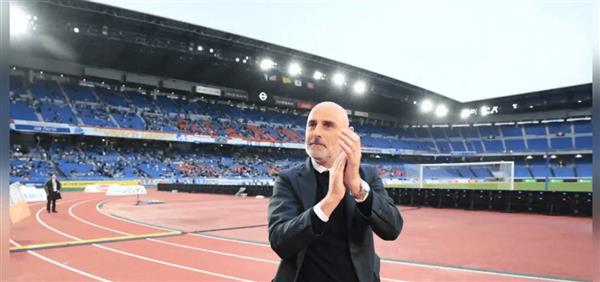
Saburo Kawabuchi, the "Godfather" of Japanese soccer.
As we all know, in 1996, the Japan Football Association (JFA) this soccer association in 1996 put forward the famous Japanese soccer centennial plan this plan as an outline, we can recognize the miracle of Japanese soccer.
At the heart of this program is the "Centennial Manifesto," in which Japanese soccer calls for expanding the soccer population to 5 million by 2015 and 10 million by 2050, hosting another World Cup and winning it.
Among other things, the 2015 plan has been realized and the Japanese women's soccer team won the World Cup in 2011.
Along the way, what did the Japanese do right? Let us decode it in several dimensions.
Characteristics of the Japanese Football League
-Overview
The Japanese Football League (J-League) is not different from the form and organization of the Chinese Super League, the K-League, etc., but it has its own unique historical origins and development characteristics.
In 1993, Japan's first professional soccer league was established, at that time there were only ten teams, the so-called "founding team" However, with the development of the professionalization of Japanese soccer, the number of teams continued to increase. 1999, due to the Japanese soccer clubs are too many, the Japanese Football Association formally split the J-League into the J1 League and J2 League, and began to introduce the classification and promotion system. It began to introduce a grading and elevation system. And our country had a two-tier league and elevation system as early as five years ago.
Compared to Japan, China has achieved a system of league specialization, grading and promotion
The Nippon Professional League was founded in 2014 as the J3 League. Compared to the Japanese league, which had only 10 professional teams in 1993, Japan now has 58 professional teams (18 in J1 and J3, and 22 in J2), and it only took 20 years for this to happen.
-Neutral name reform -
However, "going professional" doesn't mean that the ten pre-1993 teams weren't professional, but rather that professionalism represents the emergence of a mature system and the cultivation of a fan culture.
Before the creation of the Nippon Professional Federation, Japan's ten teams were still professional, but they weren't soccer clubs and they didn't have a fan culture. They were subsidiaries of corporations and zaibatsu.
Team Mitsubishi Heavy Industries, Team Panasonic Electronics, Team Nissan Motor...
That's the name of the Japanese soccer team before it was professionalized, when it was a division of major corporations with no independent fan culture.
The Japan Football Association (JFA), headed by Saburo Kawabuchi, immediately pushed forward the neutral name reform, stripping Japanese companies of their naming rights for soccer teams and implementing the neutral name reform "New Policy for Japanese Soccer Club Names".
The Japanese teams before 1993 were all divisions of corporations, all named after corporations
Japanese soccer's neutral name reform requires that corporations no longer have naming rights and that teams wanting to join a professional league must change their names. The new name must be named after the region in which it is located and can be based on a place name with some culturally unique characters.
The JFA believes that this is the only way that the Japanese team can have a foundation on which to build a fan culture.
After all, there is no reason for fans in Saitama Prefecture to support a team called "Mitsubishi Heavy Industries Soccer Team". The citizens of Kawasaki City have no reason to support a team called "Fujitsu Group Soccer".