

2-0, Ecuador beat host Qatar in their opening World Cup match, breaking the host's first match curse. It also broke the pre-match rumors exposed by the bad guys' self-published media that they would have a hard time arriving at the Qataris' gold-dollar attack and were ready to sell the ball in search of glory.
In the second match, which was drawn 1-1, the Netherlands had only two shots on goal. Despite losing 0-1 to Senegal in the third match and having played well in the first two matches, Ecuador earned the admiration and respect of the world with its performance.
It is hard to imagine, five and a half years ago, the World Cup stage shining Ecuador and the Chinese men's soccer team has a brief intersection: two national teams fifa they are ranked 70th. At that time, the Ecuadorian men's soccer team even laughed at themselves, which is somewhat similar to the national soccer team: the slogan of their fans is to cheer the dream is priceless; the national soccer fans playing on the sidelines of the heart if the heart is there, the dream is there.
But now everything has changed, and national soccer fans who are used to being spectators in front of the TV are absent with their hearts and dreams at the same time; however, Ecuador has given birth to the most valuable national team. They managed to beat traditional soccer powerhouses such as Colombia, Chile and Paraguay to reach the World Cup in Qatar.
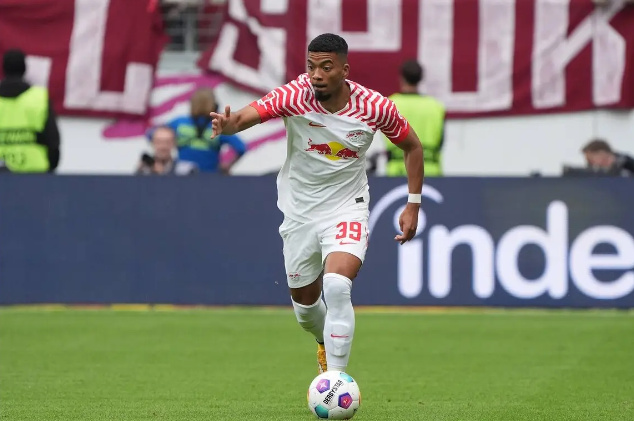
If you want to explain the sudden rise of Ecuadorian soccer, you can of course simply and crudely apply the great man theory, which means that a hero or heroes single-handedly achieved an era, such as Incapié, who is currently a starter for Leverkusen; even Real Madrid is interested in buying Brighton midfielder Moises Caicedo; and Estúlio Piñín made it to the semifinals of the Champions League with Villarreal last season; And then there's Enner, a veteran who has scored just three goals in two games - Valencia.
But the truth is that Ecuadorian soccer's progress is largely a product of its times.
Being ps in a chess game between Messi and Crow, Valencia impressed the world with three goals
Beginning in the mid-1990s, Ecuadorian soccer began to change dramatically. Antonio, the former Manchester United star and Ecuador's most famous player-Valencia-was the beneficiary of this wave of change. His mother was a vendor selling drinks outside the stadium, and his father was in charge of selling the bottles to the garbage collection point in downtown Quito. Valencia's job was to collect these bottles for his father, and in his spare time he played soccer barefoot in the open spaces around the stadium.
One day in 1996, a scout buying a drink from Valencia's mother outside the stadium overheard Valencia's unusual soccer talent, and then brought him to the most famous star in Ecuador's history, a new training base funded by the soccer federation.
Valencia scores first goal into 2022 Qatar World Cup
Also in 1996, the Confederation of South American Football (CONCACAF) underwent a major administrative restructuring. Take the World Cup qualifiers as an example:Before then, the 10 member countries of South America were divided into 2~3 groups, and according to the number of groups, the first and the second place in the group were directly promoted. This competition system has less competition, promotion is efficient, rough and simple. From 1996, the competition system suddenly became a marathon home and away two-round points system between the ten member countries.
This marathon system of home and away matches has proved to be more in keeping with the distribution of CONCACAF member nations. The fact that there are only 10 teams in the SFA makes for a short cycle of matches with long intervals between them for the national teams - traditional giants like Brazil and Argentina can keep themselves in shape with quality international friendlies instead of practicing; however, smaller countries like Ecuador do not have quality matches for a long period of time, and so it is it is difficult to improve its level of play.
In 1996, the South American Football Confederation (CONCACAF) began to follow Europe's example by arranging international friendly matches for its member countries. In this way, not only could member countries participate in quality matches on a regular basis, but their incomes also became stable. As the number of matches increased, the frequency of national team training increased, and naturally the bonding and combativeness of the national teams improved. The revenue generated by the adult national teams can help soccer associations hire better coaches and develop youth training.
This change in management paradigm is particularly important for improving the standard of a small soccer nation like Ecuador. Until 1996, Ecuador had won only five matches in their long history of World Cup qualifying. Since then, they have made great strides: in 2002, like China, they advanced to the World Cup for the first time in their history; four years later, Germany managed to make it to the knockout stages of the World Cup; and now they are playing in their fourth World Cup.
Moises, Brighton midfielder - Caicedo
Their progress was so rapid that many believed Ecuador was still a weak team competing in the tournament purely to make up for or avoid a crushing defeat. Even the rest of CONCACAF was not prepared for their rise to prominence, and in 2004 Ecuador withdrew from the Copa America for a fantastic reason: the organizer hotel where they had initially booked their stay refused them on the grounds that they were hosting the Argentine team. If even the hotels don't honor our reservations, do we even need to participate? The then president of the Ecuadorian Football Federation lamented - respect is a luxury in South American football.
At the same time, the Ecuadorian economy has undergone tremendous changes since the mid-1990s. In the eight years from 1999 to 2007, Ecuador's eight-year gdp it doubled and then maintained an average growth rate of 4% per year. The strong economic performance soon appeared at the soccer level: those talented Ecuadorians no longer needed to study abroad to realize their talent. At the same time, Ecuador's local leagues began to attract foreigners from other South American countries, especially Argentina. 2008 ushered in a national soccer highlight when Ecuadorian club Universidad del Deportivo Quito won the Copa Libertadores.
That year's title win sent all of Ecuador into a frenzy, and even the Valley, the league's oldest rival, which had been dead and buried, went independent and congratulated the Quito Sports University team as well - just like the historian Tony . Jutt writes in his book - soccer unites the country. Many of today's new generation of Ecuadorian players have been inspired by the trophy to go professional - Incapié and Moises, who were working independently in the Valley at the time - and Estupinian, who was on the Quito Sports University ladder.
It's worth noting that the Quito Sports University team that won the championship featured local players as their team, proving that Ecuador's youth training is starting to reap the rewards. The collective influx of a new generation of Ecuadorian players is beginning to catch the attention of traditional soccer powers.
In the case of Valley Independence, for example, since 2008, the club has gradually established contacts and cooperation with German, Belgian and Argentinean clubs, laying a solid foundation for the exit of quality young players. Among them, the famous Belgian soccer consultancy Two Over One has partnered to establish a complete overseas promotion channel in different stages - similar to the Red Bull Group and City Football Group. Because Kapiye, Moises - the direct beneficiaries of these collaborations are kay direct beneficiaries.
At this World Cup, Ecuador continued to use quick transition tactics in the qualifiers and had good results with quick forward passes from a few key players in key positions.
Although the Ecuadorians finally said goodbye to the 2022 World Cup in Qatar at the group stage, they won the respect of the whole world with their performance. We also believe that they will bring more surprises in the future and become an effective force in world soccer.
Putting yourself in the right place and finding a path that suits you sounds simple, but it's rare in the real world of soccer - because there will always be unrealistic dreams of distraction and eccentricity.