
With the overall strength and talent pool of the Japanese team, it was enough to sweep Asia in the qualifiers, but the first 12 games of the Blue Samurai were always accompanied by a cacophony of voices. The most vocal was the team's head coach, Mori, in the joke that protects one, is "only one goal". Of course, from the middle and late first 12, the Japanese team can still dominate the rhythm of the game, and the level of its soccer has gradually improved. "Out of Asia".
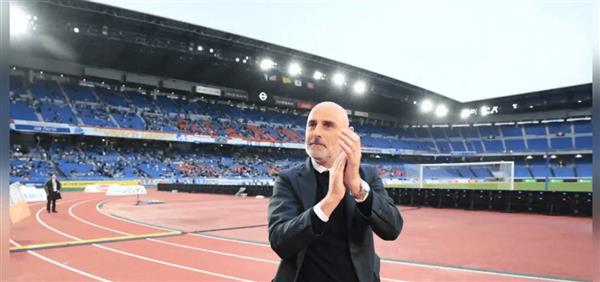
There is no doubt that Mori Boyi, who is in the middle of the public opinion, is the subject of the Japanese team. He is an international player who retired in 2003, put on a suit and began his transition to coaching with Sanfrecce Hiroshima. Since 2004, Mori Hiroyoshi has been an assistant coach for Sanfrecce Hiroshima and Niigata Swans. It wasn't until 2012 that he officially became the coach of Sanfrecce Hiroshima. He also quickly led the team to success and won three J-League titles in five years.
During his time at Sanfrecce Hiroshima, Mori was "conservative" and after the 2018 World Cup, he became the head coach of Japan and brought that style to the Blue Samurai. According to the traditional impression of the Japanese team, they learned from Brazil on their way up. Their overall characteristics are supposed to be technically proficient, dominated by pass control, and advocating attacking soccer. However, under the reign of Moriho I, Japan was more of a balanced European team.
Despite many Japanese fans questioning Mori's ability, it is undeniable that he is the national team coach with the highest winning percentage in Japan's history. In his 57 matches, Japan has a record of 39 wins, 8 draws and 10 losses, a winning percentage of 69.4%. As you know, in the last four years, the opponents have by no means been weak Asian teams, including second-tier powerhouses from Europe and South America.The Blue Samurai have also been invited to play in the Copa America in 2019, which shows the gold in Mori's winning percentage.
The top 40 matches were not very representative due to the difference in strengths and weaknesses. Early on in the top 12 tournament, Japan focused on a 4231 formation with Kamata Daiichi, who has performed well in Europe, playing up front, but it didn't work well and the team was frequently held back. Then Boichi Mori made adjustments, and Japan's formation was more like a 4141 or 433, stabilizing the fundamentals with three midfielders in both attack and defense, and counterattacking quickly on the defensive side of the ball.
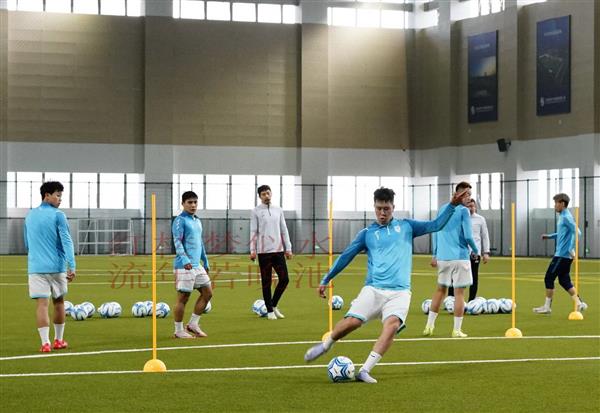
In this year's training matches, Japan continues to use the 433 and 4231 formations the most. Considering the Group of Death at the World Cup, Japan will likely continue the fighting style of the top 12. Moriichi also said bluntly in an interview that the defense will be airtight if they don't give their opponents a chance. On the offensive end, Takumi Minamino and Haruya Ito are two wingers that are especially crucial. The former can connect in the middle of the organization, while the latter is an explosive point for edge breaks. Japan will use this as their primary means of counterattacking.
First projection (4231)
Shuichi Chonda/Yuto Nagatomo, Kenyo Tomoyasu, Maya Yoshida, Kouki Sakai/Hidemasa Morita, Hikaru Endo/Echi Kamata, Takumi Minamino, Junya Ito/Daiten Maeda
Key Players: Staying with the Army, Everyone's a Key Player
In Japan's Qatar World Cup roster, 20 players are European players, 13 of whom play in the top five leagues, which is the true meaning of the "army of foreigners" Unlike other Asian teams, the Japanese team with a strong reserve talent pool promotes the whole, and everyone seems to be able to become a key player. But even so, the star also has his own characteristics, the state is good or bad, the Blue Samurai's three fronts still have the core.
The lack of a top powerful center forward is Japan's biggest weakness, making the two wing attackers especially important. As mentioned earlier, Takumi Minamino, who used to play for English Premier League giants Liverpool, continues the tradition of Japan's No. 10 jersey that Toshiyuki Nakamura and Shinji Kagawa used to wear. His footwork and ability to threaten the ball with his passing were key weapons for the team, and he was the king of the strikers that the team leapt on. Even though Takumi Minamino was only a rotation player for the Reds last season, his efficiency in scoring goals in an average of 101 minutes is still commendable.