

Recently, the internet has been abuzz with rumors that the Chinese Super League powerhouse Dalian Ren's four Tigers, Tong Lei, Shan Huanhuan, Lin Liangming, and Wu Wei, have been suspended due to an alleged contract dispute. Behind this incident, perhaps hiding the complex entanglements between the club and the players. Up to now, the Dalian People's Club and the players involved have remained silent. However, according to the Beijing Youth Daily, most clubs have had to "tighten their belts" in recent seasons due to the general environment of domestic professional soccer, a trend that has intensified in the context of blocked open source. The contradiction between the tightness of the club's financial chain and the high contracts of some players has become more and more acute, and the labor disputes are endless.
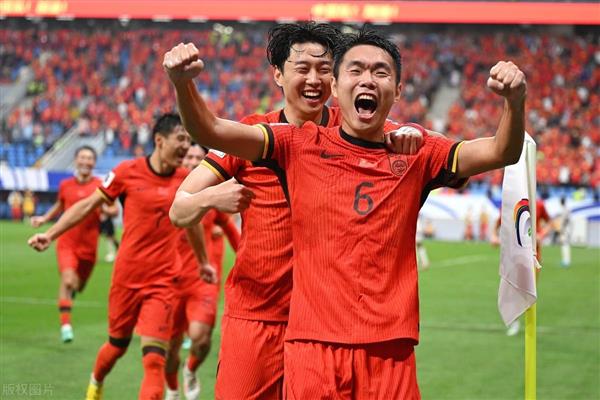
As of now, Dalian Ren has reached the 15th round of this season's Chinese Super League, and with three fewer rounds to play, the team is in the 14th place of the table. Despite playing with a full Chinese squad in the first half of the league, Dalian People's performance has been quite stable. In the 12th round of the Chinese Super League (CSL) bye game on September 1, Dalian Ren beat Shenzhen 5-1, and the tactic of "press and play" advocated by manager Xie Hui won praise again, and Lin Liangming even made his debut and scored two goals alone. However, just at this time, Lin Liangming and other four players were suspended from training news, can not help but let a person surprised.
As a matter of fact, Dalian People's Club was able to bring in a large number of new recruits at the opening of the transfer window thanks to the timely settlement of some of the contractual disputes left over from the previous period. In accordance with FIFA regulations and arbitration results, the club settled the outstanding wages of players and employees. Since most of these disputes occurred during the period of "golden dollar soccer", the settlement work cost a huge amount of money. In other words, the club was unable and unwilling to invest any more money when it came to bringing in new players or renewing the contracts of existing staff.
Putting aside the rumors that the four Dalian people will be suspended from training, a number of clubs in the Chinese Super League in the "post-golden soccer era" is still plagued by the legacy of the "arms race" in the early period. Specifically, some foreign aid and local players still enjoy high salaries according to the original contract. This is the main reason why more than half of the Chinese Super League clubs are still plagued by wage arrears and are struggling.
Although there are still some players in the Chinese Super League, the phenomenon of "serious deviation between price and value", but under the contractual constraints, to solve the problem of salary arrears is a matter of course. In this context, some of the cash-strapped clubs have to negotiate with the players and coaches to reduce their salaries, in addition to discounting the salary arrears, repayment in installments, in kind (such as houses and other real estate) has also become a way to alleviate the urgent needs of the method. However, even so, there is still a considerable portion of contractual disputes that are difficult to be properly resolved.
It is worth noting that, according to the provisions of the CFA, after the first batch of domestic professional clubs repayment deadline on July 31, the second batch of repayment deadline on October 31 is approaching. Although some of the clubs have passed the repayment of the "first hurdle", but can be required to solve the problem of arrears of wages amounting to 70% of the total amount, and successfully break through the "second hurdle" is still an unknown.
From a practical point of view, clubs with serious financial crisis are mostly concentrated in the middle and lower reaches of the league table. If they are penalized by deducting league points due to unpaid wages, their relegation pressure will be even greater. It is reported that FIFA has recently re-imposed a ban on the transfer and registration of new players for individual clubs due to repeated contractual disputes over unpaid wages. The CFA has also been penalized with a considerable fine. Of course, what deserves more attention than the fines is the integrity of the domestic professional league and its clubs, which has actually adversely affected the attraction work of Chinese Super League clubs, especially the introduction of foreign aid.