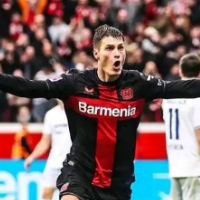

What's the secret to embarking on a journey? Simply put, it's not that complicated to press your opponents without the ball, and when you have the ball, you need to press the opposing defense in time and space, and try to create a shot on goal quickly.
2. Rangnick's followers
One often wonders where the tactical inspiration for the "pressing style" came from. It goes back 15 to 20 years to the era of Rangnick (editor's note: the legendary coach of German soccer). This is the core concept of the German soccer revolutionaries.
Ronny Longnecker divides soccer into four periods: with the ball, without the ball, and in transition. We used to pay more attention to the strategy of the time with the ball and without the ball, but Ronnick, the innovator and pioneer, puts more emphasis on the two key moments of offense and defense conversion - 6 seconds after losing the ball and 6 seconds after stealing the ball, which is called the "6-second conversion rule". This is called the "6-second conversion rule", which not only requires pressure on the opponent in space, but also emphasizes pressure in time.
On a philosophical level, the press of time has a more profound effect on the game.
Some people see this as a counterattack, but it's not, it's a fast attack, called transition in English, emphasizing the 6-second rule of transition, which means launching a fast attack when the opponent isn't quite ready.
Because of this, German soccer has always taken the lead in leading the development of world soccer. Jurgen Klopp is a follower of Rangnick, and when he coached Mainz, the team was not strong, but they were able to play a very entertaining game, specializing in capturing conversions and fast breaks, and playing aggressive, adventurous, and forward-looking soccer, which was the key to Jurgen Klopp's success. Tuchel is also a product of Mainz, and also belongs to the Rangnick system.
If this soccer philosophy can be traced back even further, to Cruyff's interpretation of soccer, he believes that soccer is "a game of space and time", since the 70s has emphasized the control of the ball, emphasizing the control of time and space.
German soccer has further developed the conversion concept based on this, which is exactly the system of Rangnick, which has been passed on and immortalized by German coaches such as Klopp, Tuchel, Nagelsmann and others, of which I also consider myself a member.
As a believer in this theory, I want to incorporate this philosophy into the teams I lead.
I firmly believe that "pressure play" has nothing to do with strength, it's just a way of playing soccer - press out, press up, press forward. Forward is a direction, fast is a time, both are crucial.
Through the above, I hope to have a clearer explanation of the "pressure style of play", and hope that you can have a deeper understanding of my coaching philosophy and soccer philosophy, and look forward to more exchanges with you in the future in the personal column of Lazy Bear Sports. If you are interested in any of these topics, please feel free to leave your comments in the comments section.