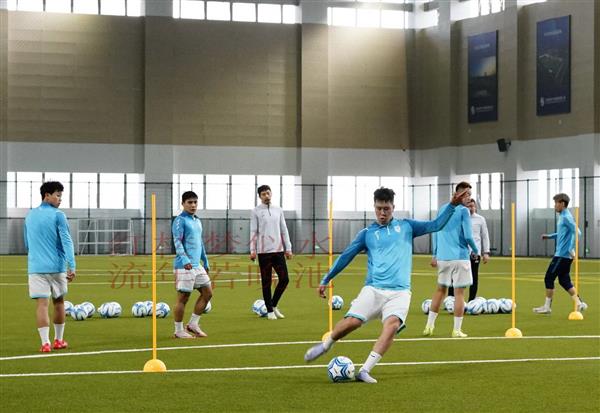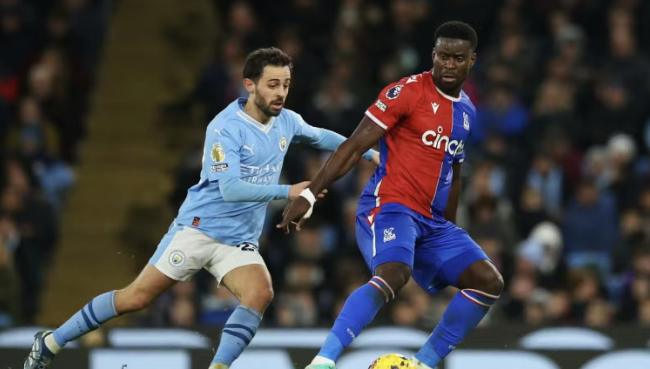


The way to victory, in short, is to press in the space of the ball carrier, forcing the opponent to take action; while in possession of the ball, it is necessary to pressure the opponent's defense in time and space, and strive to quickly form a goal opportunity, the reason is not complicated.
2. My respect for Ronnick.
It is often asked where the tactical inspiration for the "pressing style" came from. It goes back 15 to 20 years to the era of Rangnick (editor's note: the legendary coach of German soccer). This is the philosophy of the German soccer revolutionaries.
Ronnick divided soccer into four phases: ball control, no ball, offense and defense conversion. While we used to pay more attention to the ball control and ball-less phases, Ronnick, the change agent and pioneer, puts more emphasis on the moment of offense-defense transition - i.e., how to deal with the 6 seconds after losing the ball and the 6 seconds after stealing the ball. This is the so-called "6-second transition principle", which not only exerts pressure on the opponent from space, but also in time.
From a philosophical point of view, time pressure has a more significant impact on the game.
Some may see this as a counterattack, but it is not. It is a fast attack, known in English as a transition, which emphasizes the six-second principle of quick transitions. The fast attack is launched quickly before the opponent can fully react.
Because of this, German soccer has always been at the forefront of leading the world in soccer development. Followers of Rangnick, such as Jurgen Klopp, have a unique way of playing a spectator game even when coaching weaker teams. They focus on capitalizing on conversions and fast breaks, playing aggressive, risky, forward soccer. This is one of the key factors in Klopp's success. Tuchel, a product of Mainz, is also part of the Rangnick system.
Going back even further, this soccer philosophy can be traced back to Cruyff's interpretation of soccer as "a game of space and time". From the 1970s onwards, he emphasized ball control and the control of space and time. On this basis, German soccer further developed the art of transition, which is the soccer system of Rangnick. Subsequently, through the inheritance of German coaches such as Klopp, Tuchel, Nagelsmann and so on, this set of concepts has been more widely promoted, and I also consider myself one of them.
As a believer in this theory, I want to incorporate this philosophy into the teams I lead.
I've always believed that "pressure play" has nothing to do with strength, it's just a way of playing soccer - press out, press up, press forward. Forward is a direction, fast is a time, both are crucial.
Through the above, I hope you have a clearer understanding of the "Pressing Style" and my coaching philosophy and understanding of soccer. I look forward to communicating with you more in my personal column in Lazy Bear Sports in the future, so please feel free to leave a message in the comments section to share your interest in the topic.