

Zhang Wen: After a three-year-long wait, the Chinese Super League finally returned to the home-and-away format. Nearly 16,000 fans flocked to the stadium for the 11th round match between Dalian and Shanghai Seaport, highlighting the deep roots of the soccer city. So, does the return to home and away retain that familiar flavor in the Chinese Super League? Some clubs are still adrift, when can they return to their homeland? The full opening of the stadium is just around the corner? ...... After the important breakthrough of the return of home and away games, we focus on these issues in order to predict how far the Chinese Super League is from regaining its former glory.
First of all, let's ask Kaidong if you think the atmosphere in this city has changed since the return of home and away games? For example, you've been commentating on Guangzhou teams for a long time, how does it feel overall when Guangzhou City finally returns to play at Yuexiu Hill, despite not having a live audience?
Chen Kaidong: I commentated the first game of Guangzhou City's return live. Although spectators were not allowed to enter the stadium, I saw some Guangzhou City fan club fans gathering outside the stadium, trying their best to cheer for the players inside the stadium. The Yuexiu Hill Stadium is uniquely designed to be located at the foot of Yuexiu Hill, so fans can climb up the hill and cheer for their team from above. So you may hear during the live broadcast that although the sound is scattered, there is actually a clear cheering sound coming into the field.
Despite the fact that Yuexiu Hill is not yet open for spectator admission, the return of home and away is a positive sign in itself. The club, players and fans have something new to look forward to.
Despite the currently empty field of play, the Chinese Super League has returned to Guangzhou's soccer mecca, Yuexiu Mountain.
Zhang Wen: When uniformed, scarf-waving fans appear in the stands again, we will feel again that soccer games cannot be separated from spectators, home and away. Ran Feng, do you think the restoration of home and away is imminent?
Luo Ranfeng: There is a general consensus that it is necessary for the Chinese Super League to seek changes based on the match system. In the past few years, one of the complaints about the tournament system is that the season is too compact and adopts a closed management model, which puts tremendous pressure on players physically and mentally, including injuries, physical problems and psychological problems. In this state, players are unable to perform at their best, leading to a decline in the standard of the tournament. Neutral and non-die-hard fans are difficult to be attracted, which ultimately affects the league's business development and other operational matters.
With the return of the home and away system, the mental state of the players has been significantly improved, which is conducive to the enhancement of the tournament's spectacle. At the same time, the tournament landed in different cities across the country, compared to the tournament system concentrated in a few regions, with greater local coverage, higher local influence, both tournament organizers and sponsors will be more satisfied.
Home advertising revenue solves the problem
ZHANG WEN: However, restoring home and away venues does present a big challenge. By the time the program was recorded, 11 of the 18 teams in the Chinese Super League had returned to their home stadiums, but in different ways. Some return home but are unable to open the stands, such as Guangzhou City; some can return to their iconic home stadiums, such as Henan Songshan Longmen back to the Navigation Stadium; and some need to host their home stadiums in a different location, such as Beijing Guoan, whose home stadium is temporarily scheduled to be in Rizhao. Kaidong, what do you think is the toughest breakthrough in the process of restoring home and away stadiums?
Chen Kaidong: The most difficult breakthrough is undoubtedly the epidemic prevention policy of various governments. Epidemic prevention is a national chess, the return of home and away to follow the premise of epidemic prevention, it is not possible to clubs want to choose which city to do home to which city.
This means that clubs need to look for further compromises. Shenzhen, for example, have confirmed that after two rounds of the second phase of the tournament, they will move from a neutral ground in Haikou to a new home ground in Nanhai, Foshan. Although it is not directly back to Shenzhen, at least it stays in Guangdong Province, where fans can support the home team via public transportation or even by driving to the new home stadium. So the club is slowly finding some breakthroughs in the difficult situation.
Even with Rizhao as its home, Beijing Guoan has room to increase advertising revenue
There is also a breakthrough in that clubs regain the rights to pitch-side advertising even if the stadium fails to open fully or partially, or even if it doesn't open up to fans. Although clubs also have theoretical home advertising rights during the conference system, this is somewhat different from the club's rights in a truly exclusive stadium, and sponsors will be more willing to support the team back in their city. This additional advertising revenue can be considered "life-saving money".
And when fans are allowed to enter the stadium, it can solve more problems. If a ticket is 50 dollars and 20,000 people enter each game, the revenue of a home game will reach 1 million dollars, which can solve the current urgent needs. Therefore, many clubs believe that no matter how difficult it is, they want to return to their home stadiums. The CFA is also doing its best to make this happen.
Zhang Wen: But clubs usually don't have direct rights to the stadium and need to rent it; they need to pay for security and other costs if they open the stadium to fans; plus travel and so on. Does the home-and-away system increase the pressure on clubs' operations?
Chen Kaidong: As far as I know, if the funding for home stadium advertising is introduced smoothly, it can already cover travel expenses more significantly. As for renting a stadium, the club can actually choose a cheaper stadium, for example, Guangzhou team's traditional home stadium Tianhe Stadium upgraded, even if you want to rent it can not be rented, and the current choice of Huadu Stadium to be a lot cheaper, and it is said that the Huadu Sports Bureau to provide some subsidies to support. So clubs can communicate with the Sports Bureau to reduce the cost of renting venues and generally get local support to land the tournament smoothly.
"Homecoming" has multiple layers of motivation.
Zhang Wen: home and away to overcome the difficulties, the initial realization of the return. Even if there is such a situation as Beijing Guoan playing home games in Shandong, we would still consider it as a different memory left by the Chinese Super League in a special period. Ran Feng, do you think that after the return of the league to home and away, the club's operation and work content will also be different from the match system?
Luo Ranfeng: There is a typical situation in the match system: some executives of clubs are also stationed at the venue and stay in the closed area, which makes the working scene more limited. Under the home-and-away system, executives have more freedom of movement, and are more flexible in handling some business negotiations or other extended business, and can be directly connected to the corresponding personnel organization units.
Players are in a similar situation, where it's difficult to execute some targeted commercial interactions in a closed environment, and at best they can only specialize in servicing the league's sponsors or participate in events in an online format. After the return of the home and away system, the players have much more room for local activities. We know that players' incomes have changed a lot from back then, and some support for external activity costs makes more sense for players.
Under the home and away system, clubs can match sponsors
Do more local activations
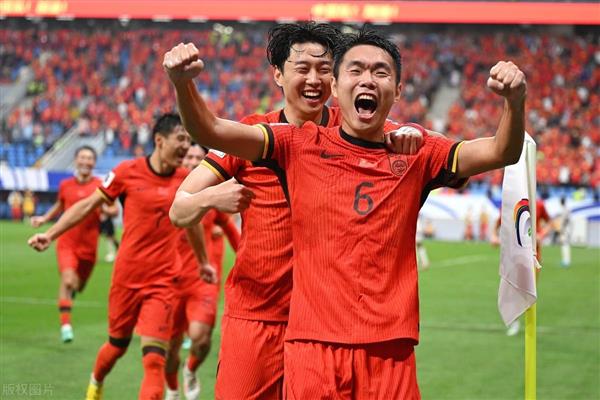
Zhang Wen: Two typical return home matches, Dalian's all Chinese team drew with rivals Shanghai Harbor, and Henan's 3:0 win over Beijing Guoan, which sounds like the disparity in scores is not a reflection of the real power gap. The fact that there were fans at both matches seems to give the impression that the link between clubs and their fans does create a chemical reaction that allows teams to play at a high level. So are the teams that do return home and get the fans cheering them on "taking advantage" of the situation?
Chen Kaidong: Fans are called the "12th man on the pitch", which of course helps the team a lot. In the first few rounds when the crowd returns, the effect of this support may be more obvious, as if the players are "pumped up". However, when the home and away matches are gradually stabilized, the players' mentality will slowly adapt, and then it is still the strength that is the main factor in determining the outcome of the matches.
But the fact that the players are "home" under the home-and-away system is an important encouragement. Last season we often saw that the players could not be with their families during the closed period, and sometimes they could only meet with their relatives through the guardrail, which looked a bit heartbreaking. Liu Dengzheng's speech at the press conference expressed what the players were saying, "Going home is a particularly big reward". So the players who have been encouraged should perform better than they did during the ten rounds of the first phase of the tournament.
Zhang Wen: Lin Liangming also wrote on the microblogging, on more than nine hundred days before the real Dalian team home and fans meet, this experience is very unforgettable.
Dynamic adaptation to overcome future difficulties
Zhang Wen: The effect of restoring home and away games is still relatively obvious, at least from the first round. But in the long run, the Chinese Super League to return to the heat of the year, need to go through no small test. These tests are mainly reflected in where?
Luo Ranfeng: The main thing is the difficulty of organizing the event. In the case of the epidemic will be repeated, there will certainly be a city suddenly faced with the possibility of epidemic prevention test. For example, the current epidemic fluctuations in Hainan, Haikou race on the test is very big. This is going to go to the organizer before the unexpected event, we have to test to the emergency response measures. These filed to deal with the specific scene will have a variety of, for example, the club can not immediately transfer to another city stadium game, but also such as the emergence of static management and other situations, pull down the progress of how to replenish and so on.
Also each club will have its own special tests accordingly. For example, if a club doesn't have a fixed home ground, even if results can be guaranteed, it lags behind operationally compared to clubs with a home ground. So how does it deal with that? Of course, these issues are not that difficult compared to organizational issues, as they can be solved over time with the opportunity to do so, such as Shenzhen's quick implementation of a new home stadium.
Our greatest wish is that there will be no objective circumstances that will interfere too greatly with the conduct of the league. As long as there are no such circumstances, I believe the league, clubs and players will feel a sense of hope for development.
Premier League quickly adjusts fixtures in response to outbreak in Hainan
Zhang Wen: the future of the Chinese Super League will also solve the problem of "fans biological clock", which is the key to the establishment of the commercial logic of the league, so that the fans know when the game is fixed at what time, what place to start, to the corresponding point in time, the season, the fans will be associated with the game should start, the champion should be born. But the Super League to restore this inertia, there is also a long way to go.
Chen Kaidong: Whether it's the FA or the clubs, the next twenty rounds or so will take a dynamic management approach. Clubs that have not found a home field continue to look for a home field, and clubs that currently have a temporary home field will also seek to optimize, for example, Beijing Guoan may just transition in Rizhao, and then move to a place closer to Beijing when conditions are feasible.
In addition, if the subsequent matches can keep running smoothly, the clubs need to try more self-help strategies to improve their operation, instead of limiting themselves to the traditional modes of advertising and sponsorship, they should re-explore how to do some offline activities. Especially for clubs with different home venues, they should also try to attract fans and sponsors through offline activities, in short, try from different directions to find new profit points. This will ensure that the club's operation can keep up even as the game is advancing.
ZHANG Wen: Before the Chinese Super League had to enter the match system mode, the average attendance of the Chinese Super League had reached the level of more than 20,000 people. These 20,000 people in each city may be the core force to ensure the survival of a Chinese Super League club. When clubs, players, and fans become "family", the emotions that are aroused are also the ties that help a Chinese Super League club to survive and stay afloat. We hope that in the coming days, more teams will return to their home stadiums and see more of their fans. Thank you for joining us, and we'll see you again next time!