

In looking at both Uruguay and Japan in this
After the performance of the Asian Cup, it is obvious that the two football associations will be the preparation of the U21 national team to the core task of the national team, which is undoubtedly a positive practice of the "Paris Olympic strategy". This strategy is not the first time in Asian football. The Iranian team in the current tournament did not advance, but as the manager of the motor Vikia said, this journey is the impact of the Olympic Games is a valuable opportunity to exercise, losing is also a useful accumulation of experience.
According to tournament rules, non-Olympic-age teams are required to be in odd-numbered sessions
compete in the Asian Cup. However, given that this is a tournament that the AFC focuses on fostering, some member associations still send lower-age Olympic-age teams to challenge strong opponents. In the case of the Japan Football Association (JFA), the third edition of the 2018
When the Asian Cup was held, they then fielded a homegrown Olympic-age team in the 1997 age group, and despite losing to the Uzbekistan U23s in the quarterfinals, the JFA felt that such a loss would be more conducive to the growth of the national Olympic team.
The data show that the third 2018
In the Asian Cup, the 1995/1996 age group accounted for 57.38% of the players, while the 1999/2000 age group accounted for 42.72%. In this year's tournament, the number of players in the 1999/2000 age group dropped to 46.87%, while players born in 2001 and later increased to 53.13%. In addition to Japan, Uzbekistan and Iran, which are dominated by U21 players, Australia and Malaysia also have a majority of U21 players.
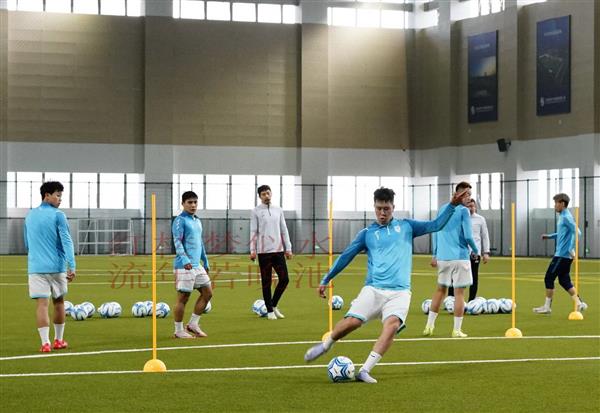
Meanwhile, the preparation of China's National Youth Football Team (the new National Olympic Team) has come to a standstill. The team has not been able to concentrate since March 27, when they finished their training in Shanghai, due to the epidemic and other factors. China
national soccer team
The Association had considered allowing the U21 national Olympic team to play in the Central League, but the proposal was eventually abandoned.
The outstanding performance of Uzbekistan's U23 team (actually the U21 age group) in this year's tournament provides strong evidence that "national teams play in professional leagues". After the 1999-age national youth team failed to qualify for the Asian Youth Championship final, the Uzbekistan Football Federation (UFF) decided to give its full support to the 2001-age team for the Olympics and to let them play in the country's top professional league. Despite currently finishing in the bottom half of the league, this exercise has helped them to do well at the international level.
中
national soccer team
The Association is hesitant to allow "national teams to play in the league", mainly for fear that it will affect the fairness of the league. In addition, the participation of national teams in international tournaments may also have a negative impact on the league.
It is worth noting that among the players of age who participated in the training of the U21 national Olympic team, only about 15% of them can get some appearances in professional leagues, and even fewer can play the main force in the club. For example, goalkeeper Huang Zihao, who plays for Nanjing City FC in the Central League, Tao Qianglong, who transferred to Wuhan Sanzhen in the Chinese Super League, Zheng Xuejian of Zhejiang, and defender Liang Shaowen of Beijing Guoan. Most of them were unable to get stable playing time with their respective clubs.
Lacking the opportunity to practice in league matches and unable to participate in the national team concentration, how can such a representative team enhance its competitiveness on the way to the Olympics?