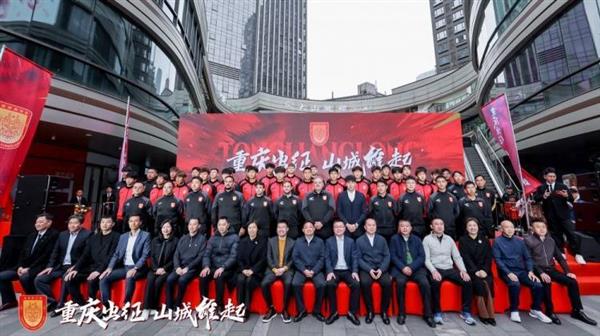


The two salons are not alone in the predicament they are experiencing, and their impact is rippling throughout the upcoming Chinese Super League, even posing a potential threat to the future of the tournament. According to the opening program reported by the Football Association to its superiors, the new season of the Super League is scheduled to open on June 3rd. The media revealed that the opening match of the new season could be played by defending champions Shandong Taishan against Chongqing Liangjiang Athletic. However, if the "strike" storm or the "unpaid wages" crisis does not subside in time, it is uncertain whether Chongqing Liangjiang Athletic will be able to participate in the league. This situation is undoubtedly a huge blow to the domestic professional league, which is in dire need of recovery.
In addition, some clubs are struggling to cut back on various operating expenses due to the shortage of funds. Some club staff have even been delaying the audience to confirm the start time of the league, the purpose of which is to arrive as late as possible, so as to save participation costs for the club. But this approach, really can "do not talk about money, first work" in exchange for "first lose and then earn" results? This is really difficult to predict.
In fact, taking into account the domestic professional soccer sector, especially many professional clubs in the operation of the actual difficulties encountered, the Football Association in early April through the official announcement of the form, clear the new season clubs to pay back wages in arrears provisions, and will be July 31, October 31, December 31 as the repayment of the three time nodes. This means that all salary arrears need to be resolved before December 31 this year at the latest.
According to the announcement, clubs are required to repay at least 30% of the total amount of salary arrears by July 31st. Clubs that fail to repay on time will be penalized to varying degrees depending on the circumstances, ranging from points deduction to relegation and even revocation of registration. However, given the current economic difficulties, there is no guarantee that clubs will be able to repay their salary arrears on time. In fact, whether clubs can survive or not, it is difficult to rely only on the "sympathy" of the industry's management or the flexibility of the rules in the long run.
At present, although the league organizers and regulators attach great importance to the survival crisis faced by the clubs, but "weaning can not survive" is well known, the clubs in order to alleviate the urgent need, but also need to work hard themselves.