

In the case of Wuhan Changjiang Football Salon, it has recently dealt with two cases left over from last year as well, involving a lawsuit over unpaid wages between players and coaches and a transfer dispute with another domestic club. The Wuhan club has made a clear commitment to pay all arrears in full by July 31 this year.
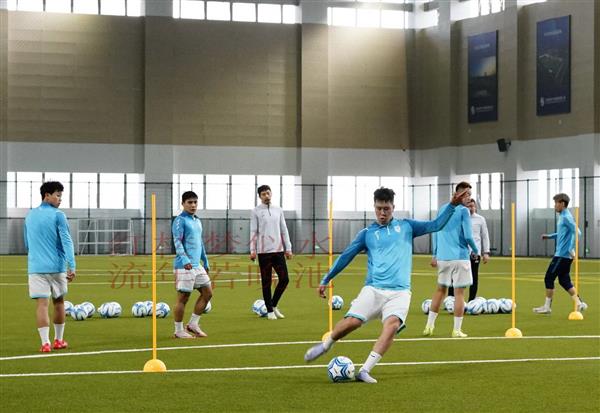
Zibo cuju club, on the other hand, is a case of dealing with the arrears of three players last year. At the same time the application was submitted, the club also put forward a detailed repayment plan and timetable, including three installments, three payments, and promised to clear before July 31st.
What's more, while promising to repay the money, the three clubs also made it clear that if they fail to follow through on their promises, they will be subject to any penalties imposed by the Chinese Football Association (CFA), including: a ban on new players registered during the original penalty period; reinstatement of the CFA's decision to impose penalties; and the possibility of facing even more serious disciplinary action, such as deduction of points from the league.
Against this background, the Chinese Football Association (CFA) made the decision to "temporarily exempt the above three clubs from the penalty of 'prohibiting the registration of new players'" and issued a notice to the clubs.
②Exemptions from the Ban: A Pragmatic Choice
As we all know, affected by the epidemic, Chinese soccer, especially professional soccer, has suffered far more than the outside world can imagine. In fact, by observing the current plight of domestic SMEs, one can more intuitively understand the survival status of Chinese professional clubs. To a certain extent, the phenomenon of large-scale salary arrears is understandable as the parent companies or enterprises behind many clubs have also encountered practical difficulties.
For the entire professional soccer league in China, the rules certainly need to be enforced, as in the past, the most central element of the access criteria - no unpaid wages. Can this year's Chinese Super League continue to strictly enforce this access rule? Of course. As the saying goes, "enforcement must be strict", but if it is strictly enforced, only four of the 16 Chinese Super League clubs could have actually managed not to have any unpaid wages in the past season. Then, what about the 2022 Chinese Super League? Should we just let these 4 clubs continue to "play" and let the professional league come to a halt? As for the Central A and B clubs, the situation is even more serious.
Against this background and in the face of the actual situation, the Chinese Football Association (CFA) as well as the preparatory group of the China Professional Football Salon Federation (CPSF) can face up to the reality and adopt a corresponding workaround, i.e., to require the clubs to submit a concrete plan to deal with the arrears of wages and ask for the arrears of wages to be resolved in phases and batches within 2022. If it is not possible to do so before the stipulated timeframe, then adopting more severe penalties such as deduction of points should be a feasible approach. Just like the "suspension of the penalty of 'banning the registration of new players'", it is also a way to cope with the actual situation and a pragmatic choice.
As a result of the epidemic, the entire society and the workplace have been greatly affected. Currently, the problem of unpaid wages also exists in many industries, not only in soccer, but also in basketball, volleyball and other sports clubs, and the parent companies behind these clubs have also suffered a serious impact. For the current Chinese soccer, there is a need for criticism and supervision, but more importantly, there is a need for feasible and effective solutions to solve the actual problems in order to save the entire Chinese professional soccer league. Chinese soccer doesn't need "people who understand" who only talk "funny" but can't come up with any substantive solutions!