

The story behind the FA's transfer ban
It remains unknown when the Chinese Super League will restart for the 2022 season under the shadow of the epidemic. Despite the festering uncertainty ahead of the new season, which includes an arbitration dispute over unpaid players, one remarkable piece of news is that the Football Association recently released a document temporarily lifting the transfer bans on three clubs in the Chinese Super League and the Chinese First Division, which has led to widespread discussion about the adjustments to the Association's policies.
soccer league
What is the hidden truth behind this decision?
April 21, the network circulated the Football Association Competition Department issued a document showing that the Wuhan team, Chongqing team, as well as Zibo Cuju three clubs due to historical issues were imposed a transfer ban, but the Football Association has recently decided to temporarily lift this ban. Screenshots of the document further confirm the authenticity of the news.
However, this decision is not a simple change in policy, but a reflection of the asymmetry of information behind it. People with different positions may choose different information to interpret this policy adjustment.
In fact, the three clubs submitted a detailed set of solutions along with their request to lift the transfer ban. These solutions, as a contract with the FA, may be inconvenient to publicize.
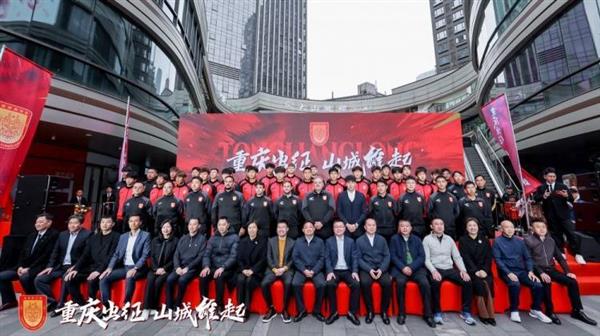
For example, Chongqing Liangjiang Athletic Club is involved in two cases in 2021, and the club has reached a settlement with the players concerned and has promised to pay all arrears by July 31st.
Wuhan Yangtze River Football Club was also involved in two cases last year, and the club has promised to pay all the money it owes by July 31st.
Zibo Cuju Club, on the other hand, is involved in the case of three players from last year, and the club has put forward a detailed payment plan along with its request, promising to pay all the arrears in phases before July 31st.
The three clubs, while submitting their payment plans, also made it clear that they would accept any disciplinary action from the FA in the event that they failed to fulfill their commitments on time, including banning newly registered players, reinstating the transfer ban and accepting harsher disciplinary action.
Against this background, the FA decided to temporarily lift the transfer ban on the three clubs mentioned above after a study and a notice was issued.
Affected by the epidemic, Chinese soccer, especially professional soccer, has been hit far harder than the outside world can imagine. In fact, the predicament that domestic SMEs are currently facing gives a clearer picture of the survival status of Chinese professional clubs.
Against this backdrop, the FA and CFF preparatory group have taken a pragmatic approach, requiring clubs to submit a detailed plan for dealing with wage arrears, and to resolve the issue of wage arrears in phases and batches within 2022, with more stringent measures, such as deduction of points, to be taken if they fail to complete the task on time, which should be a viable option.
With the epidemic having a huge impact on both society and the profession as a whole, Chinese soccer needs criticism and scrutiny, but more than that, it needs a viable and effective solution to the problem in order to save the entire Chinese professional soccer league.