

Failure to improve the overall standard in the era of "golden dollar soccer"
In January 2010, Sun Chao, who retired due to injury, changed his profession to become a soccer agent. He was keenly aware of the fact that some clubs had changed from being highly targeted to placing more emphasis on reputation when choosing foreign aiders. This change makes agents feel happy, they no longer need to look for foreign aid according to the team's technical and tactical style, and no longer worry about the agent's player's poor performance or difficult to integrate into the team. Sun Chao frankly, the agent is willing to agent such players, because "there is no risk, big-name foreign aid before coming to our country has proved itself, will not be questioned as 'water goods', sometimes even their situation is ignored, as long as there is prestige is enough."
During that period, "money" became a quick way to raise the club's profile. Domestic players often tens of millions of dollars in signing fees is not uncommon, the reserve team players can also get millions of dollars a year, let the former international players jaw-dropping. Yang Pu bluntly said: "At that time the domestic players' salary and the actual level of serious discrepancy."
The high investment of the Chinese Super League clubs in exchange for the glorious moments in the AFC Championship: in 2013 and 2015, Guangzhou Evergrande won the AFC Championship twice; in 2017 and 2019, Shanghai SIPG and Guangzhou Evergrande entered the top 4 of the AFC Championship, respectively, breaking the predicament of the Chinese Super League teams that had difficulties even getting out of the group after the reform of the AFC Championship before Guangzhou Evergrande entered the top 8 of the AFC Championship in 2012.
However, the climax does not think that this means that the entire national soccer level, "the AFC Championship is not, after all, the national team level of the game, the AFC Champions League progress to improve the results of our clubs in the Asian club tournament, but the results of the national team? This period, our national team in the World Qualifier, the Olympic Qualifier, the Asian Cup ...... results how?"
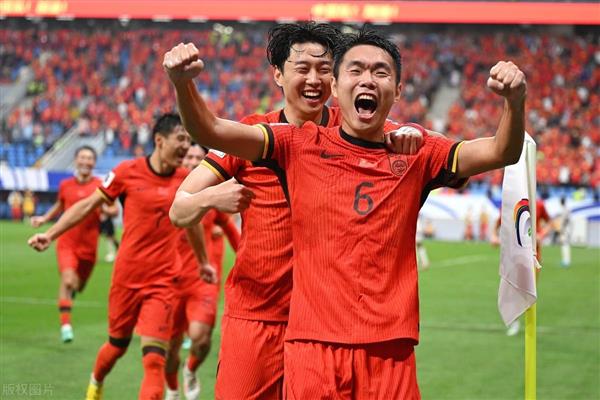
The actual level of domestic players is visually reflected in the performance of the national team. 2014 World Cup Asian qualifiers, Camacho coached the national football team in the final 20 halted, failed to qualify for the final 10, in February 2012, the early loss of the impact of the World Cup in Brazil, in June 2013 in Hefei, the national football team 1 to 5 against the Thai youth army, and thus nailed to the pillar of shame. Fan Zhiyi, who played in the backline for the "Mijia Army" many years ago, commented vehemently, "Chinese soccer has lost its face!"
In the 2018 World Qualifier, the "Silver Fox" Lippi failed to change his fate for the national football team; in the 2022 World Qualifier, Li Tie, the mastermind of the winning goal on the night of the line 20 years ago, is leading the team in a difficult march, and there is no hope for the road ahead.
The heavily invested Guangzhou Evergrande reaped the rewards, winning the Chinese Super League title eight times in 10 years. Photo/Osports
Salon's lack of profitability is a "dead end" for the league.
On March 16, 2015, the much-anticipated overall plan to carry out soccer reform in China (hereinafter referred to as the plan) was officially announced.
Lack of top-level design is the pain point of Chinese soccer for many years, the plan to the overall requirements, the main objectives of the general direction, after the redesign of the management body, club construction, improve the competition system, campus soccer, social soccer, talent training, national team construction, venue construction management, improve the investment mechanism and other levels of the soccer field of the specific deployment, pointing to the direction of the development of China's soccer in the future, is the Chinese It is a programmatic document for the reform and development of Chinese soccer.
Chinese soccer practitioners are pleased with the introduction of the plan, however, any reform requires a process and cannot be achieved overnight.
The era of "golden dollar soccer" did not end with the introduction of the plan. 2016, after stepping down as general manager of Guoan Salon, climax with the State Council's soccer reform research group went to the Chinese Super League salon research. In the research found that more and more salons began to worry about the phenomenon of the Chinese Super League attraction market increasingly burning money, some salons no longer "than burning money", but gradually reduce investment. More critically, almost none of the Chinese Super League salons can make a profit, and there is an extreme lack of design to create a profit model and a desire to automatically make a profit, so investors are unable to convert their huge investments into effective value-added assets through the soccer job market. Climax calls this phenomenon the "dead end" of whether China's soccer work league can continue to develop at a high level.
December 14, 2020, the Chinese Football Association in the soccer work league special governance work conference announced "the most stringent salary limit order": from 2021 to 2023 season, the Chinese super salon each season's total investment shall not exceed 600 million yuan; the local players in the super top salary for the pre-tax 5 million yuan, the top salary of foreign aid for the pre-tax 3 million The top salary of local players is 5 million yuan before tax, and the top salary of foreign aid is 3 million yuan before tax.
Limit salary, limit investment in the background, high-level foreign aid, foreign coaches have withdrawn from the Chinese Super League, the Chinese Super League salon 2021 winter window total investment of 28 million euros, return to the 2011 period, the "golden dollar soccer" era has come to an end.
Working leagues see wave of salon exits
In March 2015, the CFA for the first time to sell the media rights of China's team events in a bidding mode, Sports Olympics Power (Beijing) Sports Communication Co., Ltd. to take the price of 8 billion yuan for five years to 2016 to 2020 Super League TV public signal production and copyright, not only the end of the league's copyright of the "price of cabbage", but also created the The Chinese Super League's "sky-high price copyright" era. Due to the impact of a series of new policies issued by the CFA in 2017, this figure was adjusted to 11 billion for 10 years in January 2018. in early 2021, the two sides were reported to have terminated the contract in advance, and the league copyright model began to try to shift from exclusivity to distribution.
In the outside world, the emergence of "sky-high copyright" thanks to the "gold dollar soccer" period of the league boom, and "gold dollar soccer" has brought the pros and cons has been the subject of debate.
"Definitely need to look at it dialectically." Meng Hongtao said, "Fans are willing to see soccer scenes of fierce confrontation and more big-name stars and famous managers appearing in the Chinese Super League. During that period, the league's influence was there, and it even attracted a great deal of attention from the international soccer world at one point. But the problems were just as many and the side effects were not small." Climax said the "dead end" is also the view held by Meng Hongtao, "the league lacks a real work and commercialization of the overall management and operation, the so-called work salon is still just a 'business' salon, can not become an independent subject in the chain of the soccer league. The so-called working salon is still just a 'business' salon, unable to become an independent subject in the chain of the soccer league. There is no self-blood-forming function, so often the money burns out and the salon disappears."
The wave of exits from China's soccer working leagues in the past two years has been extremely tragic, with 16 salons from the three-tier working league exiting in 2020, and a total of six salons failing to pass the admission in 2021, including the defending Chinese Super League champions Jiangsu. Since the first year of the 2004 Chinese Super League, nearly 60 salons at all levels of the league have disappeared from the map of Chinese working soccer.