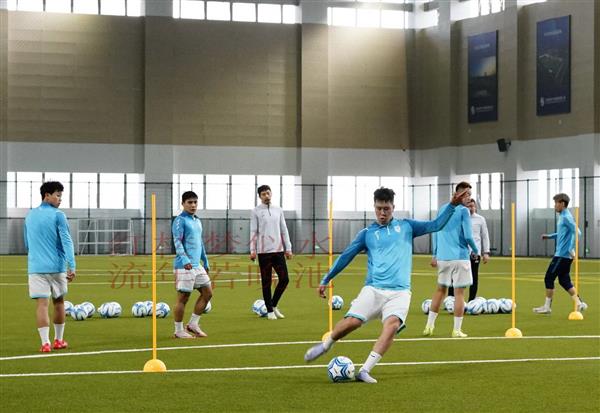

In the case of Guangzhou, for example, since the Championship Division was originally set up in Guangzhou, the Guangzhou team did not have to bear any of the costs of participating in the tournament. Players only need to arrive at the hotel in the tournament area to complete the check-in, and then they can complete the season without any problems.
China Super League (soccer league)
Journey.
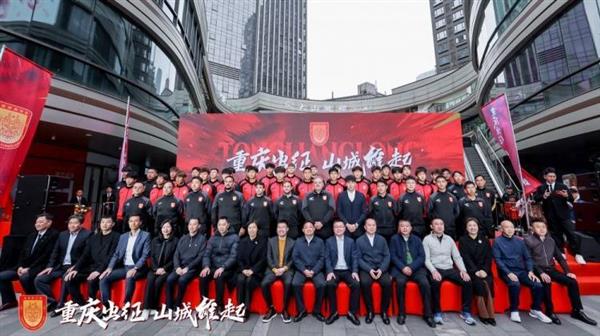
The same is true for Hebei and Chongqing, who only have to bear the travel costs from their home base to Guangzhou and Suzhou. Under the tournament system, the team's travel expenses are also relatively limited, just a ticket to the tournament area or a high-speed train ticket. Of course, all of this assumes that the players are willing to commit to the game in the midst of salary arrears. Before the start of the season, Chongqing had a situation where players refused to play due to unpaid wages, and only after Jinsi paid two months' additional wages was the crisis resolved.
Clubs call for early reform policy
As of today, there are no
China Super League (soccer league)
The club has formally applied to the CFL to withdraw from the remainder of the season. For the team, opting out of the tournament would mean that it would completely abandon the
China Super League (soccer league)
If they want to re-enter the competition, they will have to start playing in the Champions League. If the club insists on participating in the competition, it may be able to usher in the relevant policies at the end of the year, which will bring a turnaround for the club's operation. This is also an important reason why it is difficult for clubs to give up participation easily.
Realizing equity reform and promoting the diversification of clubs' equity has been the core topic of the professional league in the past two seasons. However, due to the lack of a guiding programmatic document, the reform has never been fully implemented. At the beginning of this year, some clubs took the lead in completing the equity reform, with new shareholders such as local governments, sports bureaus, cultural and tourism bureaus, and development zones joining. However, due to the lack of a detailed guidance document on the equity reform of soccer clubs, how the proportion of equity of each party is stipulated, and how the relationship of responsibility and rights is implemented after the reform, there is no clear answer to these questions, and the equity reform work is therefore stagnant and difficult to promote.
In some clubs that have completed equity reform, the form of the reform is greater than the substance, the new shareholders have not yet fulfilled their duties as shareholders, and the funds that should be in place have not been available for a long time. Coupled with the old shareholders to reduce the scale of input, resulting in clubs struggling to operate. Several clubs facing difficulties in survival, such as Hebei and Chongqing, have recently been actively promoting shareholding reform, calling for policies to be introduced as soon as possible to further clarify and refine the responsibilities and rights of shareholders. This is actually what will save
China Super League (soccer league)
The fundamental way of the league.
It is reported that the relevant parties are actively promoting the introduction of a policy on equity reform of soccer clubs. If all goes well, the relevant programmatic documents are expected to meet you at the end of the year.