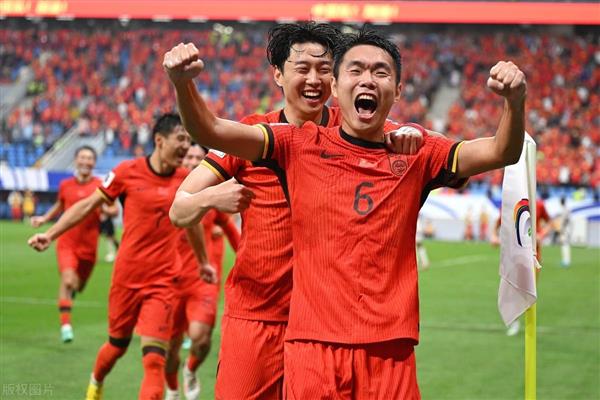


Late on September 7 at 23:00, in the second round of the Group B matches of the Asian Zone World Qualifiers, the
national soccer team
Facing Japan. Shortly after the start.
national soccer team
The heart of the defense, Zhang Linpeng, left the field with an injury, while Kubo Kenyoung's shot hit the post and Osako Yuya completed the breakthrough. Half-time.
national soccer team
Trailing by 0-1. At the change of ends, Alan, Luo Guofu and Artemisia substitutes came on the field, Yan Junling pounced on Jiuhei Ying's one-two goal, and Wu Xi's header threatened but failed to change the score in the end. The match ended with
national soccer team
The 0-1 defeat to Japan was their second consecutive loss, and they are currently ranked at the bottom of Group B. Stats: Possession 30.4% to 69.6%, shots 3 to 18, shots on goal 0 to 3, breakaways 25 to 2, pass success rate 58% to 84%.
In the first half, our team's defense was conservative and the field was slightly dull, and the unexpected victory of the Japanese team controlled the rhythm of the game. Eighteen minutes into the second half, the
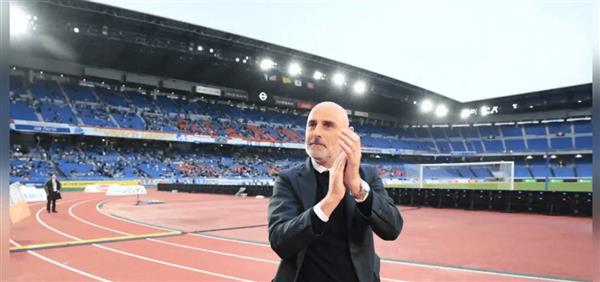
Li Tie (1977-), footballer
Decisively, they made a wide-ranging substitution, replacing Li Ang, Jin Jingdao and Yin Hongbo with Alan, Luo Guofu and Artemisia. In this way.
national soccer team
There were four naturalized players on the field. After the substitutions.
national soccer team
The offense has improved, putting pressure on the Japanese team and demonstrating the obvious improvement of our team in a short period of time, especially on the defensive end, which continues to be strengthened, and the details are handled in a more automated and reasonable manner.
Li Tie (1977-), footballer
Satisfied with the performance of the players after the match, although it still ended in a loss, compared to the top-ranked team in Asia, the
national soccer team
Significant improvement in tactics and player spirit.
After the match, let us discuss the actual situation of soccer in China and Japan. Since the 1990s, China and Japan have entered the professionalization stage of soccer, which has become a watershed in the fate of the two countries. One rose to become the Asian hegemony, close to the world's first-class level; the other is gradually sinking, once did not reach the World Preliminary Round ten matches. Objectively speaking, our country's soccer has been in progress, from 2006, 2010 and 2014 three World Cup qualifiers to see the
national soccer team
It has gone from not even being able to advance to the group stage to at least being able to play in the Top 12 and play against top Asian teams.
In this decade or so, the speed of development of Japanese soccer is remarkable, and the technical flow of play has gradually matured to the point that it can even compete with the strongest teams in Europe. This summer, the confrontation between Japan's national Olympic team and Spain's national Olympic team fully demonstrated this strength. Compared with South American and European players, Asian players have not been valued by top clubs, but Japanese players have still blazed a trail in European soccer, and the lineup of Japanese players in the top five leagues is good enough for a battle.
Why is there such a big gap between Chinese and Japanese soccer? Let's look at a set of data first. in 2011, the total number of registered professional players in China was only 8,000, a number that at the time was not as high as that of Vietnam, where the Vietnam Football Association (VFA) calculated the number of registrations to be 50,000, whereas Japan had reached 500,000 a decade earlier and had been growing steadily over the years. in the early 1990s, the number of young people involved in soccer programs in China reached an all-time high of 650,000 people. After the 21st century, this number declined rapidly, and around 2006 it had slipped to 180,000 people. Similarly, in the early 1990s, there were up to 4,000 soccer schools in the country, but at one point that number dropped to an officially calculated number in the mid-twenties. There are 4,038 teams registered for high school soccer in Japan, and more than 162,000 registered high school players. These figures visualize the gap between Chinese and Japanese soccer, and explain why our country's soccer has sunk.
Let's look at the basic data of basketball. Our basketball association has 13,000 registered regular players, the Japanese Basketball Association's figure is 750,000, South Korea's is 7,000, and the United States has 23 million. Of course, the overall quality of Japan's 750,000 registered players may be more watered down compared to soccer, which requires a higher level of physical conditioning, while soccer selection is closer to the general population. But this number at least means that there are 750,000 young people in Japan who can officially participate in basketball, regardless of height and level, they have their own stage to show.
In fact, the most surprising thing is our national sport, table tennis. The number of registered table tennis players in Japan has reached 350,000, while there are only about 30,000 table tennis players in our table tennis schools and gymnasiums combined. Of course, this does not mean that the strength of Japanese table tennis will soon surpass our country and become the ruler of the next era. After all, the quality and strength of these 350,000 people in Japan can hardly be compared with our 30,000 people. But these 350,000 people can engage in this sport authentically. After these years of international competitions, we can also find that the gap between Chinese and Japanese table tennis strength is gradually narrowing. Our netizens are mocking players such as Ito Mijo and others who are dumbfounded when they meet our country, but we have to realize that they all have hundreds of thousands of Japanese table tennis players behind them. There is a table tennis media in Japan called Pool Kingdom, this media has proudly said that there are 1.2 million table tennis fans in Japan but only six of them have the chance to participate in the Olympics, but this mechanism is too cruel and the Olympics should open up more places. There are said to be 87 million table tennis enthusiasts in China, ranging from kindergarten children to grandparents in parks. Of these 87 million people, 30,000 table tennis players have been screened out and there are more than 2,000 professional players. From a competitive point of view, there is nothing wrong with this brutal-to-the-point-of-elimination rate. But from the perspective of the sport itself, this model of development is highly undesirable. The core of sports development is not to reach the final round of the World Cup or to get the Olympic gold medal, but to let more people participate in sports and have the time and stage to engage in their favorite sports, which is the core of sports development in Japan.
The huge and well-established school leagues provided a solid foundation for Japanese sports.The 1980s was a low point for Japanese soccer. During this period, the number of registered youth players skyrocketed, tripling from just over 200,000 to 600,000, and has since stabilized at between 600,000 and 700,000 players. School leagues support the foundation of Japanese soccer, with more than 20,000 schools participating in various school tournaments each year, the most popular of which are the All Japan Soccer Junior Football Conference, the All Japan Secondary School Football Conference, and the All Japan High School Football League. Hundreds of thousands of youth players participate each year, meaning that each one plays an average of more than fifty matches a year. Of course, it's not just soccer, but every sport as well. We've all heard and read manga such as Soccer Bombers and Slam Dunkers, and in fact these episodes really do take place in Japanese schools. It has been proved that when more young people have the opportunity to take part in competitions, the strength of the national team will certainly be improved rapidly.
What we love is not the World Cup winners, but soccer itself. Therefore, whether it is the atmosphere of the system, the working environment, etc., our country and Japan are really not the same concept at all. Of course, our country is gradually changing, just hope that this speed can be faster.