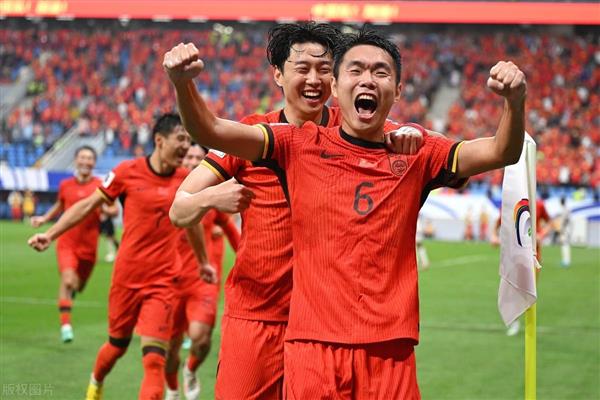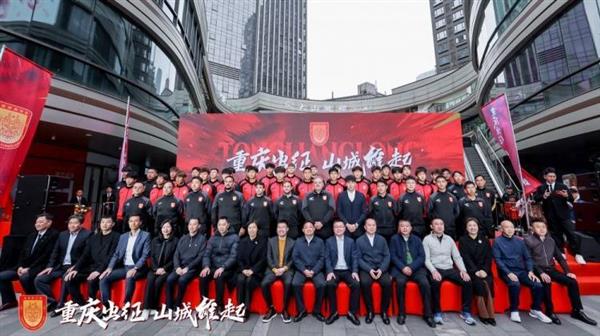


On August 30, 2021, FIFA unveiled its global transfer market overview from 2011 to 2020, with 11 clubs from the Chinese Super League (CSL) and clubs from the Middle East occupying the top 20 spots in the Asian football map over the past decade. The Chinese Super League (CSL) and clubs from the Middle East are among the top 20 Asian soccer leagues in terms of transfer investment over the past decade, with CSL clubs undoubtedly in the limelight. 11 clubs are in the list, 8 out of the top 10, and the top 4. ...... Countless soccer stars have flocked to China, making it the "sixth biggest league in the world". The Chinese Super League has been hailed as the "sixth biggest league in the world" for the past decade. However, it seems that this dream is about to wake up.
Of the clubs that have invested in reinforcements in this decade, there are 11 Chinese Super League (CSL) teams, 4 Saudi Arabian teams, 2 Qatari teams and 3 UAE teams in the Asian Top 20. When further broken down, eight of these 11 CSL clubs are in the top 10, and the top four are all Chinese Super League clubs, namely Guangzhou, Shanghai Harbour, Jiangsu Suning and Shandong Taishan. Beijing Guoan ranked seventh, Dalian Ren eighth, Shanghai Shenhua ninth and Tianjin Tianhai 10th. In addition, Hebei ranked twelfth, Tianjin Jinmen Tiger ranked seventeenth and Guangzhou City ranked nineteenth. Traditionally, Qatar, the United Arab Emirates and Saudi Arabia are considered to be synonymous with the "rich and powerful", but when it comes to Asian soccer clubs, the Chinese Super League teams have completely overwhelmed the West Asian teams in the past decade.
All 11 clubs have had players who have made a name for themselves in world football over the past decade. Guangzhou have brought in Paulinho, Robinho and Diamanti; Harbour have had Hulk, Arnautovic and Oscar, who is still in the team; Suning have had Teixeira and Ramirez; Taishan have had Italian international Pelé in addition to Fellaini, who is now in the team; Guiaoan have had Augusto and Bieira; Dalian have brought in Carrasco and Long Dong; Shenhua have brought in Didier Drogba and Tevez who have caused a sensation in the world; Tianjin Tianhai have brought in Witsel and Pato; Hebei have had Mascherano and Lara Croce. The world soccer world caused a sensation; Tianjin Tianhai has introduced Witsel and Pato; Hebei has the Argentine combination of Mascherano and Lavezzi; Zimmen Tigers have introduced Mikel and Wagner; Guangzhou City, in addition to the introduction of Moussa Dembele, but also let the scorer king Zahavi earn a lot of money.
The Chinese Super League was once called the "sixth largest league in the world" because of the comings and goings of these international stars. In addition to the transfer fees for bringing in stars, the rights to the league have also risen, and in 2015, the rights to the five-year period from 2016 to 2020 were sold for a whopping $8 billion. At the same time, the Chinese Super League began to be broadcast live in traditional soccer countries such as England and Brazil. Jinmen Tigers foreign aid Magno said in an interview that he was able to see the Chinese Super League in Brazil and had followed the performance of his old teammates like Augusto.
The prosperity of the Chinese Super League in the past ten years was built up with a lot of money. Now that the era of gold dollar soccer is over, no one mentions the title of "the world's sixth largest league" anymore. Guangzhou, once the dominant team, has already realized the "all Chinese class", and the club's owner, Evergrande Group, has begun to sell its yet-to-be-built professional soccer stadiums to cope with the group's economic crisis. In addition, last season's Chinese Super League champions Jiangsu Suning and Tianjin Tianhai, who once made it to the last eight of the AFC Champions League, have disappeared. The Tianjin Tigers have regrouped after some crises and setbacks. As for the Hebei team, from coaches to players are still struggling for survival.
More generally, the stars who used to come to the Chinese Super League have pretty much left. Against the backdrop of the Chinese Super League's salary restriction, no stars are willing to sign with Chinese Super League clubs anymore. Meanwhile, players like Paulinho and Augusto, affected by the epidemic, have also terminated their contracts with such teams. In the post-golden dollar era of the Chinese Super League, "giant crocodiles" and "oligarchs" are disappearing, and "state-owned capital" and "equity reform" have become buzzwords. "become hot words. At present, Shandong Taishan and Henan Songshan Longmen have become the forerunner, the two teams of the local culture and tourism group to take over the club, become the sign of the Chinese Super League club mixed reform. Next, Guangzhou team, harbor team and Shenhua team such as the "giants", but also to carry out reform.
Among them, the Shenhua club is currently moving more. In August last year, the Ministry of Housing and Construction, the Central Bank convened a meeting of real estate enterprises put forward three regulatory requirements, which is commonly known as the "three red lines" - excluding the advance receipts of the gearing ratio shall not be greater than 70%, the net gearing ratio shall not be greater than 100%, the cash short-term debt ratio shall not be less than 1 times. According to the number of red line, real estate enterprises are divided into green, yellow, orange, red 4 gears. A full year later, after many real estate enterprises have implemented a series of leverage reduction measures, Chinese Super League fans unexpectedly found that if you look backwards at the "top 50 listed real estate enterprises 'three red lines' list", you can see a large number of familiar names. This also includes Shenhua Club's investor Greenland Group.
Screenshot from the public website "GlobeNewswire Property Market".
In the Chinese super soccer "real estate market" to the end of the present, only input not output soccer club, become a number of real estate investors burden. The current news is that Greenland Group has begun to contact with the state-owned investment and management holding company Jiuzhi Group. Currently there is news that Jiuzhi Group is likely to buy Shenhua Club's training base Kangqiao base, which is also seen as a signal for Jiuzhi Group to invest in Shenhua Club. In fact, as early as 2000, Jiuzhi Group has been jointly funded with six other state-owned enterprises to take over Shenhua. However, the Shenhua club has changed hands many times since then, until Greenland Group became the owner of Shenhua in 2014.
Shenhua Club Chairman Wu Xiaohui
Shanghai Shenhua club chairman Wu Xiaohui recently said in an interview with Xinhua News Agency, Shenhua club actual controller Greenland Group from the 1990s to carry out mixed ownership reform, Shenhua embraced the equity diversification reform, but also willing to be the first to try. At present, although the equity reform of the Chinese Super League clubs will allow the Chinese Super League to say goodbye to the so-called "world's sixth largest league" title, but the relative social responsibility of state-owned enterprises, operational stability, more state-owned enterprises to participate in the club's equity diversification reform, the stable development of the professional league, the benefits should outweigh the disadvantages.