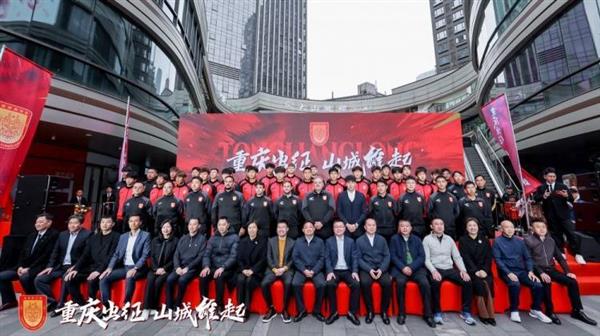


It's mind-boggling that a team would voluntarily give up on progressing to a higher league. In the context of Chinese soccer, it's not incomprehensible.
As we all know, professional soccer is undoubtedly a money-losing business in China. Once upgraded, more investment will be necessary if they want to save face in the more competitive top flight, which is not necessarily good news for the management, especially in the current climate.
The economic base determines the superstructure, similar to the "non-war crime" situation in the third tier of the professional league is not uncommon. It has become the norm for teams to play in the middle of the season, have their funds cut off, and are relegated to a fishbowl and a perfunctory season. This leads to an embarrassing situation. Sometimes, it is even difficult to determine whether the outcome of a game is due to strength or external factors.
Of course, there's no excuse for this, and as long as the fans can accept it (and so what if they don't), there's no excuse for it.
Suffering from the equity transfer fiasco of the Zhejiang team in a state of flux.
This brings us back to the heart of the "brakes" phenomenon.
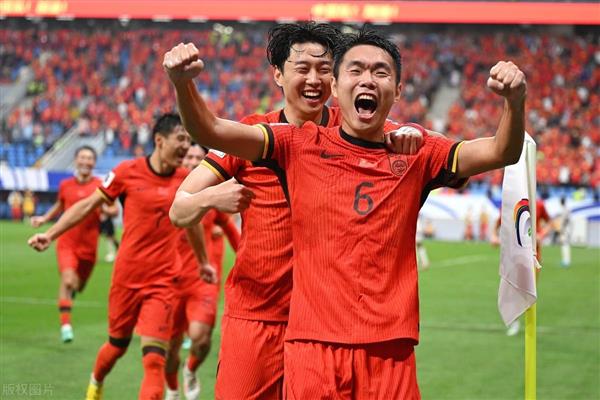
The 18-team tournament played to four rounds, the national football team each game exposed the same problem: the start is still good, but as the game goes on, the performance gradually decline - the first half and the second half of the final stage of a total of eight goals conceded, especially in the last three games, the end of the half-time there are five goals conceded, can be said to have a direct impact on the outcome of the game.
Of course, we can blame the problem on the coach's incompetence and poor tactical adjustments, but objectively speaking, is the problem really limited to that? The deeper problem may lie in the players' ability to adapt to the intensity of the game and the lack of talent pool.
During the eleven-day period, three teams in the Chinese Super League suffered losses, and even the ever-victorious Shanghai team suffered "three consecutive defeats", apparently unable to adapt to the rhythm of high-level competition in Asia. This is in the context of Japanese and South Korean players have to study abroad, foreign aid value is not as good as the reality of the Chinese Super League, appear more prominent.
Three consecutive defeats in the Super League in the AFC
In 2023, the average running distance of the Chinese Super League teams is 106.5 kilometers, and the J League is 113.6 kilometers, which is 7% higher than the Chinese Super League, which is equivalent to the effect of each team in the J League to run one more player in each game, and this is not even counting the more detailed data of high-intensity running and sprinting running. It's no surprise that the high skill of others and the tight daily pace reflect the huge gap in the strength of the national team.
Of course, the running stats are not the whole story, but rather a microcosm of many of the problems with the level of competition. Unless all the talents are born through overseas leagues, the only way to cultivate talents is to do a good job in the domestic professional league, and there is no shortcut. This is the principle of "league-based", and one of the reasons why the "Hongshankou Conference" decided to go professional.
Similarly, the phenomenon of "modesty" mentioned above is also the tip of the iceberg of the "unprofessional professional league". A professional team playing 30 "high-intensity" matches a year is not much, and the level of investment will be discounted for a variety of reasons - salary arrears, clubs don't want to upgrade, the weather is too hot, the schedule is too dense, individual matches, "harmony is most important", and the strength gap is too large. "Harmony is the most important" will not be able to fight, the strength gap is too big to fight. The national football team played more than one person does not prevail is not a coincidence.
How many games can a player play a year to get out of these predicaments? Even as a fan who loves the home team dearly, it's sometimes hard not to repeat the classic quote from coach Gong Xiaobin: "Isn't it painful to watch you play (kick) the ball?"
Don't get me wrong, this is not an accusation of professionalism on the part of the players. According to Gilbert's Behavioral Engineering model, the father of performance improvement, environmental factors always influence performance improvement more readily and fundamentally than personal factors - technology control before people control.
Considering that Chinese players' wages have gone back to reasonable or even too low levels after the bursting of the gold dollar bubble, the key is whether the league provides a suitable environment for them, without questioning their desire to improve their "performance".
In fact, the answer to the above question is not complicated:
-Playing in the Premier League if it's financially lucrative, is there anyone else who won't rush?
--Make up for unpaid wages, will players still be passive?
--With dividends tied to the standings and graded, will the mid-tier "salty" group still suck?
--- Always compressing the schedule to less than 8 months, with a doubleheader week in three volts, who doesn't have a hard time with the players, the fans, and the box office?
-Elite teams don't play outside the league, international players don't get the workout, how about looking at how much the J-League subsidizes the outside teams?
All of these should have been considered by the administrators a long time ago. Not only do they not conflict with the main goal of "serving the national team", but they are the right way to fundamentally improve the national team's level of competitiveness, but they are not being taken seriously - ignoring the role of the league's cornerstone, ignoring the expansion of the fan base, ignoring commercial development. Ignore the legitimate demands and basic rights of the clubs, ignore the rules and regulations, then reality will be punished in the harshest way. It's easy to change coaches, it's hard to fix the underlying problems.
A big bet on youth training? But ultimately the vast majority of young players are still going to enter the sea of professional leagues and just repeat the countless injury stories of the past.
Not to mention that the current youth training base is far from stable. While the adult national team lost in Australia, the U21s also suffered defeat in Russia. Only the U19's performance against Saudi Arabia left the national brand with a shred of face, but even if these kids do well at the U20 Asian Cup on home soil early next year, can we just sit back and relax?
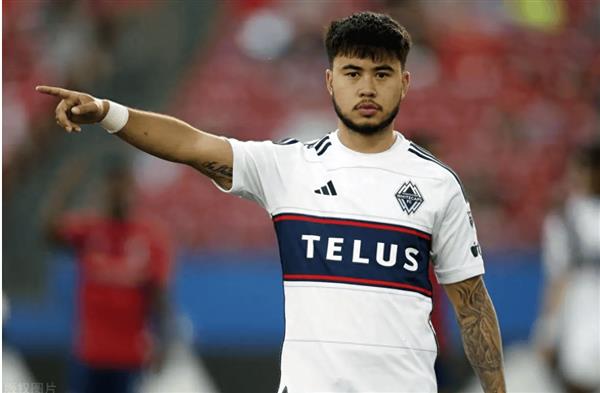
One more story. We played Australia twice in the qualifying and final stages of the 2023 U17 Asian Cup and lost both games. However, there was a back and forth on the field and the opposition was not out of reach. At the time, a new star was born in both sides' lineups - one named Ilan Kunda and the other Wang Yudong. The former is 9 months older than the latter. Ilan Kunda and Wang Yudong
Now Ilankunda has played 60 games and 2467 minutes in the AFL, joined Bayern in a €3 million transfer this summer and made his debut on behalf of the adult national team against the national football team; Wang Yudong is still struggling on the fringes of the first team of the Chinese Super League (CSL), with 274 minutes in just 10 games so far in the CSL, and even further away from being selected for the national team.
Match, match, still match, "clay method of steel" is useless, only high-intensity matches can be refined into real gold, adult players are also the same, the echelon players are also the same.
The core of the problem has never been "clubs unify their thinking and do their best to protect the national team". On the contrary, the governing body should do its best to ensure the quantity and quality of the professional league and all levels of the ladder, so as to cultivate a higher level of players, without emphasizing the "style of construction". Coaches can also ensure the lower limit of players, not to mention the driving effect of the league's prosperity on the entire sports industry.
The willpower of the Trojans and 24% possession wins won't be the norm. Maybe our players aren't that much worse than those who look like that in Europe's second and third tier leagues. Assuming, of course, that we can understand those four words - league.