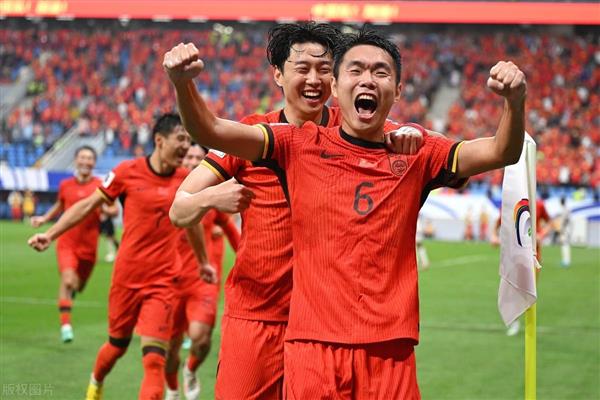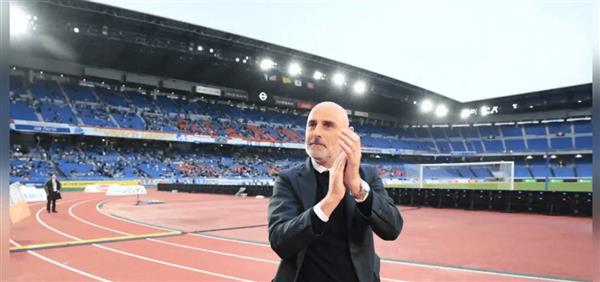


Shandong Taishan has yet to qualify for the Elite League, and this year's team is in dire straits, with few chances of winning the away match against Kobe Victory. The only expectation is to try to avoid a big loss, and even if they lose, it should be a small loss. A 0-3 loss for Shandong Taishan would be a great humiliation for the Chinese Super League.
In the face of this status quo, people can not help but wonder: the Chinese Super League team to three goals in a row to the difference between the tragic loss, the responsibility in the end who?
Some are pointing the finger at the Football Association, claiming that the recent intensive fixtures have tested the Chinese Super League giants like the devil, and indeed they have. Super League teams tend to rely on fixed lineups, and Shanghai Seaport in particular, with a large number of veteran players in their squad, seems like it's only a matter of time before they play and lose. The shortcoming of Shanghai Seaport is the lack of rotation, with few qualified players.
Shenhua, for example, although the rotation lineup is richer, the players are younger, but the drawback is too dependent on Teixeira to score goals, Teixeira's absence often leads to scoring difficulties, and his frequent injuries are even worse.
The two points attributed to the above are the tight schedule and the obvious shortcomings in the team's squad. However, we should not blame the FA's scheduling alone, because the fiasco we endured is obvious. In fact, a more critical point is that the elite AFC Champions League is like a "sewing monster" with many loopholes. One of the biggest loopholes is that there is no restriction on the number of foreign aiders.
Johor Bahru is an example of how to utilize this rule, with almost all of the players on the field being foreigners, and our team's 4 to 6 foreigners can't match that.
In the last round of matches, Hong Kong barely managed to draw with Johor Bahru with six foreigners and one naturalized player, while Shenhua only had four foreigners in the match this time, and defeat was assured.
There are not enough foreign aiders, which is determined by our national conditions and the bottom line of the Chinese Super League teams. We will not blindly increase the number of foreign aiders to compete for the AFC Champions League just for the sake of pursuing results. Therefore, it is foreseeable that big defeats will probably become the norm for Chinese Super League teams, a reality we must be mentally prepared for.
Interestingly, Japanese and Korean teams also only play in the AFC Champions League with limited foreign aid support and they manage to do well more often than not, which is something we need to think about.