
The Complex Journey of Soccer Youth Training
A 22-year-old footballer who started playing at the age of seven and made it to the ladder of a Chinese Super League club at the age of nine, his future seemed clear - to play football. However, his trials of joining the youth training system were far more complicated than he had imagined.
He had not anticipated that change would take more than it should. Not only did he have to deal with the rigors of training, but he had to adjust to time, language, human interaction, and even face an unknown fate.
"Couldn't play, couldn't compete." Liszt mentioned his reason for retiring lightly.
Sijie is the fourth batch of young players to stay in China under Wanda's "China's Football Stars of Hope" program, which coincides with a change in the training model: in 2015, Wanda acquired a 20% stake in Atletico de Madrid, where all the selected players will undergo three years of training. The first three batches of players were dispersed among various clubs, and some stayed with host families and had exotic "families".
When he was notified of his selection, Sijie excitedly searched for his name on various websites. His parents are both ordinary workers, and he couldn't afford to go to Spain to train on his family's strength.
Parents are very cautious about sending such young children to Europe and investigate carefully. They know people to ask people they know what happened to the stay-at-home players who went to Spain earlier. The information learned is limited, but not so much that it's a deterrent. The clubs cooperating in the project are Atletico Madrid, Villarreal and Valencia, all teams loved or familiarized by Chinese fans, and the one responsible domestically is Wanda, with Wang Jianlin on CCTV talking about the importance of soccer youth training and development.
However, the turnaround came at the end of the first contract. The length of the "Star of Hope" contract consists of two parts, 3+3, at the end of the first three years, the player is evaluated and then signed the next stage of the contract. Sijet reached the second stage and was given the opportunity to join the Real Sociedad club team.
Head north to San Sebastian. The small seaside town famous for its film festivals and Michelin restaurants has produced Alonso and also Griezmann. Photographic film and gooseneck barnacles can't fantasize about Sijet, but Alonso, who returned to his job as a youth coach at the Real Sociedad and met him once in a while, can.
The decentralized training model was restored. Sijie was given the opportunity to mix training with the local ladder team, his Spanish skyrocketed, and the level of his kicking was such that he became a representative of China's youth training players.At the end of 2019, the second phase is almost over. He is about to come of age and can apply for a participation license to play in official matches. All the matches he played in the last six years were not actually official matches organized by the Spanish Football Federation, he was a foreign minor with a school visa and could not be registered as a player.
Real Sociedad gave him his first professional contract with a salary of one or two thousand euros a month. It would come into effect when he turned 18, and Dad booked a flight to Spain to sign as a guardian.
If the story stopped there, it would be a very "hopeful" story. Esprit will be watched constantly by fans at home, recording his stats every time he takes the field and wanting to hear that he's won again.
The new crown epidemic is here.
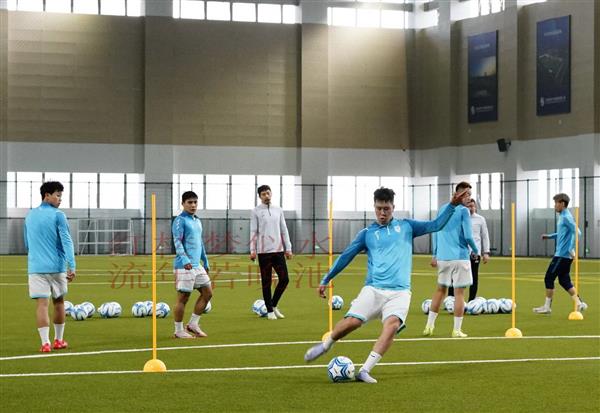
The league stopped, Wanda recalled the youth players scattered in three clubs to a hotel. Training dare not stop, the coach put buckets in the corridor, can not gather to meet, all take turns to go out to carry the bucket to do strength training. They had a lounge where the underage players studied in the morning, and in the afternoon the players wore masks and practiced their foot frequency inside. After a month or so, Spain's segregation policy was relaxed slightly and they were finally able to leave their rooms. On the tarmac road in front of the hotel, a string of them practiced long runs and sprints at a "healthy and safe" distance.
Physical fitness is at its peak in his recent years. On the other hand, he's gotten worse with the ball and has to go back to the Royal Society to catch up on his training.
He didn't receive news of a contract re-signing. The club's revenue has been drastically reduced by the epidemic, the partnership with Wanda expired, and there is no intention of taking up the non-EU player quota for the Chinese.
He's coming of age and his contract with Wanda is about to expire. Still wanting to play professionally, Sijie tried out for Dalian Ren, a club owned by Wanda. After a month of training with the Dalian People's ladder team, he could not see the hope of entering the first team and wanted to go back to Spain. 2021 and 2022, due to visa problems, he had no matches to play, and could only look for two Liga B teams to do some daily training to keep up with his form.
Training while applying for a work-stay visa. The Spanish police department was extremely slow in processing visas for foreigners, and during the epidemic a huge amount of application materials piled up, so that every step of the residency process had to rely on luck to grab an appointment. By the time he finally got his papers, half a year had passed and he was completely out of shape. Injuries had caused his level to drop, so retirement was the choice he had to make.
For the first three years of his training in Spain, Sije trained in the morning and went to school in the afternoon. Wanda had assigned them a class in business management, which he had taken for some reason when he was thirteen. To this day, it was still a subject he couldn't use.
A diamond-shaped highway, the M-30, circles Madrid, dividing the city's core from its periphery, like the five rings that distinguish the two "Beijings". Guernica, Don Quixote, the Royal Palace of Spain and the Bernabeu Stadium are all wrapped in the ring, connecting and echoing each other to represent the Spain that is best known to all. Having spent three years in Madrid, Sitges remembers how he felt every time he stepped onto the M-30, both because of the excitement and because of the scarcity of the trips - for the first three years he could barely leave the Alcobedas area, where Atletico Madrid's base is located.
The dormitory building they live in is right next to the academic building. There is a ban on free access except for special circumstances. Teenagers, enclosed in an environment where they can't go out, hormones captive in two tiny buildings.
In addition to the "Star of Hope" players, there are also young people from other countries at the base. The school authorities do their best to avoid conflicts, and the overseas players are concentrated in three classrooms. But the culture clash and the gap cannot be eliminated. In the narrow corridors, some people deliberately provoked them with racist remarks. More than a hundred Chinese youth players hooted and hollered, relying on violence to solve the problem. By the time they were found by their teachers, the racist had a swollen nose, and representatives of the school, Atletico, Wanda, and parents, of all parties, were forced to sit down together.
Even in a group fight, you can't completely trust your teammates.
From the beginning of the draft, they have to compete. Guards and guards, forwards and strikers, people vying for the same position instinctively can't be best friends. Everyone wants to add a little more points to their mid-year evaluations, a little difference that might get them more attention in return.
Small groups emerge in a different way. People who have trained together, who come from the same place, who are the same age, unconsciously aggregate and group together. With teenagers as old as sixteen or seventeen and as young as ten, hazing and group fights are common.
Age is a privilege. Turning sixteen gave you the opportunity to apply for an outing and take younger players with you. In order to get away from school for once, buying meals and recharging games were the most common ways to curry favor. Life in the building was boring, the only things that could be called pastimes were billiards, table tennis and table soccer, the only PS4 was a luxury item and older people had priority to play games.
Cell phones are prohibited and punished. Initially cell phones were banned after 10 p.m., then they were simply not allowed to be present. The school fixed a special locker for cell phones, and no locker with a star on it meant the phone was turned in. Many people prepared two cell phones, one dedicated to confiscation and one hidden in any corner of the dorm. A player's phone was confiscated, since then, he stood next to his friend with a cell phone every night, the other side to play King of Glory he commanded, the other side to brush the short video, brush to what he watched.
Another way to punish a group of adolescents is with a fine. Five euros for a dirty room, ten euros for stealing snacks, and in extreme cases, the fine would become fifty euros, close to four hundred dollars. No one knows where the fines, planned to be used to fund public events, end up.
There had been another TV in the two-person dorm room, which initially worked, but it stayed on the adult porn channel for too long. The next year, the TVs were all locked up.
The Spanish didn't want to be so strict, the rules weren't initiated by them.
A player who participated in the "Star of Hope" project said that young, good-looking, fair-skinned boys were "harassed" by older players. The physical contact in the confined canned environment crosses boundaries and leaves the victim with psychological problems.
The dormitories were described as "prisons". The strict confinement of the dormitory made everyone's psychological condition worse. The psychiatrist sent by Atletico Madrid became a fixture, and in an environment where Chinese was spoken every day, the language level did not allow them to communicate with the doctor. Even those who express themselves better are afraid to go to the psychiatrist, which is tantamount to declaring weakness to the group.
Off-field conflicts inevitably carry over to the field. Failure to cooperate with a pass is the slightest form of retaliation; more dangerous is deliberate physical confrontation.
There are a lot of people who don't want to continue and not many who actually give up. Parents stop youth players who want to leave. It's the biggest, most professional program, how can you give up?
Players and parents mostly feel that overseas training is better. Domestic training methods are not scientific and advanced enough, the connection between the echelon and the first team is cut off, and the level of youth training coaches is mixed, while the youth training system of overseas clubs has been built over decades and has a complete and mature model, so these problems are rare.
Learning from places with a more developed level of soccer is a path that could conceivably be taken, with Japan and South Korea having profited from youth training to stay in the country.
Before the emergence of the "Star of Hope" program, Jianlibao also provided a bad precedent. Sent to Brazil's Sao Paulo Jianlibao youth team, there are ten people selected for the national team, including Li Jin Yu, Li Tie, Li Wei Feng these names.
Even if they are unable to become professional players through the Stay Abroad program, many benefit from staying abroad. They learn another language, see a more professional youth training system, and learn about soccer overseas. They give back to Chinese Chinese soccer, in the form of translators, coaches, and managers.
With three years and five hundred million investment in Chinese soccer, Wang Jianlin believes that youth training is the most important part of the plan. 30 years ago, his Dalian Wanda has been helped by local youth training - 55 games undefeated to win the first A championship, half of the team from the Dalian youth training.
So Wanda's "China's Soccer Stars of Hope" program began, and the destination was chosen to be Spain, which had won the European Cup and the World Cup in 2008 and 2010. Choose the most powerful country and send the children there.
The number of downloads of the registration form on Wanda's official website exceeded 13,000 at the start of the first registration period. At Wanda Plaza in Chengdu, there were parents who came from Yunnan to ask questions. All cities with a tradition of soccer youth training were on the list. Shanghai's Fan Zhiyi, Tianjin's Yu Genwei, and Dalian's Zhang Enhua, players with deep ties to their cities, became ambassadors for the draft, and their presence added another layer of confidence for players and parents.
Shi Xueqing, the head of Wanda Football, explained why he chose Spain before the project began. The first clubs that cooperated with Wanda, Atletico Madrid, Villarreal, and Valencia, were the top three in the European league the year before; Spain's soccer is well developed; and the training in the European country is more systematic, so Brazil was not chosen.
Twelve years from now, a viewer who cares about the Chinese Super League may know that Wang Zhenao and Tao Qianglong came from the "Star of Hope" program. If he cares about substitutes and the lower leagues, he may know that Wong Ka Fai is now playing for Tianjin Jinmen Tigers, and that Lv Cheuk Yi and Zhao Jian Bo, who played for Dalian People, are now playing in the Central League.
A Chinese Super League player used to train with the "Star of Hope" players. He was a dozen years older than them, and not long before he retired. But the 20-somethings had left the team before him. The team had set up new tactics for the returning players and offered them high salaries, with veterans like him making way for the newcomers. After a few rounds of games, the team underachieved and he had to come back, the team needed him.
A staff member familiar with the youth training of the Dalian People's Club told Off the Field that the players still playing in the "Star of Hope" program can be divided into three types. The first kind, after the end of the contract with Wanda, insisted on staying in Europe, even in the lower leagues. The second type, after returning to their home country, will be transferred to other mid-level clubs. The third type, back to the Dalian people's youth training ladder. After the Dalian people were disbanded, they bounced around the domestic leagues at all levels, and there were people in the teams in the Central League, Central B and Central Championship.
A coach who coaches youth has traveled to Spain to observe these "hopeful" players. Some of them were regulars in the national junior team, and according to the trajectory, they might be promoted to the national youth team, or if it goes better, the national team. Six years later, he does not feel that there is something wrong with the project of youth training in foreign countries, "just wishful thinking of the training method is not appropriate, we are hard to organize some children to go over there to train, the risk of success will be greater", "selection of young players to get the recognition of the European clubs is more meaningful! ". It doesn't make sense to invest a lot of money and end up with only a small percentage of them becoming successful.
Returning players hear the same voice, "This group of kids is kind of wasted, they have the skills, but they can't play the game at all." Sije said, "We've done many mock exams, but we haven't really been on the field for the high school exams."
The players who stayed in the country with school visas, they played training matches, invitational matches, cups, Wanda tried to increase the number of matches they played, but the identity problem could not be solved, and they were never able to join the real Spanish youth league system.
As a representative of the success of the "Star of Hope" program, in 2018, Wang Zhenao and Wanda had a lawsuit. The Danish Vaal Club was ready to sign a professional contract with Wang Zhen'ao, and asked Beijing Wanda Club, to which Wang Zhen'ao belonged, to issue documents to register the player. Wanda found that Wang Zhenao was in breach of contract in terms of his affiliation and demanded 2002 million in damages.
The first transfer club in the career history of the players trained by "Star of Hope" is Beijing Wanda. At the time of selection, the two sides signed a training agreement, which stipulates that after the player reaches the age of 18, the registered ownership and disposal rights belong to the Wanda Club, and that the club must agree to any transfer of the player.
Parent teams charge very low fees to develop players, sign contracts, and profit from a share of the player's adult post-transfer, which is how European youth training systems work. Wanda's use of large sums of money to train players for free is a rather extreme case. In the Chinese soccer transfer market, it is difficult to generate enough value for Wanda to recoup its costs when the "hopeful" players reach adulthood. The situation got worse when the bubble of gold dollar soccer deflated.
In June 2017, Beijing Wanda launched the professionalization of its youth players for the first time, and the first batch of players who turned 18 were about to sign professional contracts. According to the Wanda suit, Wang Zhenao and his father and son were out of contact from this point until an email from the Vaal club in November.
The players say the opposite. Wanda didn't contact him much, he didn't play for a long time and the Danish club was approached by him. He and his father have not received any notification from Wanda, the club has all their contact information and does not understand why they are said to be out of contact.
Wang Zhenao and his father signed the first contract in 2012 for three years, followed by yearly training contracts, with the last one signed in 2016 and a deadline until 2017. When the father signed, he signed only the first and last pages, and they did not notice the relevant clauses about registered ownership and handling rights.
The huge astronomical compensation of $200,200,000 did not meet the youth development compensation standards set by FIFA, but the club's ownership contract stuck the player signing. The case finally disappeared until 2020, when Wang Zhenao moved to Dalian Ren FC.
This is not the first time the ownership conflict has arisen, it was the most sensitive issue at the start of the program and some people have given up on training in Spain as a result. Most of the players who make the cut are registered with the local football association and local clubs have invested money in developing them to the age of 10-12.
Shi Xueqing said "all the players elected to the country's ownership of the Chinese soccer, we do is a public service, three or five years after the thing has not thought about." Behind the beautiful response, Wanda compensated the original club 50,000 yuan cultivation costs, the commitment to the players 18 years old, if the transfer fee can be generated, but also compensate the original club 500,000 yuan.
Half a million dollars is an early estimate of the price of the player, Wanda believes that the "star of hope" players can bring returns, do not think that all the investment is to put money into the water.
Those familiar with the program have told off-court that not all of the "Stars of Hope" players who return to China at the age of 17-19 can't play professionally. Their contracts are held by the Beijing Wanda club, which determines their career trajectory.
Players who are in the transfer market realize the cost of a free item, and it comes after a few years of delays to show what it costs to get it.
In 2014, Wang Jianlin went to Spain to see these children, and he hoped that there would be "stars of tomorrow" who would enter the world's top clubs.The news broadcast on March 24th reported this news, with the headline "Wanda's model of sending elite players to overseas training solves the problem of cultivating youth soccer talents in China". Wanda's model of sending elite players to overseas training has solved China's youth soccer talent cultivation problem.